



.avif)







Apple’s new chief John Ternus unveils foldable iPhone Duo from $1,999
Apple's new chief executive presented the biggest shake-up to the smartphone in its nearly 20-year history, but can iPhone revenue continue to grow at a double-digit year-on-year growth rate?
%202.png)


Not to be redistributed, copied or modified in anyway. FT and Financial Times are trademarks of the Financial Times Limited.
Chip has hosting rights to certain limited Financial Times articles. This is not a live feed of Financial Times content.
All commentary and opinions are those of independent FT journalists and experts, not those of Chip. Chip does not give financial advice.
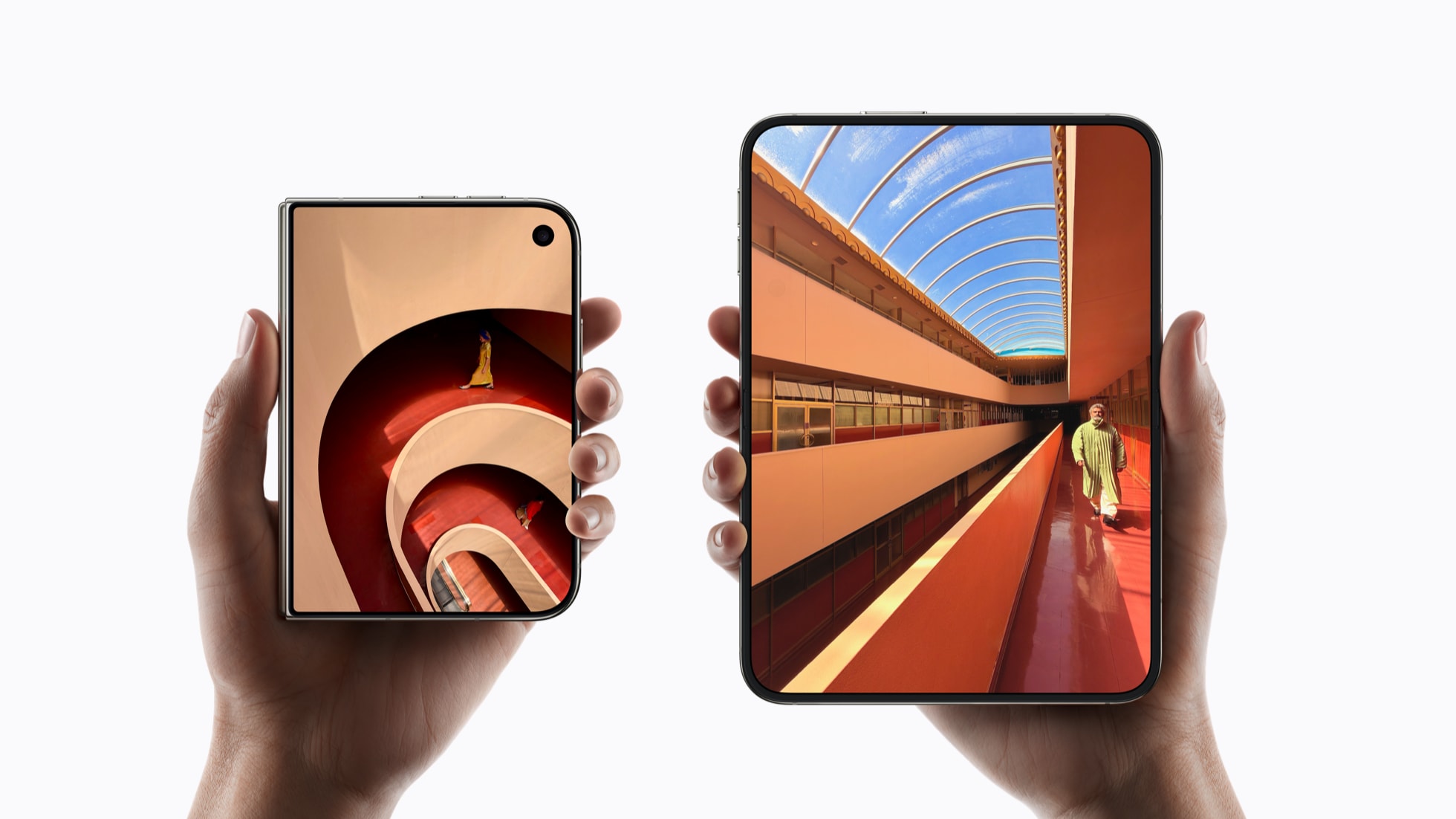
Apple will price its folding iPhone Duo from $1,999 as its new chief executive John Ternus presented the biggest shake-up to the smartphone in its nearly 20-year history alongside cost increases across the range.
The device unveiled on Wednesday, which will cost as much as $3,199 for the top-spec model, marks a record high for iPhone pricing. But the wider increases were less than some analysts had feared.
Ternus said the Duo, which folds out to a screen almost as large as an iPad Mini, would “redefine the experience of using a foldable phone” after rivals had “created foldables that just feel like two phones stuck together”.
The Duo has been in development for almost a decade and comes several years after Apple’s rivals Samsung and Huawei began selling their own foldable phones.
The annual iPhone launch event, held at Apple Park in Cupertino, California, is a crucial moment for the financial performance of the world’s second-most-valuable company.
Whether the new features and pricing on its latest models convince customers to upgrade their hardware is a major driver of smartphone sales, which make up half Apple’s revenue.
The event marked the first big public event for Ternus since he took over from Tim Cook last week. Cook was in the audience for the launch and appeared in an opening video in which he symbolically handed over to Ternus as the “main character”.
Apple said its iPhone 18 Pro and Pro Max models would be $100 more expensive than the comparable devices in last year’s 17 family, starting at $1,199 and $1,299 respectively.
The base model iPhone 18 will launch next spring, marking a new staggered way of releasing an iPhone line-up.Higher-end versions of the Duo with more storage will cost $2,599 for 1TB and $3,199 for 2TB.
The price increase reflects pressure from industry-wide component shortages, notably for memory chips, caused by the boom in data centre building.
This has left Apple with the choice to take a hit to its margins or pass the cost on to consumers, potentially affecting demand. Apple’s $100 price increase on its 18 Pro models was more modest than the worst-case scenarios foreseen by analysts.
Wamsi Mohan, analyst at Bank of America, said the price increase was “less than we thought across iPhones. We had expected $150-$200”.
He said the pricing decision “will enable Apple to take more [market] share but will pressure gross margins in the interim”, adding that the “Duo was extremely well designed”.
Apple is marketing the Duo as a top-of-the-line device that involves minimal trade-offs with its normal iPhone design. It promises the same chip as the iPhone Pro and similar battery life when using one screen, and roughly half as long when using both.
The 48-megapixel camera involves a trade-off from the bulkier camera on the Pro, which has a more advanced lens.
Critical to its success will be if users find the folding screen creases over time or is susceptible to damage, a common problem with foldable glass. Apple said it used a new custom polymer and a novel multilayer lamination technique for the screen, alongside titanium and carbon fibre support plates.
The company showcased how the device can be used to snap pictures while allowing the subject to see the frame and can be partially folded to stand up on its own.

While the high-priced phone could be popular among Apple’s most loyal fans, the product will be in short supply when it goes on sale in October because of the complexity of manufacturing its display and hinge.
UBS analysts expect it to sell about 10mn units in its first year, based on supply chain checks — a small fraction of the roughly 250mn iPhones sold every year.
“A key thing everyone is watching for is: can the iPhone revenue continue to grow at this double-digit year-on-year growth rate?”
JPMorgan analyst Samik Chatterjee said ahead of the event.
The iPhone accounts for about half of Apple’s revenue, generating $209.6bn in sales for the 2025 financial year. Last year’s iPhone 17 family surprised analysts with stronger than expected sales, driving record revenue.
The memory chip crunch is expected to only worsen in 2027, leading to price rises across the industry. Apple increased its iPad and Mac prices by about 20 per cent in June. The smartphone market is forecast to shrink by more than 14 per cent globally in 2026, according to Counterpoint Research.
Wednesday’s launch also marks the first generation of iPhones since Apple unveiled its new AI-powered Siri voice assistant, using Google’s technology, earlier this year after a botched initial launch.
Ternus, who appeared only briefly on Wednesday to introduce the videos of the new products, emphasised that the iPhone would be one of the primary ways that people access AI, acting as a “personal hub”.
The company showcased a new feature for Siri in its latest Apple Watch, “Siri Recap”, where the device will listen to conversations and store them with summaries and talking points.
%202%20(2).png)
%202.png)