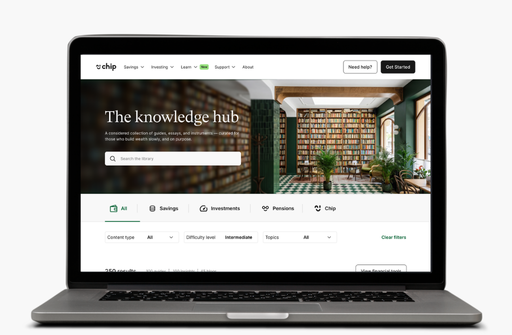
The knowledge hub

A considered collection of guides, essays, and instruments — curated for those who build wealth slowly, and on purpose.

0
results
Filter results
Filter by:
Content type
Difficulty level
Topics
0
results
View financial tools
What are stocks and how do they work?
2 min read
Beginner
Investing basics

How do stocks work?

Companies issue shares to raise money often through an initial public offering (IPO), which allows them to sell ownership stakes to investors.

Once listed on a stock exchange, these shares can be bought and sold by the public. 

The price of a share is driven by supply and demand. If more people want to buy a stock than sell it, the price goes up, and vice versa.

Market value (or market cap) is the share price multiplied by the total number of shares. 

Prices change based on company performance, news, investor sentiment, and broader economic factors.

‍

Why invest in stocks?

Investing in stocks gives you the chance to grow your money if a company's value increases over time.

Some stocks also pay dividends, a portion of company profits shared with shareholders, potentially providing regular income. 

Over the long term, stocks have historically outperformed cash savings and helped investors build wealth. While short-term ups and downs are normal, staying invested can pay off.

‍

How do stocks make you money?

As mentioned above, investors can potentially make money from stocks in two ways:

  1. Capital appreciation - this means the price of your stock has increased. When your appreciated money is invested in a stock, you won’t make a profit until you ‘realise’ your gains by selling it.
  1. Dividends - this is a share of a company’s profit, paid out to you in cash. Not all stocks offer dividends, and payouts are at the discretion of the company. 

‍

Types of stock explained‍

  1. Growth stocks aim for rapid expansion and often reinvest profits, so they may not pay dividends. 
  1. Value stocks are seen as undervalued by the market and could offer higher potential growth. 
  1. Dividend stocks regularly share profits with investors, providing income alongside potential growth. 
  1. Blue-chip stocks are large, established companies known for stability
  1. Penny stocks are low-priced and higher risk, often tied to smaller or newer businesses. 

Each type comes with its own balance of risk and reward, so it’s worth matching your picks to your goals and comfort level. Understand stock market basics.

‍

Risks of investing in stocks

Stock prices can rise and fall quickly due to market volatility, meaning there’s always a risk of losing money.

Emotional investing, like panic selling during downturns, can lock in losses and hurt long-term returns. 

It’s important to understand your risk tolerance and avoid reacting to short-term market noise.

Diversifying your investments and staying focused on long-term goals can help manage risk investments. A steady mindset is just as valuable as a strong portfolio.

‍

Stocks summary

Stocks let you buy a slice of a company, with the potential to earn through rising prices and dividends — though prices move up and down.

They’re a powerful tool for long-term growth, especially when you stay diversified and think long-term.

Next, we’ll explore investment bonds — typically a steadier asset than stocks that can offer regular income and help balance risk in your portfolio.

‍

FAQs

Is investing in stocks worth it?

Investing in stocks can be one of the most effective ways to grow wealth over time. While there are risks, stocks have historically outperformed cash savings and inflation, especially over a long-term investment horizon.

Do all stocks pay dividends?

No, not all stocks pay dividends. Some companies reinvest their profits to fuel growth instead. These are often called growth stocks, while dividend-paying stocks provide income alongside potential capital gains.

Which stock is best for beginners?

There’s no one-size-fits-all answer, but beginners often start with well-known, stable companies (blue-chip stocks) or consider index funds and ETFs, which spread your money across many stocks to lower risk.

‍

Direct investment into individual stocks is not available via the Chip platform. Chip offers investment funds that invest in different assets as a collective investment.

Economic indicators investors should know and watch
2 min read
Expert
Economic context

What is an economic indicator?

An economic indicator is a data point or set of statistics used to assess the performance of an economy. 

Governments and independent agencies regularly publish these indicators to provide insight into economic activity, trends and turning points.

Economic indicators are usually grouped into:

  • Leading indicators: Signal future economic activity.
  • Lagging indicators: Confirm trends that are already occurring.
  • Coincident indicators: Move in line with the economy.

‍

Main economic indicators for markets

There are a variety of economic indicators investors in the UK tend to watch. Some of the main indicators relevant to investing include:
‍

Gross domestic product (GDP)
  • Measures the total economic output of a country (the value of goods and services produced).
  • A key indicator of overall economic health and growth.
Consumer price index (CPI)
  • Used to measure inflation, which impacts interest rates and purchasing power.
  • Tracks changes in the price of a basket of goods and services.
Unemployment rate
  • Reflects the percentage of the workforce that is jobless and seeking work.
  • High unemployment rates may indicate economic distress. Low rates often signal economic strength. 
Bank of England base rate
Purchasing managers’ index (PMI)‍
  • A forward-looking indicator based on surveys of businesses.
  • Indicates trends in manufacturing and services activity.
Retail sales data‍
  • Tracks the value of goods sold by retailers.
  • A measure of consumer spending and confidence.
Balance of trade‍
  • The difference between imports and exports.
  • A trade surplus or deficit can impact currency value and market sentiment.
Consumer confidence index
  • Gauges how optimistic or pessimistic consumers feel about the economy.
  • Often aligned with future spending behaviour. 
Wage growth
  • Measures the pace at which average earnings are increasing.
  • Impacts inflation and consumer spending power. 

‍

Interpreting economic indicators as an investor

Economic indicators rarely tell a complete story in isolation. Context always matters when it comes to investing. For example:

  • Rising GDP might be positive, but if inflation is also climbing rapidly, it could signal overheating.
  • Low unemployment might boost consumer spending, but it could also lead to rising wages and higher inflation.

As an investor, it’s essential to consider how indicators interact and how markets might react; not just what the numbers say. 

‍

How to use the stock market as an indicator

The stock market itself can act as a leading economic indicator. Equity markets often reflect investor expectations about future growth, interest rates and corporate earnings.

Key stock market signs to watch can include:

  • Sustained market rallies often signal optimism about economic prospects. 
  • Sharp corrections or volatility may reflect economic uncertainty or risk aversion. 
  • Sector performance (such as consumer discretionary vs consumer staples) can hint at changing investor sentiment. 

Learn more about the stock market. 

‍

Advantages of economic indicators‍

  • Accessible and public: Most indicators are released on regular schedules and available to everyone.
  • Helps identify trends: Indicators reveal patterns in economic growth, inflation, employment and more.
  • Supports informed decision-making: Investors can use indicators to anticipate potential shifts in interest rates, asset prices or policy changes. 

‍

Disadvantages of economic indicators‍

  • Lagging effect: Some indicators only confirm trends after they’ve occurred.
  • Market overreaction: Markets and investors may respond emotionally or irrationally to a single data point.
  • Interpretation required: Indicators can be complex or give conflicting signals.  

‍

Economic indicators summary

For new and aspiring investors, economic indicators serve as essential signposts that help explain what’s happening in the broader economy. 

While they don’t predict the future with certainty, they offer valuable clues that can shape investment thinking and strategy. Understand how to build a passive income through investing. 

By learning to interpret these signals, alongside other tools and personal financial goals, you can make more informed, confident investment decisions in an ever-changing market environment. 

Biggest companies in Japan by market cap
2 min read
Intermediate
Global cap giants

What are the biggest companies in Japan by market cap?

This list ranks the biggest public companies in the Japanese market by market capitalisation. We’ll also highlight other key figures, such as revenue, gross profit, and 1-year return. Key facts like the company's exchange, founding year, and country are also covered.

‍

1. Toyota Motor Corp. 

  • Market cap: $246.8 billion
  • Revenue: $329.03 billion
  • Gross profit: $63.5 billion
  • 1-yr return: +14.38%
  • Exchange: TSE
  • Year founded: 1937
  • Country: Japan

Designs, produces, and sells a wide range of vehicles across several brands. Their philosophy is key to their success, focusing on eliminating waste and continuous improvement (“kaizen”). This has built them a reputation for quality and long-term reliability. 

  • Automotive sales: Largest source of revenue generated from sales of their core Toyota brand, their luxury division Lexus, and other brands like Daihatsu (small cars) and Hino (trucks). 
  • Hybrid technology: pioneer of hybrid tech with the iconic Prius, with future strategy focusing on a diverse approach to electrification, and investment in next-gen electric cars and solid-state batteries. 

‍

2. SoftBank Group Corp. 

  • Market cap: $194.89 billion
  • Revenue: $25.74 billion
  • Gross profit: N/A
  • 1-yr return: +137.88%
  • Exchange: TSE
  • Year founded: 1981
  • Country: Japan

A multinational conglomerate holdings company renowned for making huge, bold investments in the world’s boldest and most innovative tech companies.

  • Vision fund: one of the world’s largest venture capital funds, with multi-billion dollar investments in late-stage startups and public companies across sectors like Artificial Intelligence (AI), biotech, and fintech.
  • Arm holdings: its most valuable asset is its huge stake in the British firm that designs chips for most of the world’s smartphones, whilst maintaining interests in telecommunications and other technology assets. 

‍

3. Mitsubishi UFJ Financial Group 

  • Market cap: $174.52 billion
  • Revenue: $81.70 billion
  • Gross profit: $8.28 billion
  • 1-yr return: +59.18%
  • Exchange: TSE
  • Year founded: 2001
  • Country: Japan

Japan’s largest bank and one of the world’s leading full-service financial institutions.

  • Retail and commercial banking: serving millions of customers and businesses across Japan through its main banking unit, MUFG Bank, offering a full suite of services from deposits and loans to wealth management.
  • Corporate and investment banking: provides large-scale financing, treasury, and securities management services to multinational corporations and institutional investors globally. 

‍

4. Sony Group Corporation

  • Market cap: $171.37 billion
  • Revenue: $85.36 billion
  • Gross profit: $25.13 billion
  • 1-yr return: +60.77%
  • Exchange: TSE
  • Year founded: 1946
  • Country: Japan

A huge Japanese conglomerate that has evolved from a legendary electronics maker into a global entertainment and technology giant. 

  • Entertainment empire: Sony Gaming produces the iconic PlayStation, Sony Music is one of the world’s largest record labels, and Sony Pictures produces major Hollywood films and TV.
  • Technology: leader in high-end consumer electronics like Bravia TVs and Alpha camera, but its most critical business is imaging and sensing solutions, where it is a world leading manufacturer of the camera sensors used in a majority of smartphones, including the iPhone. 

‍

5. Hitachi Ltd.

  • Market cap: $130.93 billion
  • Revenue: $85.36 billion
  • Gross profit: $19.29
  • 1-yr return: +18.35%
  • Exchange: TSE
  • Year founded: 1980
  • Country: Japan

An industrial conglomerate that’s evolved from a heavy industry giant to a technology leader focused on IT and social industry.

  • Digital systems and services: IT solutions for its business customers focusing on data storage, AI, and its ‘Lumada’ Internet of Things platform (connects physical machinery to digital analytics).
  • Green energy, mobility and connective industries: build and maintain critical infrastructure, from high speed rail, power grids, construction machinery and advanced automotive components.

‍

6. Sumitomo Mitsui Financial Group 

  • Market cap: $104.08 billion
  • Revenue: $64.18 billion
  • Gross profit: N/A
  • 1-yr return: +33.19%
  • Exchange: TSE
  • Year founded: 2002
  • Country: Japan

One of Japan’s largest ‘megabanks’, SMFG is a major global financial institution and holdings company that operates globally in retail, corporate, and investment banking.

  • Sumitomo Mitsui Banking Corporation: the group's main subsidiary, providing retail and commercial banking services to millions of individual customers and corporate clients across Japan.
  • Corporate and investment banking: serves multinational clients with project financing and trade finance, alongside its securities division, SMBC Nikko Securities, which handles brokerage and underwriting. 

‍

7. Nintendo Co.

  • Market cap: $98.33 billion
  • Revenue: $10.12 billion
  • Gross profit: $5.04 billion
  • 1-yr return: +65.57%
  • Exchange: TSE
  • Year founded: 1889
  • Country: Japan

World famous pioneer of the video game industry. The mastermind behind the Wii, DS, Switch and a range of iconic games.

  • Consoles and hardware: core focus of the business, having evolved from the iconic Nintendo 64 and GameCube, to the Switch and 3DS.
  • Games: some of the world’s most valuable entertainment intellectual property, such as Super Mario, The Legend of Zelda, and Pokémon franchises, which are being expanded into movies and theme parks.

‍

8. Fast Retailing Co. 

  • Market cap: $95.33 billion
  • Revenue: $22.75 billion
  • Gross profit: $10.80 billion
  • 1-yr return: -2.63%
  • Exchange: TSE
  • Year founded: 1949
  • Country: Japan

Global fashion retail holding company that owns big names such as UNIQLO, GU, Theory and Helmut Lang.

  • UNIQLO: core business offering, operating thousands of stores worldwide. They focus on producing high-quality, functional and affordable basic apparel for a mass audience.
  • Other brands: focus on greater affordability through GU, and more premium offering through Theory.

‍

9. Keyence Corporation 

  • Market cap: $92.19 billion
  • Revenue: $7.27 billion
  • Gross profit: $6.08 billion
  • 1-yr return: -12.61%
  • Exchange: TSE
  • Year founded: 1972
  • Country: Japan

A global leader in the development and manufacturing of factory automation sensors, measurement systems, and other industrial electronics.

  • Tech: its core business involves creating high-tech products like sensors, vision systems, and laser markers that are essential for automating production lines in industries such as automotive, electronics, and food packaging.
  • Sales: the company is renowned for its unique direct-sales business model, where a highly-trained salesforce works directly with customers on-site to solve complex engineering problems, leading to exceptionally high profit margins and a deep understanding of market needs.

‍

10. Mitsubishi Corporation

  • Market cap: $88.25 billion
  • Revenue: $123.26 billion
  • Gross profit: $11.27 billion
  • 1-yr return: +15.42%
  • Exchange: TSE
  • Year founded: 1950
  • Country: Japan

Japan’s largest general trading company, Mitsubishi is a vast conglomerate that trades in nearly everything and acts as a major global investor.

  • Commodities and products: traditional business trades everything from sourcing and distributing energy, metals and chemicals to food and machinery.
  • Strategic investor: takes significant ownership stakes in businesses and develops large-scale industrial projects, such as power plants, mining operations, and retail enterprises around the world.

‍

What are the biggest companies by total annual revenue?

  • Toyota Motor Corp.: $320.52 billion 
  • Honda Motor Co Ltd.: $144.71 billion 
  • Mitsubishi Corporation: $124.23 billion 
  • Itochu Corporation: $98.18 billion 
  • Mitsui & Co Ltd.: $97.78 billion

‍

What are the biggest companies by workforce?

  • Toyota Motor Corp.: 383,850
  • NTT Inc.: 341,320 
  • Sumitomo Electric Industries Ltd.: 288,140
  • Hitachi Ltd.: 282,740 
  • Japan Post Holdings Ltd.: 218,720

‍

Summary

Understanding a company's performance is crucial; it's how you truly know what you own. These metrics directly drive the value of your stocks and funds. When you understand these key drivers, you can navigate market changes with confidence, rather than just reacting to headlines.

Next we’ll be looking at the biggest companies in the USA by market cap.

All market data sourced from TradingView and company reports as of 06.10.2025.

Understanding the Base Rate
2 min read
Beginner
Rates, Tax & Economics

The Bank of England Base Rate, also known as Bank Rate, holds significant influence over the UK's financial landscape, impacting borrowing costs, mortgage rates, and savings interest. 

It's important to understand the Bank of England Base Rate and how it affects your financial decisions. In this guide, we'll explain what the Bank of England Base Rate is, how it influences interest rates, its impact on the economy, and why it plays a role in influencing spending and inflation.

‍

What are Interest Rates?

Interest rates refer to the percentage charged or earned on borrowed money or invested funds. 

Lenders charge interest on loans as compensation for the risk and opportunity cost of lending money, while savers earn interest on their deposits as a reward for entrusting their funds to financial institutions. Learn more about interest rates.

‍

What is the Bank Rate?

Bank Rate, often referred to as the Bank of England Base Rate, is the key interest rate set by the Bank of England. It acts as a tool for controlling inflation and stabilising the economy. 

The Bank of England assesses economic conditions and adjusts Bank Rate accordingly to support the government's inflation target and ensure economic stability.

‍

How Bank Rate Affects Your Interest Rates:

Changes in Bank Rate have a ripple effect on various interest rates throughout the economy. Here's how it influences your financial decisions:

  • Mortgage rates: Bank Rate influences the cost of borrowing for banks, impacting the interest rates they offer on mortgages. When Bank Rate rises, mortgage rates tend to increase, making borrowing more expensive. When Bank Rate decreases, mortgage rates may go down, providing potential savings for homeowners.
  • ‍Savings interest rates: Bank Rate also affects the interest rates offered on savings accounts. Higher Bank Rates generally result in higher savings interest rates, potentially increasing the returns on your savings. Lower Bank Rates may lead to reduced savings interest rates.

‍

How Changes in Bank Rate Affect the Economy:

Changes in Bank Rate have a significant impact on the broader economy. Here are some key effects:

  1. Borrowing costs: Changes in Bank Rate directly influence the cost of borrowing for individuals, businesses, and financial institutions. Higher rates increase borrowing costs, potentially curbing spending and investment. Lower rates encourage borrowing and stimulate economic activity.
  2. ‍Inflation: Bank Rate plays a crucial role in managing inflation. When inflation is rising, the Bank of England may increase Bank Rate to reduce spending and control price increases. During economic downturns, lowering Bank Rate can encourage borrowing and spending, boosting economic activity.

‍

Why Does Bank Rate Influence Spending and Inflation?

Bank Rate influences spending and inflation primarily through its impact on borrowing costs. When borrowing becomes more expensive due to higher interest rates, individuals and businesses may reduce their spending, leading to a potential slowdown in economic activity and inflation.

Lower interest rates make borrowing cheaper, encouraging spending, investment, and economic growth. How do interest rates affect inflation? 

‍

Bank Rate Summary

Understanding the Bank of England Base Rate is crucial for making informed financial decisions in the UK. The rate directly affects interest rates on mortgages and savings, impacting borrowing costs and potential returns. 

Changes in Bank Rate have far-reaching effects on the broader economy, influencing spending, investment, and inflation levels.

Meet the UK’s “Dashing Dozen”
2 min read
Expert
Global cap giants

When we think of stock market stars, it’s often the US names like Apple, Microsoft, and Nvidia that grab the headlines. But closer to home, a group of UK-listed companies has been quietly outperforming the wider market for years.1

They’ve been dubbed the “Dashing Dozen”. These are twelve firms that have consistently flown the flag for the UK.
A recent feature in MoneyWeek highlighted them for substantially outperforming the stock market and “clearly doing something right” so let’s take a look.

‍

Who are the Dashing Dozen? 

This group spans a range of sectors — from defence and engineering to gaming and data services. Some familiar names include:

  • BAE Systems – benefiting from increased global defence spending.
  • Rolls-Royce – rebounding strongly with a surge in aerospace demand.
  • Games Workshop – the maker of Warhammer, proving that niche hobbies can mean big business.
  • Next – a high-street and online retail giant with a proven ability to adapt and thrive

Other members of the Dashing Dozen include: London Stock Exchange Group (LSEG), Halma, Diploma, Goodwin, Cohort, Concurrent Technologies, RELX, and 3i Group.

What they have in common is a track record of consistent growth, with all 12 businesses profitable and all paying dividends1. These are qualities that appeal to investors building a long-term portfolio.

Always remember, when considering any investment, a diverse portfolio across different asset classes, sectors and regions can manage risk and smooth returns.

‍

Why it matters to you

For years, FTSE 100 has been seen as a bit sluggish compared to US markets, but the “Dashing Dozen” prove that the UK market still packs some punch. 

While not a guarantee of future performance, they do highlight that businesses with durable advantages and strong demand – in sectors like defence, data, and gaming – can offer investors both resilience and opportunity.

So next time you think about your portfolio mix, remember: sometimes the dash for growth doesn’t require looking across the Atlantic – it could be right here at home.

‍

How Chip can help you take advantage

With Chip, we offer a range of index funds such as the FTSE 100, that include all of these high-growth companies in a single investment, as well as other popular indexes like the NASDAQ 100 and S&P 500.

Open a Stocks & Shares ISA in minutes, invest from £1, and manage everything right from our app. Just go to the ‘Invest’ tab to get started.

‍

What is an investment time horizon?
2 min read
Beginner
Portfolio building

Understanding investment time horizons

Investment time horizons will vary depending on where you are in your investing journey, your strategy and typically, your age. These timelines are not necessarily fixed, and horizons may evolve over time with changing market conditions, retirement and tax rules, and your goals. 

‍

Short-term investment horizon

Short-term investing is any holding period up to five years. These investments wouldn’t be appropriate for higher risk assets like stocks, as immediate market downturn could derail your progress towards a short-term goal without giving your portfolio the necessary time to recover. 

Lower-risk investments like short-term bonds, money market funds, or high interest savings accounts allow you to focus on capital preservation, and aim to outpace inflation, without the potential for big price swings.

These might be suitable for investors who need easy access to their cash, such as those approaching retirement. 

‍

Medium-term investment horizon

Medium-term investing is any holding period up to ten years. These investments have some time to ride out the ups and downs of the market and potentially benefit from compounding returns. 

A balanced allocation between higher risk assets like stocks and funds, and lower risk assets like bonds and money market funds can offer some protection whilst aiming to outperform inflation and generate some growth. Investors could tailor their approach to a more aggressive or defensive strategy based on their risk tolerance and goals. 

Read our full guide on aggressive and defensive investing strategies. 

‍

Long-term investment horizon

Long-term investing is any holding period of more than ten years. These investments have the most time to ride out the ups and downs of the markets, so investors may want to consider a higher portion of equities in their portfolio to take advantage of this. 

Goals associated with long-term investments are typically retirement or setting money aside for your family to inherit. You aren’t just putting money away, you’re planting a seed for the long-term, on the belief that the global economy will grow over a long period of time. 

Read our full guide on retirement and long-term investing. 

‍

How to plan your investment goals

Aligning your investment horizon with your goals, risk tolerance and capacity for loss is essential; and not doing so could be costly.

For example, trying to build your entire retirement fund in five years isn’t likely to be successful, and going all in on higher-risk assets might leave you overexposed to risk, and potentially worse off than you’d be if you just focused on preserving capital.

It might feel tempting to speculate when markets are moving in a positive direction, but the ‘fear of missing out’ on a good stock market rally often kicks in before a market bubble is about to burst.

So, make a plan for each investment and stick to it as making too many decisions can be a costly mistake for investors trying to reach a specific goal. 

See our full guide on behavioural investing and common mistakes.

‍

Investment time horizon summary

Short-term goals (under 5 years) prioritise capital preservation, favouring lower-risk assets like bonds and savings accounts. Medium-term horizons (up to 10 years) allow for a balanced approach, mixing stocks and bonds to achieve growth while managing risk.

For long-term goals (10+ years), such as retirement, investors might take on more risk with a higher allocation to equities, allowing maximum time for growth and to recover from any market downturns.

Aligning your goals, risk tolerance and capacity for loss with the correct time horizon can potentially prevent costly mistakes, like taking on too much risk for a short-term need or being too conservative for long-term growth.

Annuities
2 min read
Intermediate
Accessing your pension

What is an annuity? 

An annuity is a type of insurance product that allows you to exchange some or all of your pension for a guaranteed, regular income once you reach the minimum pension retirement age (currently 55, rising to 57 in 2028) 

It is a popular option for savers who want a certain payout each month, removing the risk of leaving a portion of your pension pot invested.

The trade off is that you won’t benefit from any investment growth, and generally annuities can’t be changed once set up. 

‍

How does an annuity work? 

An annuity works by handing over a lump sum of pension savings to an insurance company. This provider will calculate and offer an ‘annuity rate’ based on your life expectancy and market interest rates.

For example, a rate of 6% would mean that for every £100,000 of your pension paid to the provider, they would pay you £6,000 a year for the rest of your life. 

  • If you live to be 100 your insurer loses money but you would likely profit. However, if you passed away two years after buying your plan, the insurer usually keeps the rest of the pot, unless you purchased specific guarantees. 
  • Once you purchase a lifetime plan, the decision is usually irreversible. You cannot change your mind or ask for your lump sum back. 

‍

The main types of annuity 

If you’ve decided an annuity is right for you, you can tailor it to suit your specific needs, but every feature you add will affect the rate you’re offered. 

  • Lifetime annuity: This pays you a regular income for the rest of your life, no matter how long you live. This may be the best protection against the ‘longevity risk’ of living longer than your savings allow. 
  • Fixed-term annuity: This pays you a fixed amount for a set period, like five or ten years. At the end of your term you may also get back a ‘maturity amount’, which you can use to buy another plan or move into drawdown. 
  • Index-linked annuity: This type of plan will start with a lower payout, but increase each year to track inflation, and protect the purchasing power of your payments. 
  • Single-life annuity: These are designed for a single person. When this person dies, payments are stopped and the plan ends. Typically these offer a higher starting rate, because the insurer expects to pay out for a shorter time. 
  • Joint-life annuity: This continues to pay an income to your spouse or partner after you die. You usually choose what percentage they receive e.g. 50% or 100% of your income. Because the insurer expects to pay out for longer, the starting rate is lower than a single-life policy.
  • Enhanced annuity: This is a type of lifetime annuity that pays a higher guaranteed income if you have certain health conditions or lifestyle factors (like smoking or high blood pressure) that may shorten your life expectancy. As the insurer expects to pay out for a shorter period they offer a more generous rate.
  • Purchased life annuity (PLA): This provides a guaranteed income bought with cash savings rather than a pension pot. The primary benefit is tax efficiency, as the government treats a large portion of each payment as a tax-free ‘return of capital’. 

‍

How to buy an annuity? 

When buying an annuity, consider the following:

  1. The most important rule of buying an annuity is to consider your options. The first offer you get may not necessarily be the best, and you can potentially boost your income for free!
  2. Make sure you make accurate health declarations. When getting quotes, you’ll be asked health related questions, and it's important you're totally honest. If you smoke, are overweight, or have conditions like diabetes or high blood pressure, insurers may offer you an ‘enhanced annuity’. Lower life expectancy means they can afford to pay a higher income. 

‍

Annuity vs drawdown 

Choosing between annuity and flexible drawdown is a big decision, so consider the following factors:

  • Income security: Annuities guarantee an income, whereas flexible drawdown accepts a degree of uncertainty because of investment performance.
  • Flexibility: Annuities have low flexibility as income is fixed once set up. Drawdown is highly flexible as you can adjust your income whenever you like.
  • Investment risk: Annuities carry no investment risk, this risk is transferred to your insurer. Drawdown can be a  higher risk as your investments can move up and down in value.
  • Death benefits: Annuities generally have poor death benefits and income stops when you die (unless joint-life). If you choose to draw your own income, the remaining pot will be passed on to your beneficiaries.

Annuities are generally suited to people who want peace of mind and essential income covered. Flexible drawdown is better for people who want full control, and some potential growth at the expense of taking on some risk. 

‍

What happens to your pension when you die?

Historically, pensions have been one of the best vehicles for passing wealth down the generations because they aren’t included in your legal estate, meaning they’re usually not liable for inheritance tax. However, this is handled differently depending on what type of pension you have, and the age at which you die.

Note: from April 2027, unspent pension pots are expected to become subject to inheritance tax, this may affect how you think about drawdown vs annuity

Read our next guide for more understanding.

‍

Financial Advice

Chip does not provide financial advice, if you’re unsure what pension options are right for you, speak to a regulated financial adviser. They’ll be able to guide you through your options and give you advice based on your personal circumstances. 

You can find regulated and impartial advisers through the MoneyHelper website. Or, if you’re over 50 you can get free and impartial guidance through Pension Wise.

Biggest companies in Europe by market cap
2 min read
Intermediate
Global cap giants

What are the biggest companies in Europe by market cap?

This list ranks Europe’s biggest public companies by market capitalisation: the cumulative value of a company's total outstanding market shares. We’ll also be highlighting other key figures, such as the company's revenue, gross profit, and 1-year return (all based on the previous fiscal year). 

Some other key facts such as the exchange the company is listed on, the founding year and country the company is headquartered in are also covered.

‍

1. SAP SE

  • Market cap: $317.7 billion
  • ‍Revenue: $37.56 billion
  • ‍Gross profit: $26.98 billion
  • ‍1-yr return: +20.62%
  • ‍Exchange: XETR
  • ‍Year founded: 1972
  • ‍Country: Germany

SAP is a global leader in enterprise application software. Its systems are a cornerstone of modern business operations.

  • Cloud & software: Provides cloud-based solutions and traditional software for managing business operations and customer relations, including ERP (Enterprise Resource Planning).
  • Services: Offers expert support, implementation services, and training to help customers maximize the value of their SAP applications.

‍

2. LVMH Moët Hennessy Louis Vuitton

  • Market cap: $292.83 billion‍
  • Revenue: $94.62 billion‍
  • Gross profit: $65.34 billion‍
  • 1-yr return: -21.76%‍
  • Exchange: EURONEXT‍
  • Year founded: 1987‍
  • Country: France

LVMH is the world's largest luxury goods conglomerate, managing a diverse portfolio of prestigious brands.

  • Fashion & leather goods: The largest division, featuring iconic brands like Louis Vuitton, Christian Dior, and Fendi.
  • Wines & spirits: Owns world-renowned champagne and cognac houses such as Moët & Chandon, Hennessy, and Dom Pérignon.
  • Watches, jewellery, & retail: Includes brands like Tiffany & Co., Bulgari, and TAG Heuer, alongside selective retailers like Sephora.

‍

3. ASML Holding N.V.

  • Market cap: $286.99 billion‍
  • Revenue: $30.13 billion‍
  • Gross profit: $15.48 billion‍
  • 1-yr return: -13.77%‍
  • Exchange: EURONEXT‍
  • Year founded: 1984‍
  • Country: Netherlands

ASML is a critical player in the semiconductor industry, holding a near-monopoly on the production of extreme ultraviolet (EUV) lithography machines.

  • Lithography systems: Designs and manufactures the complex machines that chipmakers like TSMC, Samsung, and Intel use to create the circuitry on microchips. These systems are essential for producing the most advanced processors in the world.

‍

4. Roche Holding AG

  • Market cap: $259.40 billion‍
  • Revenue: $66.27 billion‍
  • Gross profit: $46.06 billion‍
  • 1-yr return: -3.58%‍
  • Exchange: SIX‍
  • Year founded: 1896‍
  • Country: Switzerland

Roche is a global pioneer in pharmaceuticals and diagnostics, focusing on advancing science to improve people's lives.

  • Pharmaceuticals: A world leader in oncology (cancer treatments) and also develops medicines for immunology, ophthalmology, and infectious diseases.
  • Diagnostics: Provides a wide range of innovative diagnostic tests and systems that help doctors detect, diagnose, and monitor diseases.

‍

5. Novo Nordisk A/S

  • Market cap: $252.19 billion‍
  • Revenue: $36.70 billion‍
  • Gross profit: $30.87 billion‍
  • 1-yr return: -60.12%‍
  • Exchange: OMXCOP‍
  • Year founded: 1923‍
  • Country: Denmark

Novo Nordisk is a global healthcare company with a primary focus on treating chronic diseases, particularly diabetes.

  • Diabetes & obesity care: The world's leading supplier of insulin and has seen massive growth from its highly effective GLP-1 treatments for diabetes and weight loss, such as Ozempic and Wegovy.
  • Rare diseases: Develops and markets biopharmaceutical products for treating hemophilia and other rare blood and endocrine disorders.

‍

6. Hermès International SCA 

  • Market cap: $251.24 billion‍
  • Revenue: $14.86 billion‍
  • Gross profit: $10.45 billion‍
  • 1-yr return: -21.56%‍
  • Exchange: EURONEXT‍
  • Year founded: 1837‍
  • Country: France

Hermès is an icon of high-end luxury, renowned for its exceptional craftsmanship, exclusivity, and timeless designs.

  • Leather goods & saddlery: The core of its business, famous for its highly sought-after Birkin and Kelly handbags.
  • Other categories: Produces a wide range of luxury goods, including silk scarves, ties, ready-to-wear fashion, perfumes, and watches.

‍

7. AstraZeneca PLC

  • Market cap: $245.98 billion‍
  • Revenue: $47.92 billion‍
  • Gross profit: $39.42 billion‍
  • 1-yr return: -5.88%‍
  • Exchange: London Stock Exchange‍
  • Year founded: 1913‍
  • Country: United Kingdom

AstraZeneca is a global, science-led biopharmaceutical company with a focus on creating innovative prescription medicines.

  • Oncology: A world leader in cancer treatments, which forms a significant and growing part of its revenue.
  • Biopharmaceuticals: Develops medicines for major disease areas like cardiovascular, respiratory, and immunology.

‍

8. L'Oréal S.A.

  • Market cap: $244.94 billion‍
  • Revenue: $45.93 billion‍
  • Gross profit: $33.72 billion‍
  • 1-yr return: +3.01%‍
  • Exchange: EURONEXT‍
  • Year founded: 1909‍
  • Country: France

L'Oréal is the world's largest cosmetics and beauty company, with a vast portfolio of brands covering all segments of the market.

  • Consumer products: Mass-market brands like Maybelline, Garnier, and L'Oréal Paris.
  • Luxe: High-end brands including Lancôme, Kiehl's, and Yves Saint Laurent Beauté.
  • Active cosmetics: Dermatological skincare brands such as La Roche-Posay and CeraVe.
  • Professional products: Supplies hair salons with brands like Kérastase and Redken.

‍

9. Novartis AG

  • Market cap: $240.15 billion‍
  • Revenue: $50.31 billion‍
  • Gross profit: $37.89 billion‍
  • 1-yr return: +3.91%‍
  • Exchange: SIX‍
  • Year founded: 1996‍
  • Country: Switzerland

Novartis is a global healthcare company that provides solutions to address the evolving needs of patients worldwide.

  • Innovative medicines: Focuses on developing and marketing patented prescription drugs across various therapeutic areas, including cardiovascular, immunology, and neuroscience.
  • Sandoz (generic & biosimilars): Operates a major division that produces generic pharmaceuticals and biosimilars after patents on original drugs have expired.

‍

10. Nestlé S.A.

  • Market cap: $237.10 billion‍
  • Revenue: $105.13 billion‍
  • Gross profit: $49.52 billion‍
  • 1-yr return: -16.87%‍
  • Exchange: SIX‍
  • Year founded: 1866‍
  • Country: Switzerland

Nestlé is the largest food and beverage company in the world, with a massive portfolio of well-known brands.

  • Powdered & liquid beverages: Includes major coffee brands like Nescafé, Nespresso, and Starbucks (packaged).
  • PetCare: A global leader with brands such as Purina, Friskies, and Fancy Feast.
  • Nutrition & health science: Produces infant formulas, health supplements, and medical nutrition.
  • Confectionery & packaged food: Owns iconic brands like KitKat, Maggi, and Toll House.

‍

What are the biggest companies by total annual revenue?

  • Volkswagen Group: $305.98 billion 
  • Shell: $265.74 billion 
  • TotalEnergies: $208.61 billion 
  • Mercedes-Benz Group: $166.70 billion 
  • Uniper SE: $121.36 billion

‍

What are the biggest companies by workforce?

  • Volkswagen Group: 684,013 
  • DHL Group: 594,439 
  • Schwarz Gruppe: 575,000 
  • Compass Group: 550,000 
  • Tesco: 337,255

‍

Summary

Understanding a company's performance is crucial; it's how you truly know what you own. These metrics directly drive the value of your stocks and funds. When you understand these key drivers, you can navigate market changes with confidence, rather than just reacting to headlines.

Next we’ll be looking at the biggest companies in China by market cap.

All market data sourced from TradingView and company reports as of 04.09.2025.

Saving challenges 2026
2 min read
Savings Strategies & Tips

Savings challenges have taken off because they make the often daunting task of saving money simple, engaging, and motivating.

By "gamifying" the process, they help people build consistent money habits with a clear structure that’s easy to follow.

The key is choosing a savings challenge that fits your lifestyle, so here’s a look at some of the most popular ones, so you can work out which one might suit you best.

‍

The £1 a day challenge:

What is it?: Save £1 every day for a year and you’ll end up with £365.‍

Why it works: This is one of the simplest challenges out there, and that’s exactly why it works. The amount is small, predictable and easy to commit to. Making it ideal if you’re new to saving or just want to rebuild the habit.‍

Best for: People starting from scratch, or anyone who wants to take things slow and steady, this challenge can ease you in.

‍

The 1p challenge:

What is it?: Start by saving 1p on day one, then increase by 1p each day. By the end of the year, you’ll have saved £667.95.‍

Why it works: This challenge eases you in gently, with very small amounts at the start and larger ones towards the end of the year. It’s satisfying to watch it grow in value

‍Best for: Those who like visible progress and don’t mind gradually increasing contributions daily over time.

‍

The monthly incremental challenge:‍

‍What is it?: Start with £10 in January, £20 in February, £30 in March... This increases each month until December. By the end of the year, you’ll have saved £780.‍

Why it works: This challenge lines up neatly with monthly pay cycles and feels manageable even as amounts grow. It’s also easier to plan around than daily saving.‍

Best for: Monthly savers who want predictability without the effort of adding money daily.

‍

The 52-week challenge:

What is it?: Save £1 in week one, £2 in week two, all the way up to £52 in week 52 (a total of £1,378).‍

Why it works: This is a popular one for a reason. It gives you a clear weekly target and works well if you’re paid monthly or weekly. You can also flip it and start with the bigger amounts first – whatever works for you‍

Best for: Anyone who likes structure and wants a more meaningful savings pot by the end of the year.

‍

The fiver challenge:

What is it?: Save £5 in week one, £10 in week two, £15 in week three. All the way to £260 in week 52. Giving you a total of £7,000.‍

Why it works: This one isn’t for the faint-hearted, and can really supercharge your savings. Contributions ramp up quickly, so you’ll need planning and discipline to stay on track but it can be very powerful if you’re saving for something big.‍

Best for: Higher earners or experienced savers working towards a large, time-bound goal.

‍

The no-spend challenge:

‍What is it?: Pick a week, fortnight or a month where you only spend on essentials, and move everything else you would’ve spent into a savings account‍

Why it works: This is a bit different as it isn't about saving fixed amounts, it’s more about awareness of your spending. It can be hard to stick to, but for many people this can be eye-opening, and the chance for a bit of a reset.    ‍

Best for: Anyone who likes to challenge their willpower, reset and quickly boost savings with no tech or maths required.

‍

So… which one should you choose?

The best savings challenge is the one you’ll actually stick to.

If you’re building confidence, start small. If you’re saving for something specific, choose a challenge that lines up with your goal. And, if you’ve fortunate to have more disposable income, push yourself to save those bigger amounts.

Remember, you don’t have to follow these rules perfectly. Tweaking amounts, skipping weeks, or restarting is still progress. Saving isn’t about being perfect. ‍

‍

How Chip can help

Savings challenges work best when they’re automated and that’s exactly where we come in.

‍With our smart recurring deposits, Chip can regularly move money into a savings account for you automatically, so you don’t have to remember every contribution yourself.‍

With our Goals feature, you can set clear targets and track your progress in the app, whether you’re aiming for £365, £7,000 or beyond.

Whatever challenge you choose, Chip helps turn good intentions into real results - and earn interest while you do it.

Learn more about our savings accounts.

Thank you! Your submission has been received!
Oops! Something went wrong while submitting the form.