



.avif)







‘I had a superpower’ Investors pile into brain implants
Start-ups developing thought-controlled technology are drawing venture capital funding from Silicon Valley to Beijing
%202%20(1).png)

Not to be redistributed, copied or modified in anyway. FT and Financial Times are trademarks of the Financial Times Limited.
Chip has hosting rights to certain limited Financial Times articles. This is not a live feed of Financial Times content.
All commentary and opinions are those of independent FT journalists and experts, not those of Chip. Chip does not give financial advice.
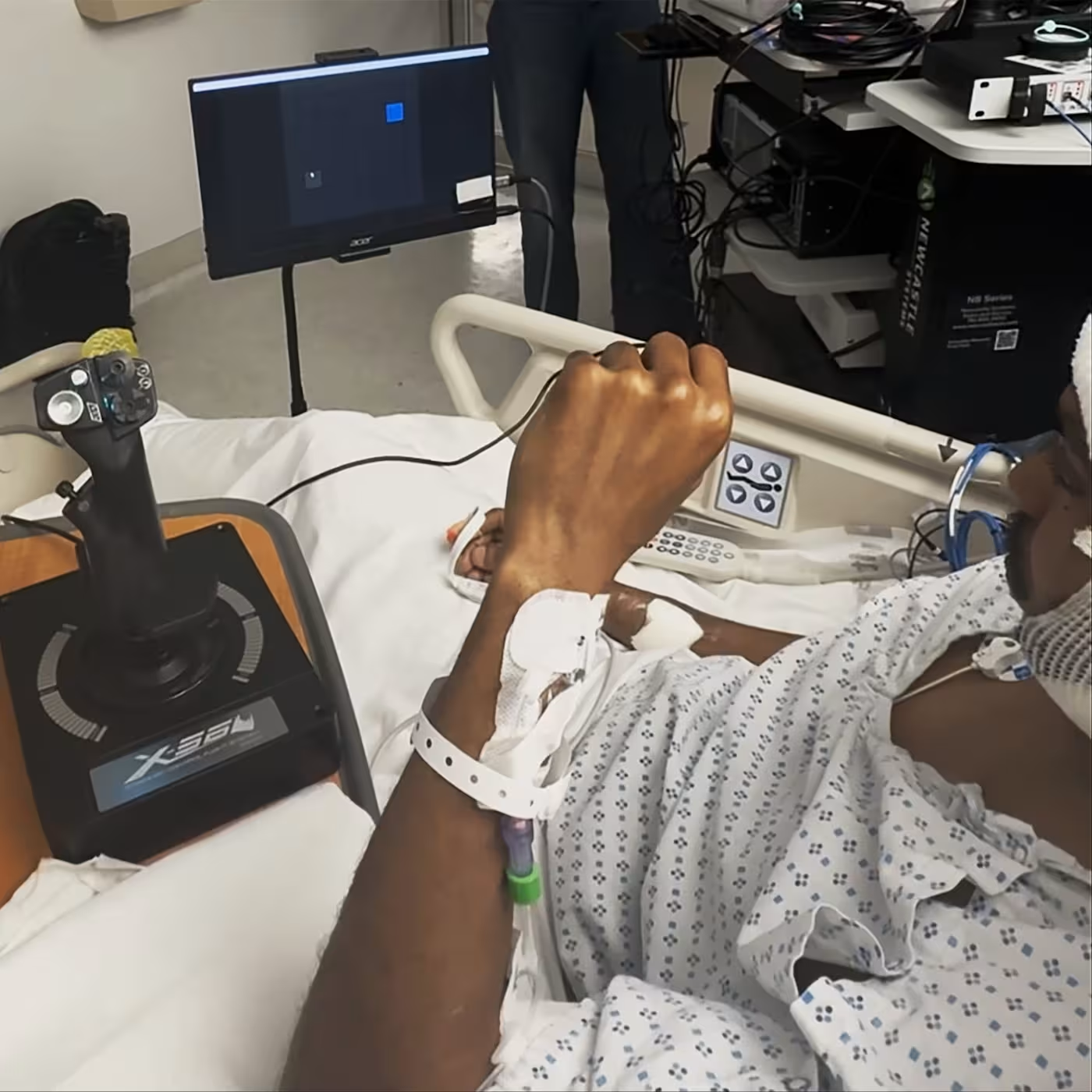
Jasaun Knight remembers the first time he operated a PC using only his brain.“The experience of controlling a computer with my thoughts, moving a cursor around the screen and playing games, was mind-blowing,” said the 35-year-old American. “It was like telekinesis.
I felt I had a superpower.”Knight is one of fewer than 200 people worldwide who have been implanted with a brain-computer interface (BCI) — a device that detects neural activity and translates it into digital commands.
BCIs have the potential to restore speech and movement to people who have lost them through injury or disease. If the technology becomes safe and affordable, it could turn computers and artificial limbs into more direct extensions of the human body, reshaping the relationship between people and machines.
Companies developing BCIs have already raised more than $1bn in 2026, according to PitchBook data, compared with $1.56bn in the previous four years combined.
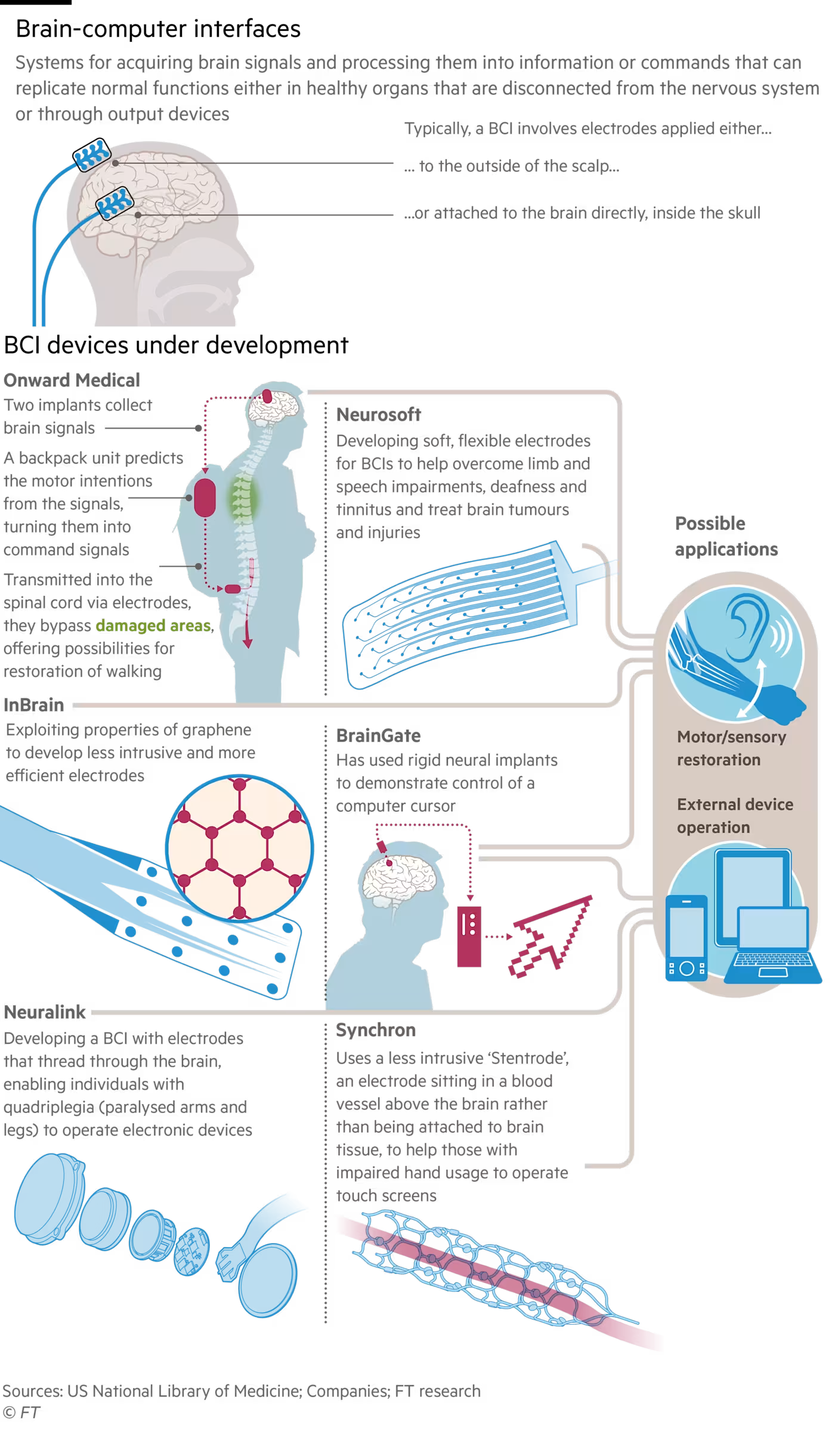
Neuralink, founded by Elon Musk a decade ago, is the best-funded, having raised more than $1.3bn in seven rounds. But dozens of competitors are pulling in substantial investments as they pursue a range of approaches to connecting computers to the nervous system.
“The field is advancing rapidly as investors move into neurotechnology, though it has already been well characterised and validated in academia,” said Michael Mager, chief executive of New York start-up Precision Neuroscience, which made Knight’s implant. “We in industry are now taking this transformative technology and making it into products that will have a broad impact.”
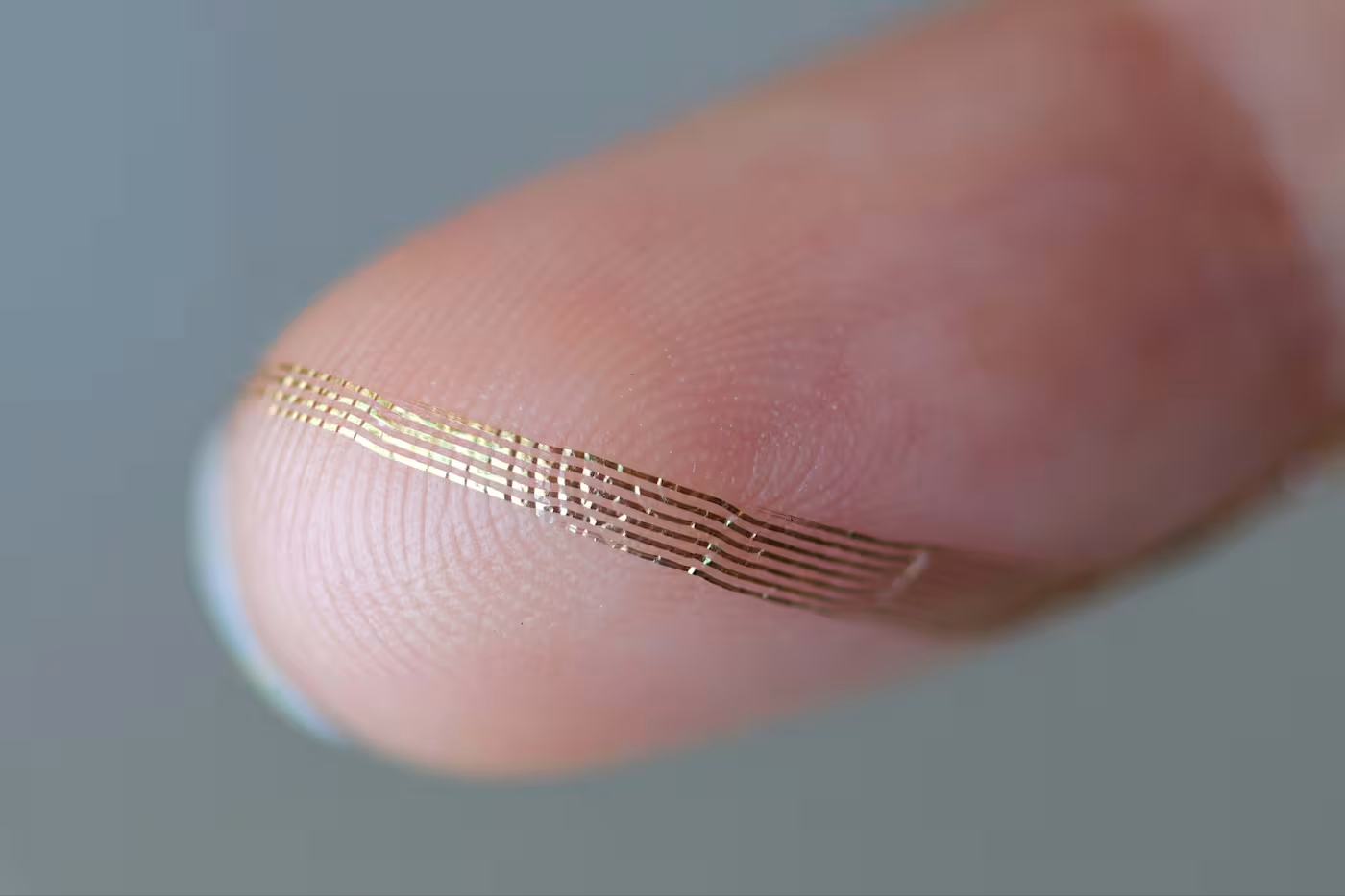
The most ambitious companies are developing “invasive” devices inserted through a surgical incision in the skull. Some, like Neuralink, have electrodes that penetrate the brain and are designed for long-term use. Others, including Precision Neuroscience, are developing thin, flexible BCIs that sit on the surface of the brain without piercing it.
Knight received his device during surgery for brain cancer as part of a clinical trial that lasted a few days.
“I didn’t feel anything physically in my head,” he said. “Once you get the hang of it, your thoughts control what’s happening on the computer screen with no effort at all. ”Another area of research involves non-invasive systems placed on the scalp, which avoid the need for surgery altogether.
However, although they can be useful for diagnosis and research, the brain signals they receive are weakened by passing through the skull, and the devices are not yet sensitive enough to convert thoughts into dependable computer instructions. “All the hype and the funding is going into implantable BCIs,” said Damien Coyle, director of Bath University’s Institute for the Augmented Human.
“With non-invasive techniques the spatial resolution of signals is not so good, but they have a lot of scope for development over the next few years, for example to modulate brain activity. ”US companies including Synchron, Blackrock Neurotech, Axoft and Merge Labs benefit from deep American venture capital markets and a Food and Drug Administration that executives regard as more responsive than regulators in Europe.
But a cluster of innovative BCI companies is emerging in Europe, among them CorTec in Germany, Onward Medical in the Netherlands, Spain’s InBrain, and Neurosoft and Ability Neurotech in Switzerland.
“The advantages of a European location lie in our deep engineering and precision manufacturing heritage as well as our talent in neuroscience,” said Frank Desiere, CorTec chief executive.
However, he added that Europe “has a real gap in late-stage funding and scale-up capital, as well as a fragmented reimbursement landscape”, and that the continent lacked a regulator “guiding and consulting manufacturers like in the US”.
The company has chosen US sites — the University of Washington and Mayo Clinic — for the first clinical trials of its BCIs.
Meanwhile, the industry is also growing rapidly in China following Beijing’s designation of BCIs last year as a nationally strategic sector, with a roadmap to create two to three “world-class” companies by 2030.
Several provinces have launched investment funds and industrial zones, backed start-ups and supported hospitals running clinical trials.
Private investors have followed suit. In the first half of 2026, VCs poured Rmb7bn ($1bn) into the broader neurotech sector across 60 investments, according to ITJuzi data.
Roughly a dozen Chinese companies are working on invasive BCI devices, according to a tally by the FT, with a much larger number developing non-invasive applications.
One leader in the field is NeuroXess, founded in Shanghai in 2021, which is developing flexible implants to treat severe neurological disorders.
Analysts say China has a strong advantage with its large patient population for clinical trials and regulatory support for accelerating the technology’s development.
Most BCIs work in one direction, reading signals from the brain and turning them into electronic commands. But some companies are developing systems that can also send signals back, creating a two-way exchange between brain and machine known as closed-loop stimulation.
CorTec is among them. “It’s like having a dialogue with the brain, adapting our therapy to the individual signals of the patient,” said Desiere. “In strokes we target the motor cortex, reading and stimulating the cells there so that they fire together. Neurons that fire together wire together.
”One of neurotech’s biggest opportunities may come when BCIs converge with another rapidly advancing field: prosthetics. Artificial limbs have been around since ancient times but developments in sensors, materials, batteries, motors and software are making them lighter, more capable and easier to control.
Bristol-based Open Bionics makes arms fitted with sensors that detect movement in a user’s remaining muscles and transmit the signals to the prosthetic hand.
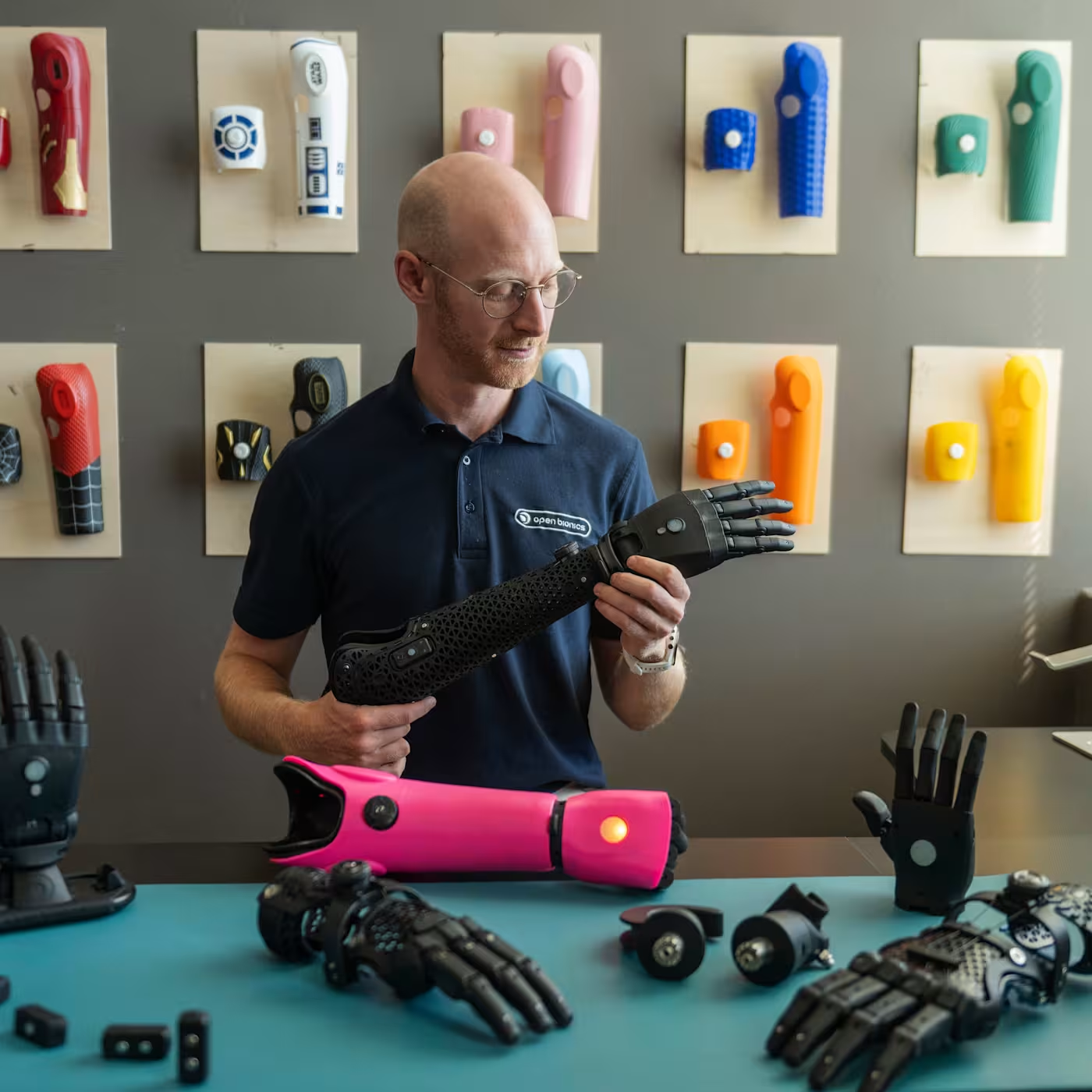
While the investment climate has fluctuated during the company’s 12-year existence, its revenues have grown at a compound annual rate of 60 per cent since 2018.Yet even the most advanced artificial hands lack much of the dexterity and sensation of the biological original.
The technical capability to build a hand that replicates many natural movements already exists, according to Joel Gibbard, Open Bionics co-founder and chief executive. But the systems used to control them remain “very, very rudimentary” — a problem BCIs have the potential to resolve.
Researchers hope a direct link to the brain could eventually provide the missing interface — and, if signals flowed both ways, restore a sense of touch.Meanwhile, Open Bionics is embracing the superhero associations of its technology.
Its Hero Arm offers children designs based on characters from franchises including Black Panther and Metal Gear through licensing agreements with companies including Disney.“There are technical limitations for today, but what people think about for the future is inspired by movies and science fiction,” said Gibbard.
Back in New York, Knight, a former insurance agent who is now training as a software engineer, is considering a new career in neurotech — helping to develop the kind of systems he helped test.“After my experience,” he said, “I’d probably be a perfect candidate.”
%202%20(2).png)
%202.png)