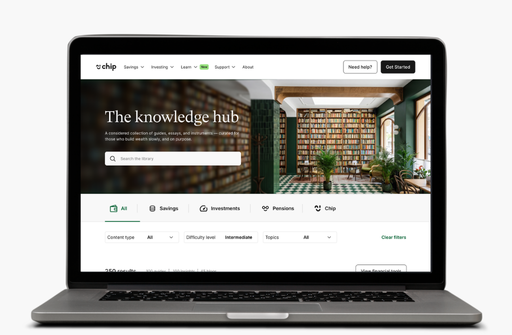
The knowledge hub

A considered collection of guides, essays, and instruments — curated for those who build wealth slowly, and on purpose.

0
results
Filter results
Filter by:
Content type
Difficulty level
Topics
0
results
View financial tools

Claude thinks I’m an investment dunce

2 min read


I’m convinced I have friends whose birthdays pop up way more often than once a year. Each time, I worry I’ve screwed up in my Google Calendar. To call or not? Get it wrong and they’ll know I haven’t a clue when the real date is.  

But, like losing my car in a multistorey parking lot, the “annual” FT Weekend Festival in London is on another level. It seems as if I’m in the Money tent every few months. Indeed, I began my presentation last weekend with the words “As I was saying…”  

Time flies by as you get old. And then along comes artificial intelligence to make analysts of my generation feel prehistoric. I spent millions of hours building valuation models. AI can do them in minutes.  

This is why my editor Nathan reckoned that it would be amusing to pit my aged investment brain against Claude live on stage this year. “Can an AI chatbot make a better portfolio than you?” was the title of our session, by which he meant me.  

Regular readers may remember that I asked ChatGPT to construct an optimal portfolio for me in February. Back then, though, I held nothing but cash in my pension fund. It was a blank slate for AI to work on.  

It was also before the war in Iran, the subsequent sell-off in equities and the sharp rebound soon after. SpaceX had not begun trading on 95 times revenues — revenues! — either. Bond yields weren’t yet wobbling knees.  

To recap, I told ChatGPT about my goal of reaching a million pounds by 2032. It recommended a portfolio comprising 35 per cent in developed equities, 10 per cent in emerging market stocks, 20 per cent in bonds, half that in private equity and a quarter in alternatives.  

I was impressed. Not only with the fact that OpenAI’s chatterbot had read every academic paper ever written on portfolio construction, but that it knew when to overcomplicate things and — more importantly — when not to.  

How would Claude fare by comparison? And what would it make of my current holdings now that I am up to my gullet in equity funds again? First, though, I had to pay for and learn how to use Claude.  

The FT’s resident expert, Tom Ursell, came to the rescue and ultimately joined Nathan and me on stage at the festival too (watch a replay here). He also showed me under Claude’s hood where you can insert things called “skills”.  

A skill is a reusable bundle of instructions that teaches Claude how to perform a specific task. So, for starters, we made sure that its answers were turned into slides that could be seen from the back of a tent.  

More importantly, though, Tom included the following: “Build a model investment portfolio using traditional fund and portfolio management theory (investment policy statements, capital market assumptions, modern portfolio theory/mean-variance optimisation, strategic asset allocation, diversification, rebalancing rules).”  

I couldn’t have said it better myself — and I encourage readers who are keen to use Claude (or other AIs with similar functions) to copy and paste the skill above before asking their own investment questions.  

So what did it think of my portfolio? Claude wasn’t impressed — by which I mean its suggested weightings across various asset classes were very different from my own. It was quite patronising, too. “Here are the trades I’d recommend in plain English,” it said more than once.  

It reckons I should have 63 per cent in equities versus the 82 per cent I have today. It would chop my 30 per cent exposure to the UK (which it witheringly called a “single-country bet wearing a diversification costume”) down to 10 per cent and halve the fifth of my portfolio in Asia — likewise Japan, which my Asia fund excludes. As for Latin America, that goes to 3 per cent.  

Claude was even more dismissive of one UK gilt being my only fixed-income holding. Too idiosyncratic. Too much reinvestment risk — whatever that means. “No credit exposure, no maturity ladder?” it asked. I was tiring of Claude’s tone.  

Instead, it recommended that I raise my bond weighting from 18 to 25 per cent, adding a global aggregate bond ETF (a broad mixture of government and corporate bonds) to my lonely 10-year gilt.  

And finally, it wanted to push me into having a tenth of my portfolio in infrastructure (roads, ports, bridges, railways and the like) versus the zip I have currently. A big difference, but then again ChatGPT said I needed 15 per cent in so-called real assets.  

Taken together, Claude calculated that the mix above would spit out a 6.3 per cent annual return — close enough to the 6.6 per cent I need for my portfolio to reach seven figures before my 60th birthday.  

Quite a low equity weighting, remarked a few members of the festival audience. Yes, that’s because my short timeframe can ill afford too much stock volatility. For comparison, we gave Claude a 20-year time horizon and no £1mn target, and it immediately raised the weighting to 78 per cent.  

Others in the crowd wondered why we didn’t use Claude’s large brain to come up with a more radical portfolio — with hedging. When we asked it to, however, it failed to appreciate that most of the strategies it recommended (long-dated out-of-the-money puts and so forth) were not available for most UK retail investors to buy.  

“Get it to compare Stuart’s performance with Norway’s sovereign wealth fund,” someone from the rear of the tent shouted towards the end of our session. Turns out our annualised returns are an identical 14 per cent since my first Skin in the Game column almost four years ago.  

I promise the question wasn’t planted — my mum lives in Australia.  

The author is a former portfolio manager.

The tax-free lump sum
2 min read
Expert
Accessing your pension

What is the tax–free lump sum?

The tax-free lump sum is a feature of UK private pensions that allows you to withdraw up to 25% of your total pension pot without paying any Income Tax. This option is sometimes referred to as Uncrystallised Fund Pension Lump Sums (UFPLS). 

Unlike the other 75% of your pension, which is taxed as earnings when you withdraw it, this 25% portion can be withdrawn to your bank account in full. You do not need to take it all at once; you can take it in stages, or you can leave it invested if you don't need the cash immediately.

‍

How much of my pension can I take tax-free?

You can normally take 25% of your private pension savings tax-free, but there is a strict lifetime allowance on the total amount of tax-free cash you can draw.

This is called the Lump Sum Allowance (LSA).

  • The current LSA cap is £268,275
  • This represents 25% of a pension pot of £1,073,100. Anything beyond this amount is treated as taxable income. 

Some older pensions with ‘protected’ rights allow for a higher tax-free amount than 25%. Check your policy documents to see if this applies to you.

‍

Can I take my pension as a lump sum? 

You could technically take your entire pension at once, as a lump sum. However, if you cash in the whole pot, usually:

  • 25% is tax-free
  • The remaining 75% is taxed as income

It’s worth noting if you do decide to do this, the 75% taxable portion is added to your income that year. If you withdraw a large pot, this could easily push you into the Higher (40%) or Additional (45%) rate tax bracket; meaning you’d be taxed a huge chunk of your pension.

Note: There are several exceptions to the standard 25% tax‑free rule. These include serious ill‑health (where the whole pot may be tax‑free), small pots under £10,000, older pensions with protected tax‑free cash, defined benefit schemes with different calculation rules, and certain death‑benefit situations.

‍

Do I have to declare my pension lump sum? 

No, you do not need to declare the tax-free portion of your pension as it is not taxable income. However, if you take any cash beyond your tax-free Lump Sum Allowance, your provider will deduct tax before paying you. 

Providers typically have to apply an ‘emergency tax code’ to your first withdrawal, which may result in them over-taxing you initially. You would then have to reclaim this overpaid tax from HMRC.

‍

Lump sum: pay off your mortgage or invest? 

A common question for pension savers is whether to use their tax-free lump sum to pay off some, or all of their mortgage or to leave the money invested. Both options have advantages but the right choice depends on their personal circumstances.

Paying of your mortgage:

  • By paying off debt, you effectively earn a ‘guaranteed return’ equal to your mortgage interest rate. If your mortgage rate is 5%, paying it off saves you that 5% interest cost. 
  • Being mortgage-free would likely also reduce your monthly outgoings, meaning you need less income from your pension to cover your expenses.. 

Staying invested:

  • If your investments grow faster than the interest you’re paying on your mortgage, for example, it’s returning 7-8% to your 4% mortgage interest, you could come out ahead.
  • Property is an ‘illiquid’ investment — once your money is locked into property, it’s more difficult to access quickly. Keeping the funds in a savings or investment account usually leaves them more readily accessible.

‍

Pension drawdown

When thinking about what to do with the remaining taxable 75% of your pension pot, you have a couple of options. The first option covered in the next guide is the most popular; flexible drawdown. 

Flexible drawdown allows you to pay yourself an income of your choosing from your invested pension pot. It gives you the freedom to take as much or as little as you like, but it also means you’re responsible for managing your withdrawals and ensuring your money lasts throughout retirement.

‍

Investment Portfolio Management
2 min read
Expert
Investing basics

What is portfolio management? 

Portfolio management is the ongoing process of you selecting, monitoring and adjusting your investments to meet your financial goals.

It’s not just about choosing a few investments and crossing your fingers – it’s about seeing the full picture and making smart, informed choices.

That means thinking about the mix of investments you own (also called asset allocation), how much investment risk you’re taking, and making regular adjustments as life or market conditions change.

Done well, it can help you grow your wealth steadily while keeping risk at a level you’re comfortable with.

‍

Investment portfolio management examples

The following portfolio management strategies are commonly used:

Cautious portfolio: Might include a large portion of bonds and cash, with a smaller slice in equities.
Great for:
people close to retirement or those who don’t want much risk.
Balanced portfolio
: Typically splits investments between equities and bonds, aiming for moderate growth with manageable risk.
Great for:
long-term investors who want a bit of both worlds.: Heavier on equities (including global and emerging markets), and lighter on bonds or cash. 
Great for:
investors with a higher risk tolerance and a longer time horizon.

These are just examples; your ideal portfolio depends on your goals, timeline, and how much market fluctuation you’re okay with.

‍

DIY investing vs managed portfolios

There are two main tracks you can go down with your portfolio:

‍DIY Investing

You pick and manage all your investments yourself.‍

Great if: you like having full control, enjoy researching markets, or want to tailor things really specifically. But it requires time, confidence, and a steady hand when markets wobble.

Managed Portfolios

You choose a risk level, and a provider (like Chip) builds and maintains a diversified portfolio for you.‍

Great if: you want a more hands-off approach, but still want exposure to the market. You’ll usually pay a small fee for this convenience, but it can be well worth it if it helps you stay invested long-term.

‍

What is asset allocation & why it matters?

Asset allocation is the mix of different asset classes in your portfolio – typically things like equities (stocks), bonds, cash, and sometimes alternative assets like property or commodities.

Getting the mix right is crucial. Why? Because it’s one of the biggest factors that affects your portfolio’s overall risk and return.

  • More equities – higher potential returns, but also more ups and downs.
  • More bonds – lower risk, but also lower growth.

Your ideal allocation depends on your goals and how long you’re planning to invest. This is not set in stone, and it can (and should) shift over time.

‍

How to rebalance your investment portfolio

Over time, some of your investments will grow faster than others, which means your portfolio can drift away from your original asset allocation. That’s where rebalancing comes in.

Rebalancing means adjusting your investments to bring them back in line with your target allocation.

For example, if stocks have surged and now make up 80% of your portfolio instead of your intended 60%, you might sell some and buy more bonds or cash-equivalents.

Some managed portfolios (like what’s listed on the Chip app) automatically rebalance for you. If you’re doing it yourself, you might want to set a calendar reminder every 6 or 12 months to review your allocation.

‍

Understanding behavioural investing & common mistakes

When it comes to investing, your emotions can be your worst enemy. Many investors panic-sell when markets fall, or chase after the latest stock or trend, only to end up buying high and selling low. 

This is known as behavioural investing, and it’s often where people slip up. The majority of investment gains are dampened by a degree of investor error, and generally the less decisions you can make, the better. 

The next guide in our series will dive into this in some more detail. 

‍

Biggest companies in the UK by market cap
2 min read
Beginner
Global cap giants

What are the biggest companies in the UK by market cap?

This list ranks the UK’s biggest public companies by market capitalisation; the cumulative value of a company's total outstanding market shares. We’ll also be highlighting other key figures, such as the company's revenue, gross profit, and 1-year return (all based on the previous fiscal year). 

Some other key facts such as the exchange the company is listed on, the founding year and country the company is headquartered in are also covered.

‍

1. AstraZeneca PLC

  • Market cap: £182.77 billion
  • Revenue: £43.67 billion
  • Gross profit: £31.67 billion
  • 1-yr return: - 10.57%
  • Exchange: London Stock Exchange
  • Year founded: 1913
  • Country: United Kingdom

AstraZeneca is a global, science-led biopharmaceutical company that focuses on the discovery, development, and commercialisation of prescription medicines.

  • Pharmaceuticals: A leading developer of treatments in major disease areas.
  • Global reach: Its innovative medicines are used by millions of patients worldwide.

‍

2. HSBC Holdings PLC

  • Market cap: £164.23 billion
  • Revenue: £110.12 billion
  • Gross profit: N/A 
  • 1-yr return: + 42.14%
  • Exchange: London Stock Exchange
  • Year founded: 1959
  • Country: United Kingdom

HSBC is one of the world’s largest banking and financial services organisations, serving customers worldwide from offices in 62 countries and territories.

  • Wealth and personal banking: Provides a range of services from current accounts and mortgages to wealth management and insurance for individuals.
  • Commercial banking: Offers banking services to small, medium-sized, and large corporations.
  • Global banking and markets: Provides financial services and products to corporate, government, and institutional clients.

‍

3. Shell PLC

  • Market cap: £158.58 billion
  • Revenue: £212.38 billion
  • Gross profit: £36.13 billion
  • 1-yr return: - 0.33%
  • Exchange: London Stock Exchange
  • Year founded: 2002
  • Country: United Kingdom

Shell is a global group of energy and petrochemical companies with a focus on the entire energy value chain.

  • Integrated gas and upstream: Explores for and extracts crude oil, natural gas, and natural gas liquids. It also markets and transports oil and gas.
  • Downstream and renewables: Turns crude oil into a range of refined products, which are moved and marketed around the world for domestic, industrial, and transport use. It is also investing heavily in low-carbon energy solutions like biofuels, hydrogen, and wind power.

‍

4. Unilever PLC

  • Market cap: £114.06 billion
  • Revenue: £50.24 billion
  • Gross profit: N/A
  • 1-yr return: - 5.63%
  • Exchange: London Stock Exchange
  • Year founded: 1930
  • Country: United Kingdom

Unilever is one of the world's leading suppliers of Beauty & Wellbeing, Personal Care, Home Care, and Nutrition products with sales in over 190 countries.

  • Global brands: Owns over 400 brands, including Dove, Ben & Jerry's, Knorr, Lipton, Magnum, and Persil.
  • Consumer reach: Its products are used by 3.4 billion people every day.

‍

5. British American Tobacco PLC

  • Market cap: £91.37 billion
  • Revenue: £25.6 billion
  • Gross profit: £16.58 billion
  • 1-yr return: + 46.86%
  • Exchange: London Stock Exchange
  • Year founded: 1902
  • Country: United Kingdom

British American Tobacco (BAT) is a leading, multi-category consumer goods business that provides tobacco and nicotine products to millions of consumers around the world.

  • Traditional tobacco: A leading global seller of cigarettes with brands like Dunhill, Kent, and Lucky Strike.
  • New categories: Investing heavily in a portfolio of non-combustible products, including vapour (Vuse), heated tobacco (glo), and modern oral nicotine pouches (Velo).

‍

6. Rolls Royce Holdings 

  • Market cap: £90.23 billion
  • Revenue: £19.54 billion
  • Gross profit: £4.77 billion
  • 1-yr return: + 119.47%
  • Exchange: London Stock Exchange
  • Year founded: 1906
  • Country: United Kingdom

A world-leading industrial technology company that provides complex power and propulsion solutions for critical applications.

  • Civil aerospace: Designs and manufactures engines for large commercial aircraft like the Airbus A350 and Boeing 787.
  • Defence: A key supplier of engines for military aircraft and naval vessels worldwide.

‍

7. Rio Tinto PLC

  • Market cap: £78.93 billion
  • Revenue: £41.53 billion
  • Gross profit: £10.08 billion
  • 1-yr return: - 4.47%
  • Exchange: London Stock Exchange
  • Year founded: 1873
  • Country: United Kingdom

Rio Tinto is a leading global mining group that focuses on finding, mining, and processing mineral resources.

  • Key materials: A major producer of iron ore for steel, aluminium for cars and smartphones, copper for wind turbines, and other essential minerals.
  • Global operations: Owns and operates open pit and underground mines, mills, refineries, and smelters, as well as a network of railways and ports.

‍

8. BP PLC

  • Market cap: £66.81 billion
  • Revenue: £144.2 billion
  • Gross profit: £22.79 billion
  • 1-yr return: - 1.11%
  • Exchange: London Stock Exchange
  • Year founded: 1908
  • Country: United Kingdom

BP is a global integrated energy company that delivers solutions for heat, light, and mobility.

  • Oil and gas: Focuses on exploration, production, and refining of oil and natural gas.
  • Convenience & mobility: Operates a large network of retail service stations.
  • Low carbon energy: Investing in renewable energy sources, including bioenergy, hydrogen, and wind and solar power, as part of its transition to a net-zero company.

‍

9. RELX PLC

  • Market cap: £62.96 billion
  • Revenue: £9.53 billion
  • Gross profit: £5.99 billion
  • 1-yr return: - 4.01%
  • Exchange: London Stock Exchange
  • Year founded: 1903‍
  • Country: United Kingdom

A global provider of information-based analytics and decision tools for professional and business customers.

  • Risk: Provides data and tools for evaluating risk for industries like insurance and banking.
  • Scientific, technical & medical: A major academic publisher through its Elsevier division.

‍

10. GSK PLC

  • Market cap: £58.51 billion
  • Revenue: £31.63 billion
  • Gross profit: £22.68 billion
  • 1-yr return: + 13.88%
  • Exchange: London Stock Exchange
  • Year founded: 1715‍
  • Country: United Kingdom

GSK (formerly GlaxoSmithKline) is a global biopharma company with a focus on uniting science, technology, and talent to get ahead of disease together.

  • Vaccines: A world-leading vaccine business, providing protection against a range of infectious diseases.
  • Specialty medicines: Develops and manufactures innovative medicines for areas such as HIV, respiratory diseases, and immunology.

‍

What are the biggest companies by total annual revenue?

  • Shell: £214.24 billion
  • Glencore: £180.76 billion
  • BP: £148.05 billion
  • HSBC: £116.6 billion
  • Tesco: £69.92 billion

‍

What are the biggest companies by workforce?

  • Tesco: 336,430
  • HSBC: 211,000
  • Glencore: 150,000
  • Unilever: 120,040

‍

Summary

Understanding a company's performance is crucial; it's how you truly know what you own. These metrics directly drive the value of your stocks and funds. When you understand these key drivers, you can navigate market changes with confidence, rather than just reacting to headlines.

Next we’ll be looking at the biggest companies in Europe by market cap.

All market data sourced from TradingView and company reports as of 01.09.2025.

How to build a balanced portfolio
2 min read
Intermediate
Portfolio building

Building a balanced portfolio

Building a balanced investment portfolio is key to smoothing out the ups and downs of the stock market, and ensuring that your long-term goals stay on track. Quick reminder: your portfolio (in investing terms) refers to all the different investment assets you own — stocks, bonds, ETFs, commodities etc. 

Spreading your investments between different assets can help mitigate against overexposure, if the price of a particular asset class suffers a downturn. 

‍

Focus on your financial goals first

Grounding your investment choices in your goals is a great way to get the most out of your portfolio. Whatever you’re investing in, it’s good to have an idea of why you chose a particular investment and what purpose it serves. 

Investing is best suited to those long-term goals, the outdoor office, that pricey furniture making course, Wimbledon final tickets, turning those big spends that feel out of reach now into your new standard of living. 

A balanced portfolio aims to give investors steadier, long-term growth, as mitigating risk between different assets has historically provided positive returns over a longer period of time. 

See our guide on retirement and long-term investing. You can track your goals and seamlessly link them to an investing account in the Chip app. 

‍

Assessing your investing risk tolerance

Determining your risk tolerance is key to balancing your portfolio. If you have a longer time horizon to invest, you may be able to tolerate some more risk, as historically markets have always trended upwards over time. 

If you’re approaching retirement, your risk tolerance may be lower as you get closer to your target date.

Some investors choose to allocate a greater portion of lower-risk assets like bonds or cash equivalents, with the aim of preserving capital.

On the other hand, those with more than ten years to stay invested, may take more risk; aiming for greater long-term growth despite short-term volatility.

The right balance depends on your comfort with potential losses, your financial situation, and how long you plan to keep your money in the market.

See our guide on risk, return and investing strategies for a deeper dive.

‍

Understanding asset allocation

Asset allocation is simply how you split your investments between different types of assets — like stocks, bonds, property, or commodities. Each type behaves differently over time.

  • Stocks can offer higher growth potential, but also come with bigger price swings.
  • Bonds usually provide lower, steadier returns and can act as a buffer during market downturns.
  • Cash equivalents (like savings accounts) are the safest, but offer the lowest returns.‍
  • Alternative assets (like gold or real estate) can add extra diversification.

Your mix of these assets should reflect both your goals and your risk tolerance. Someone with decades before retirement might have a higher proportion of stocks, while someone nearing retirement might hold more bonds and cash.

See our guide on asset classes for more details.

‍

Diversification

Diversification means not putting all your eggs in one basket. By spreading investments across different asset types, industries, and countries, you reduce the impact of poor performing funds dragging down your whole portfolio.

For example, if tech stocks are having a bad year, gains from bonds or commodities could help cushion the blow. A well-diversified portfolio aims to smooth out returns and make the ride less bumpy over the long term.

‍

Rebalance your portfolio regularly

Over time, some investments will grow faster than others, changing your original asset allocation. This “drift” can increase your risk without you realising it.

Rebalancing means checking your portfolio regularly, every six months or so, and moving money between assets to get back to your target allocation. It’s like course-correcting on a long journey to make sure you stay headed towards your goals. 

We have a whole series dedicated to various investment strategies that can help you stay on track.

‍

How to build a balanced portfolio summary

Balancing your portfolio starts with knowing your goals, understanding your risk tolerance, and picking an asset allocation that fits both. From there, diversifying and rebalancing are key to managing risk and keeping your plan on track.

Next up in this series: What is asset allocation and why it matters.

What is a Savings Account?
2 min read
Beginner
Accounts & Products

How does a Savings Account Work?

‍Banks tend to offer a range of savings accounts with various interest rates. When you deposit money into a savings account, the bank will usually pay a small amount of interest on that money, which means that your balance will grow over time.

You can usually withdraw money from a savings account at any time unless it’s an account which requires you to send a notice to withdraw funds.

In general, savings accounts are a safe and easy way to help save money and earn interest on that money too. Learn some money saving tips.

‍

What Types of Savings Accounts are available in the UK?

‍There are a variety of savings accounts available in the UK. Some of the more common accounts are:

  1. Easy Access Savings Account: This type of savings account allows you to deposit and withdraw money at any time, typically with no notice period or penalty for withdrawals. They usually have no minimum deposit requirements. Learn more.
  2. Notice Savings Accounts: These accounts require you to give notice before making a withdrawal, usually 30, 90 or 120 days. Notice accounts tend to have a higher interest rate than easy access accounts.
  3. ISA (Individual Savings Account): ISAs are tax-free savings or investment accounts that allow you to save money without paying tax on the interest earned. There are different types of ISAs, such as cash ISA or stocks and shares ISA.

Chip does not provide tax advice. Tax treatment depends on individual circumstances and may be subject to change in the future.

It’s always important to do your own research into the various savings accounts available and find one that best fits your needs.

‍

Opening up a Savings Account

‍It’s typically very simple to open up a savings account. However, you should make sure you do your research to ensure you open a savings account that’s right for you. Some tips for finding the right savings account include:

  1. Interest Rate: Look for savings accounts that have a high AER (annual equivalent rate). The higher the AER, the more interest you can earn through deposits and the account balance. Learn more about interest rates.
  2. Fees: Some savings accounts may come with fees, which could be for monthly maintenance or fees for withdrawing. Make sure you check the terms and conditions to ensure you don’t have to pay unexpected fees.
  3. Accessibility: You should consider whether your cash can be instantly accessed or you need to give notice to withdraw funds. As a general rule you shouldn’t put savings you may need to access instantly in notice or fixed term savings accounts.
  4. Minimum Deposit Requirement: Some savings accounts require a minimum deposit to open the account, while others don’t. Choose an account that best fits your financial situation.

It’s a good idea to shop around and compare the different savings accounts available, to find the one that best fits your needs.

Our vision for an AI wealth guide
2 min read
Accounts & Products

We want to build something game-changing

We’re working on something exciting at Chip HQ – an AI powered guidance tool designed to give you personalised financial guidance.

Traditionally, financial guidance and advice has been out of reach and expensive. We think that new technology can make financial guidance smarter, faster and most importantly – more accessible to everyone.

In this blog we’ll share with you why we’re building it, what it will mean for your money, and how in the future, this new tool could bring you a level of personalised support that was previously only available to a select few.

‍

Why we are building an AI guide

One of the most common pieces of feedback we hear is: “I have savings, but I don’t know if I am on the right track to achieve all my plans.”

For over eight years, we’ve been helping people grow their wealth, but we know saving is only the first step. The real challenge is figuring out what comes after.

That’s why we’re building a personalised AI guide: to make financial guidance available to everyone.

With the game-changing power of AI, we would be able to help our customers not just save, but help them achieve their ambitions and goals too.

‍

The vision: what our AI will do

The concept is to start with an AI guide to help you understand your goals and how you can achieve them faster.

Our ambition will be to evolve it into a powerful tool that can build a personalised guide to plan your entire wealth journey.

However, a quick caveat: there’s no shortcuts to us building this - we’ll need to do a lot of hard work with the regulator to make sure we’re doing this properly and explore the best way to build it (it’s cutting edge stuff!).

But here’s our ultimate vision of where we want to take it.

‍

Start with a conversation

Imagine this: discuss your goals and ambitions — where you are now and where you want to get to.

Chip’s AI wealth guide would then build a personalised guide based on this conversation, suggesting which savings and investments accounts to open, how much to put into a pension vs an ISA, what short and long term goals to set, and recommend an automated plan to effortlessly top up your savings.

You would be able to review the suggestions, easily tweak them to fit your needs in an open discussion and when you’re happy, you simply say “make it so” and Chip’s AI could crack on with the leg work – opening the accounts, initiating deposits, transfers, with all the admin done for you.

‍

You’re in control

Let’s be very clear: this wouldn’t be about surrendering control of your money. You would have complete authority and full visibility in the app, with clear graphs, portfolio views, and progress trackers to keep you on top of your goals.

You’d be able to pre-program nudges for yourself and book in regular reviews, and at any time simply discuss with the AI to update the plan for you if your ambitions grow or circumstances change.

We believe that this will help you achieve your financial goals with greater simplicity and confidence.

And don’t worry, you’ll always be able to interact with a real person at Chip when you need us.

‍

How we’re building it

You would interact with the tool through a large language model (LLM) – think of it as your conversational guide, ready to answer questions and help you navigate financial decisions.

Behind the scenes, an intelligence layer will analyse your data to provide personalised, actionable recommendations tailored to your situation.

And of course, we’ll be rigorously testing the AI and putting strong guardrails in place, so everything stays compliant, safe, and focused on delivering the best outcomes for you.

We’ve already applied to join the Financial Conduct Authority’s (FCA) development “sandbox”  which would allow us to test it alongside the FCA. If granted approval, we will have support from the regulator and access to the Nvidia AI Enterprise software suite which will accelerate our ability to build and refine our AI tech stack further.

Our ultimate goal, as we say above, is that our AI wealth guide will be able to connect to your accounts, offering actionable recommendations and taking the heavy lifting off your shoulders – bringing you the sort of service that was previously reserved for the very wealthy.

‍

The wider context: why we’re doing this

There are big changes coming together in our industry right now:

  1. A game-changing new technology

The use of AI has exploded over the past couple of years, since ChatGPT first burst onto the scene in 2023.

We believe we can be at the cutting edge of this technology in our sector as we’ve seen a huge opportunity to leverage AI to disrupt the financial advice sector and bring advice to everyone.  

‍

  1. Once in a generation reforms

Adding to the mix, the Financial Conduct Authority (FCA) has just introduced a “once-in-a-generation”1 reform to the financial advice industry, allowing firms to offer targeted support to customers, opening up the door for innovation here at Chip.

The FCA’s research shows the gap we can close:

  • 24% of people with over £10,000 in cash savings don’t invest because “they don’t know enough”
  • 12% feel overwhelmed by the number of options
  • 8% say they need more support before investing

‍

  1. A legacy industry ripe for disruption

We think the legacy advice providers and currently available wealth services leave a lot of room for improvement.

We’re not alone - you might have heard the term ‘advice gap’ where people who could benefit from advice are not being served by the currently available services.

These services are seen as exclusive, only open to the very wealthy and expensive - typically costing anything between £500 and £5,000+ a year.

Or to quote the 2025 Advice Gap report:

“It seems there are a significant number of people who need advice and would benefit from it, whether that’s financially or from the peace of mind that advice brings.

“But they can’t access it because it either costs too much, or the services they need are just not profitable at those levels for companies. Finding a solution would not only help those people but open up a huge untapped client list.”

Whilst we don’t believe AI can fully replace the world of face-to-face human consultations at the moment, it’s clear that this legacy advice model can’t provide service at scale, and stops many millions of people who could benefit from the advice seeking it out.

We believe we are very well placed to build an AI that can fill this gap in the market – delivering real value to Chip customers while opening the door for millions of people across the UK who want financial guidance, but are currently under-served.

‍

Where this will take us

We’ve spent much of the last eight years putting as many tools, products and accounts in the palm of your hands as possible, so you can build your wealth at the tap of a button.

But now, we’re presented with a game changing moment to tie it all together with a personalised user experience powered by AI.

Essentially, you’ll have everything you need to build and grow your wealth in a couple of taps across cash, investments, pensions (and eventually even more).

But also, you’ll have a guide that listens to what you want, asks about your goals, and builds a plan around your needs that is personal to you.

There’s many people who are ready for better guidance and as one the UK's fastest growing companies, we are built to move quickly and capture a share of this £2.4 trillion2 financial advisory market.

‍

Please note it will not have direct control over your finances and all of Chip’s AI solutions will operate exclusively inside our own infrastructure.  This will be an optional in-app service.

Source:

1 Financial Conduct Authority

2 St. James's Place

Meet Lisa, our first £250,000 Grand Prize winner
2 min read
Accounts & Products

Mia from Chip here (second from left).

January has been a massive month for us, because we crowned our first-ever £250k Grand Prize winner. Her name was Lisa. She cried. I cried. We all cried.

We invited her to a beautiful countryside hotel near her home in Hampshire, where we let her know she was the lucky winner of our December draw. Having been a loyal Chip user since 2018, Lisa grew her balance over time – building up 6,326 entries along the way.  

Her words stuck with me:

“I’m proof real people win.”

And honestly, watching her realise it in that moment was something I’ll never forget.

She told me she’s going to use the money to pay off her mortgage, pay towards her stepdaughter’s wedding, help put her 16-year-old through uni – and even retire early.

‍

Watch the full reveal video below:

‍

Lisa’s win was the headline – but she was one of 11,000+ winners in the draw, and nearly 40% of winners had never won before. In fact, 16% of everyone who entered took home a win.

And if you’re feeling a tiny bit jealous of Lisa (we certainly were), then there’s good news: we’re doing it again!

We’ll be announcing another £250,000 Grand Prize winner at the end of our £500k March draw (entries close 31 March 2026). T&Cs, eligibility criteria and minimum average balance of £10 apply.‍

Any entries you earn in our January and February draws also count towards the March £500k one, so keeping money in your Prize Savings Account really does matter.

Lisa was first, but you could be next. Enter here.

Thanks,
Mia from Chip

Retirement and long-term investing
2 min read
Beginner
Investing basics

Why retirement planning matters

Saving alone often isn’t enough. Rising living costs, longer lifespans, and inflation can eat into the value of your savings over time.

Investing helps your money grow faster than inflation — giving you a better chance of reaching your retirement goals.

Starting early means your investments have more time to grow through compound returns. Even modest monthly contributions can snowball into a chunky retirement pot if you begin in your 20s or 30s.

‍

What is long-term investing?

Long-term investing generally refers to committing your money for 10 years or more, often with retirement as the goal. It’s less about picking stocks and more about staying the course and letting time do the heavy lifting.

By sticking with your investments long-term, you’ll be able to see the effects of compounding (snowballing returns).

Short-term volatility will matter less, and you’ll be less tempted to make impulsive decisions, because you have a plan in place. 

‍

Common investment options for retirement

Pensions (State & Private)
  • State Pension: In the UK, this provides a basic income from age 66+, but for most people, it’s not enough to live on alone.
  • Workplace Pension: You and your employer contribute to help boost your retirement savings. You’ll get tax relief, and this is an opt-out scheme so if you meet the requirements, this will build automatically.
  • Private Pension (SIPP): You invest the money yourself, and you’ll still get tax relief. Offers more control and choice over where your money is invested. Generally, employers won’t contribute outside of a workplace pension so this could be a better option to supplement your workplace pension.

Chip does not currently provide these types of investment products.

Index funds and ETFs

Using low-cost, diversified funds that track a broad market index, can be a great vehicle for retirement investing. More information about what ETFs are.

As the holdings of these funds are adjusted in line with market movements, it can be a great passive option, as you don’t have to choose stocks yourself. 

Other ETFs can also offer great diversity, but make sure you’re aware of the holdings, and make sure you aren’t over exposed to one particular sector or market, as any downturns might have a bigger effect on your retirement portfolio. 

Learn about different investment types and asset classes.

Target-date retirement funds (TDF)

Target-date retirement funds automatically adjust the weighting of a portfolio as the investors retirement date approaches.

Weightings shift from higher risk assets such as stocks to lower risk assets like bonds, in line with the funds roadmap. 

The main benefit of using a TDF is the professional management. The ‘glidepath’ or roadmap of the fund is carefully designed to map out an investment journey that mitigates against overexposure to risk, but also seeks to significantly outpace inflation. 

‍

How much should you invest for retirement?

There’s no one set path for budgeting for your investments, but there are a few popular rules you can follow to keep yourself on track each month:

  • The 50/30/20 rule is a simple budgeting technique that ensures each month you can take care of the essentials, like rent and bills (50%), enjoy the things you love (30%), and pay something towards your future with saving or investing (20%). Full guide here.
    ‍
  • The 25x rule or 4% rule helps you calculate the total amount of money you should aim to save before retiring. Multiplying your yearly retirement expenses by 25 assumes you’ll be covered, withdrawing 4% of your invested portfolio each year to sustainably cover living costs. 

These are a couple of options that can help, but everyone’s situation is unique, so it can be good to play around with calculators to help you.

A Monte-Carlo simulator allows you to input your investment asset allocation and details of your investing timeline, providing you with a series of outcomes.

No portfolio path is binary, and viewing the variety of possible outcomes and their probability, can help you ground your expectations. 

Starting early will always give you the best chance of reaching your retirement goals, and in some cases you may be able to beat your retirement target.

Starting in your 20s is ideal as you can comfortably invest little and often, but it’s not too late for you if you’re starting in your 30s, or even 40s. 

‍

Strategies for long-term investing success

Stick to the following principles, and you can build a long-term, passive investment strategy that you can have confidence in:

  • Start early, stay consistent. Even small amounts compound over time
    ‍
  • Automate your contributions. Remove friction and emotion
    ‍
  • Diversify your portfolio. Reduce risk and improve stability
    ‍
  • Reinvest dividends or choose accumulating assets. Accelerate growth through compounding
    ‍
  • Avoid market timing. Focus on time in the market, not timing it
    ‍
  • Review and rebalance annually. Adjust as life goals and risk tolerance evolve

‍

Mistakes to avoid when investing for retirement

Keep the following in mind when investing with retirement as your goal:

  • Starting too late. Start as soon as you can, even small amounts can make a big difference
    ‍
  • Taking on too much or too little risk. Make sure your asset allocation is right for where you are in your investment journey
    ‍
  • Not accounting for inflation. Remember to account for the effect of inflation when tracking your required retirement pot
    ‍
  • Cashing out early (highlight penalties or lost growth). There are tax implications for taking your pension early, and you might miss out on potential growth. Stick to your plan
    ‍
  • Ignoring fees and charges. Fees compound in the same way returns do, so don’t pay more than you need to

Learn more about behavioral investing and common mistakes.

‍

Ethical and thematic investing

The investing landscape is shifting. Ethical and thematic investing is growing in popularity, as more investors week to align their portfolio with their own values. 

Our next guide will go into what ethical and thematic investing are, the different types, how they work and how to get started. 

Thank you! Your submission has been received!
Oops! Something went wrong while submitting the form.