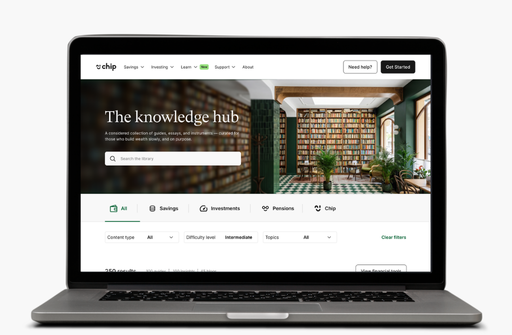
The knowledge hub

A considered collection of guides, essays, and instruments — curated for those who build wealth slowly, and on purpose.

0
results
Filter results
Filter by:
Content type
Difficulty level
Topics
0
results
View financial tools
Pension funds
2 min read
Intermediate
Building your pension

What is a pension fund? 

A pension fund is a large pot of money pooled together from many different pension savers. Professional fund managers use this pool to buy a diverse range of assets within their pension plans, such as:

  • Shares: (equities): Owning small parts of companies (e.g. Apple, Shell, Tesco). Historically, these offer high growth but come with higher volatility. 
  • Bonds: Loaning money to governments or corporations in exchange for interest. These are generally safer/lower risk but offer lower returns.
  • Property: Commercial real estate like warehouses and office blocks.

By investing in a fund, you don’t choose specific investments yourself. The aim of holding a fund is to spread your risk over hundreds or even thousands of assets, to smooth out the ups and downs of the market.

What is a target date fund? 

A target date fund (TDF) is a type of pension fund designed to make retirement planning simple and automatic.

Instead of asking you to choose a level of risk when you start pension saving, you simply enter the year you plan to retire.

  • In the early years (when retirement is far away) the fund automatically invests mostly in shares to maximise growth. You can afford to take risks because you have time to recover from market dips.
  • In the later years (as you approach retirement) the fund gradually shifts your money into safer assets like bonds. This protects your pot from volatility as you get closer to needing the money.

The ‘glide path’ approach removes the need for you to constantly monitor and rebalance your portfolio, as the fund does this for you.

Choosing a pension fund 

If you are managing your own pension (like in a SIPP) or looking at your workplace options, choosing the ‘right’ fund depends on your timeline.

  • Timeframe: If you have 30+ years until retirement, inflation could erode the returns from lower risk assets, so some exposure to shares can help beat rising prices. If you’re retiring next year, you’ll likely want the safety from cash or bonds. 
  • Risk tolerance: Think about the risk you’re comfortable with. Can you handle watching some ups and downs as the market moves? If not, a lower-risk fund might be better suited to you, even if returns are lower.

What is a default pension fund?

A default pension fund is the investment option you’re automatically allocated when you join a workplace pension scheme. It’s a ‘one-size-fits-all’ solution for the average employee.

While default funds are regulated to be suitable for most people, they are not tailored to your specific circumstances or retirement savings trajectory.

They typically take a balanced approach that’s potentially too cautious for the younger saver or too risky for someone closer to retirement.

Some default funds use a target date approach and adjust automatically, check whether yours does. 

How to check your pension fund  

To check which pension fund you’re invested in and how it's performing:

  1. Log in to your provider’s app or website
  2. Find your fund ‘factsheet’. This document will give you a breakdown of what the fund is invested in, along with past performance and the risk profile.
  3. Check your fees: Look for the Ongoing Charge Figure (OCF) or Annual Management Charge (AMC). Just as investment returns compound over time, so do the costs of high fees, making them more damaging than they might initially appear.  

Pension consolidation

Understanding where your pension savings are invested is crucial, but this can be very difficult to track if you have a lot of different pots from previous jobs; some of which you may have difficulty accessing.

Managing a portfolio of scattered funds can mean you’re paying higher fees, losing track of documentation, and lacking a clear strategy. One solution to this may be  to consolidate; bringing your pensions to one provider that gives you complete oversight over how much you have and where it’s invested.


Note: Before consolidating, check whether any of your existing pots have valuable guarantees, such as a guaranteed annuity rate, that would be lost on transfer. Read our next guide to learn more.

Important limitation: The Chip SIPP does not currently offer a drawdown service. To access your funds at retirement, you will need to transfer your pension to a provider that supports drawdown.

The art of laddering a wealth building strategy for savvy savers
2 min read
Expert
Savings Strategies & Tips

What is laddering?

Laddering is the practice of dividing your savings across several fixed-term accounts or bonds with varying maturity dates. Instead of locking up all your money in one long-term account or keeping it entirely in easy access savings, you spread it across multiple terms.

This allows you to benefit from better interest rates while ensuring a steady flow of accessible funds.

How does it work?

Imagine you have £10,000 to save. Instead of placing it all in a single account, you could, as an example, split it like this:

  • £2,000 in a one-year fixed-term account
  • £2,000 in a two-year fixed-term account
  • £2,000 in a three-year fixed-term account
  • £2,000 in a four-year fixed-term account
  • £2,000 in a five-year fixed-term account

As each account matures, you would then have the option to access the money or reinvest it in a new five-year account, thus maintaining the ladder.

This way, you will be continuously cycling your savings, while simultaneously benefiting from higher interest rates on long-term accounts.

How to start laddering

Before you start building your ladder, you’ll need to plan ahead:

  • Evaluate your needs: Decide how much you can afford to lock away for longer terms and how much (if any) you’ll need to access in the near future.
  • Compare rates: Understand the best fixed-term savings rates.
  • Start small: You don’t need a huge lump sum to get started. Begin with what you have and build your ladder over time.
  • Stay updated: Monitor interest rate trends and economic conditions to make informed decisions when your accounts mature.
  • Understand tax implications: Be mindful of how your interest earnings might impact your tax liabilities, especially if you’re in a higher tax bracket.

Is laddering right for you?

Laddering can be a great option if:

  • You have a lump sum to invest;
  • You want to maximise your savings’ interest without sacrificing liquidity;
  • You’re comfortable managing multiple accounts;
  • You have a stable financial situation and can afford to lock away part of your savings;
  • You need instant access to all your money or are just starting your savings journey, an easy-access savings account may be more appropriate for now.

The bottom line

Laddering is a simple but effective strategy that helps you strike a balance between earning potential and maintaining flexibility.

Whether you’re looking to grow your savings or ensure regular access to funds, this method could be a game-changer for your financial future.

Of course, it’s important to always keep in mind that personal finance is unique to each individual, and what works for one person might not be the best fit for another. Take the time to assess your goals, risk tolerance, and financial needs before implementing laddering in your savings plan.

Please note: Chip only offers savings and investment products, which are listed in its app and website. Chip does not provide financial or tax advice, and this information should not be considered a personal recommendation.

What are gold and commodities?
2 min read
Intermediate
Asset classes

Why do people invest in gold?

Gold has held its appeal for thousands of years and for good reason. It’s often viewed as a safe haven1 (prices can fluctuate) investment that people turn to during periods of uncertainty.

Here’s why it continues to attract attention from investors:

  • Store of value: In times of economic crisis or market downturns, gold tends to retain its worth better than riskier assets.
  • Hedge against inflation: When inflation rises and currency loses purchasing power, gold has historically maintained or increased its value – acting as a financial hedge.2
  • Diversification: Gold doesn’t typically move in the same direction as stocks or bonds, making it a useful addition to a balanced portfolio.

1Investopedia

2Investopedia

How to invest in gold in the UK

There are several ways to gain exposure to gold, depending on your preferences, budget, and investment goals:

1. Physical gold
  • Pros: Tangible, recognised globally, no counterparty risk (the chance that a party to a financial transaction, like a loan, investment, or trade, will fail to fulfill its obligations, potentially leading to losses).
  • Cons: Needs safe storage, insurance, can be less liquid than other options.
2. Gold ETFs, Gold ETCs and funds
  • Pros: Simple, cost-effective, easy to buy/sell like stocks.
  • Cons: Doesn’t give you access to physical gold. May involve price tracking errors or management fees.
3. Gold mining stocks
  • Pros: Potential for higher returns if gold prices rise.
  • Cons: Company-specific and operational risks. 
4. Gold savings accounts or digital vaults
  • Pros: Fractional ownership (an option to share between a number of investors), digital ease, lower entry point.
  • Cons: May have account or withdrawal fees, and depends on provider trustworthiness.

Risks and disadvantages of investing in gold 

Like any asset, gold has its downsides. It’s important to understand these before diving in:

  • No income: Gold doesn’t pay dividends or interest – returns are confined to price growth (may be subject to Capital Gains tax).

  • Price volatility: Despite its ‘safe haven’ label, gold can still fluctuate in value based on market sentiment, interest rates, or geopolitical news.

  • Storage and insurance costs: Holding physical gold securely often comes with extra fees and responsibilities.

Historical performance of gold

Gold has historically provided moderate long-term returns, though it can go through extended periods of underperformance. Over the past 20 years, gold has returned an average of ~12% per year.1

It has historically performed best during:

  • Inflationary periods
  • Currency devaluations
  • Market shocks or crises

1 J.P. Morgan

Investing in other precious metals and commodities

Gold isn’t the only option when it comes to tangible assets. Other precious and industrial commodities can also play a role in your strategy.

Precious metals:
  • Silver – More volatile than gold, with both monetary and industrial demand.
  • Platinum & palladium – Used in manufacturing and clean energy tech, offering unique demand drivers.
Broader commodities:
  • Oil & natural gas – Linked to global energy prices. Prone to sharp swings but still essential to global economies.
  • Agricultural commodities – Wheat, coffee, sugar, and livestock can offer growth tied to global supply/demand shifts.

These can help hedge against inflation or add exposure to global growth – but also carry distinct risks based on weather, politics, or regulation.

How to invest in commodities in the UK

You don’t need to stockpile barrels of oil or coffee beans to invest in commodities. Here are some beginner-friendly ways to get started:

  • Commodity ETFs/ETCs – Track the price of specific goods or baskets of commodities (e.g., gold, oil, agriculture).
  • Futures contracts – More advanced and high risk – these involve speculating on the future price of a commodity.
  • Commodity-producing companies – Invest in miners, energy producers, or agricultural businesses.
  • Physical metals – As mentioned, physical gold or silver remains popular for tangibility and trust.

Gold and commodities in a diversified portfolio

Commodities behave differently than traditional assets like stocks and bonds – so they can add balance to your portfolio.

They’re often non-correlated, meaning they may rise when stocks fall (especially during inflation, currency shocks, or geopolitical events).

Investing in gold and commodities summary

Gold and other commodities can be powerful tools for diversification, especially in uncertain economic times.

They don’t generate income like stocks or bonds, but they can help protect against inflation, currency weakness, or financial market shocks.

The right amount for your portfolio depends on your goals, risk tolerance, and time horizon. However, even a small allocation can go a long way in building resilience.

In the next guide of the series we take a closer look at cryptocurrencies and how they work. 

FAQs
How can a beginner invest in gold?

ETCs, ETFs and other digital options can be great starting points due to their accessibility, low cost, and simplicity.

How do you invest in gold in the UK?

Options include buying physical gold (bars, coins), investing via ETCs, ETFs or funds, purchasing mining stocks, or using digital vault platforms.

Is gold the best investment?

Gold is a defensive asset so it can protect against market shocks. Best used as part of a wider, diversified portfolio.

What’s the difference between investing in gold and silver?

Gold is more stable and seen as a store of value. Silver has greater industrial use, tends to be more volatile, but can offer higher returns under certain conditions.

Direct investment into gold and commodities is not available via the Chip platform.

The FTSE 100 is beating Bitcoin
2 min read
Expert
Asset classes

This week the UK’s most famous index, the FTSE 100, reached fresh highs, closing above 9,5001 and extending its year-to-date gains to around 15%, a standout in global equity markets.2

We picked out the FTSE 100 back in June for its notable performance, and it's taken that momentum into the Autumn. 

While this isn’t a competition, the index of old British staples is having such a good year that it’s beating the young gun, Bitcoin, with its 2025 return trailing at around 10%*. And we all know which gets far more headlines.

* FTSE 100 and Bitcoin price accurate as of 15:45 on 23 October 2025 adjusted for dividends and currency. Source: Google Finance

What’s pushing the FTSE 100 higher

Global asset manager Fidelity offered some key insight as to why the index is having such a strong year:  3

  • Strong defensive & diversified mix: The FTSE 100 is heavy on internationally-oriented giants in mining, energy, finance and defence that are benefiting from higher commodity prices and global volatility in areas like tech.
  • Relative value appeal: UK stocks in well-established brands look comparatively cheap to U.S. counterparts, making them attractive amid global uncertainty.
  • Easing external risks: Relief over U.S. trade policy, combined with resilient UK earnings and solid domestic data, has helped sentiment. 

Why it matters to you

Even in a year of tech-mania and crypto frenzies, it’s a good reminder that you don’t always need to chase the headlines – whether it’s Bitcoin or the latest surging tech stock.

Long-term growth doesn’t have to be flashy. Steady gains from global brands, dividends, and value stocks can build wealth just as well, and often with a lot less drama.

Sometimes, the solid returns and stability you’re looking for are closer to home, and in investing, the tortoise often beats the hare.


How Chip can help you take advantage

With Chip, you’ve got access to diversified index funds like the FTSE 100, the S&P 500 and Nasdaq 100, alongside other regions, themes and sectors.

Check out those fund options in the Invest tab in your app today and see how you could put your money to work today with a tax-free Stocks & Shares ISA or General Investment Account.

Types of investment accounts
2 min read
Beginner
Investing basics

What are the types of investment accounts in the UK?

  • Stocks & Shares ISA
  • General Investment Account (GIA)
  • Stocks & Shares Lifetime ISA (LISA) - not available with Chip
  • Workplace Pension - not available with Chip
  • Self-Invested Personal Pension (SIPP) - not available with Chip
  • Investment Bond - not available with Chip

What is a Stocks & Shares ISA?

A Stocks & Shares ISA is your tax-efficient friend when it comes to any gains you might make on your investments. 

Why choose an SSISA?
They’re tax-free

Unlike the General Investment Account, any returns on your portfolio within your SSISA remain free from income tax. This is often referred to as a ‘tax wrapper’ on your ISA. 

You also won’t owe any capital gains tax if you decide to sell your investments at a higher price than you bought them, or any tax on dividends you earn.

With Chip – It’s flexible

Another added benefit to a Chip Stocks & Shares ISA, is it’s flexible, you can withdraw and redeposit funds from your ISA without it affecting your annual ISA allowance. 

For example, if you deposited £10,000 into your SSISA in May, and then needed to make a withdrawal of £1000 on June; once you redeposit the £1000 in July, you would still only have used £10,000 of your ISA allowance (tax year runs from April 6 to April 5 the following year). 

What are the drawbacks?

You are currently limited to invest or save £20,000 per year across all your ISA’s. So, you’ll need to make sure you keep track of all your ISA’s between platforms. In the Chip app, it’s easy to view your ISA allowance with us in the ‘Profile’ tab. 

It’s also worth remembering that having multiple SSISA’s could come with paying a variety of fees, which may work out greater than holding all your SSISAs in one place. Learn more about investment fees.

Can you have a Cash ISA & a Stocks & Shares ISA?

Yes! If you already have a Cash ISA, you’re able to open a Stocks & Shares ISA, and have both at the same time but don’t forget you are currently limited to invest or save £20,000 per year across all your ISA’s. 

Previously, it was only possible to hold one type of ISA at a time, so you’d be limited to one of each (Cash ISA and Stocks & Shares ISA), but as of April 2024, you are allowed to hold multiple of each type of ISA, with the exception of a Lifetime ISA, where you are only allowed one open at any one time. 

What is a General Investment Account (GIA)?

A General Investment Account (GIA) is the standard option for investing as much as you like, without the ‘tax wrapper’ of the Stocks & Shares ISA. 

Why choose a GIA?

With a GIA, you aren’t restricted to the £20,000 investment per tax year that the SSISA is. You can take advantage of unlimited deposits and withdrawals, without worrying about what you might have invested elsewhere. 

This gives you the freedom to open multiple GIAs and deposit as much as you like to take advantage of the best rates. For example, with a Chip X subscription, you can take advantage of 0% platform fees which can save you thousands over time as your portfolio grows. 

What are the drawbacks? 

With a GIA, investors are liable to be taxed on their investments. If your investments have grown in value, you may owe Capital Gains Tax (CGT) on these gains. However, every tax year you get an ‘Annual Exempt Amount’. 

For the 2025/2026 tax year this is £3000, so anything above this amount is taxed at 18% for basic rate taxpayers, and 24% for higher rate and additional taxpayers. 

You are also liable to be taxed on any dividends you receive from income funds that pay out on your gains. Similar to the CGT rules, you are given an allowance per tax year, which for 2025/2026 is £500.

Beyond this the tax rate is 8.75% for basic rate taxpayers, 33.75% for higher rate taxpayers, and 39.35% for additional rate taxpayers.   

What is a Stocks & Shares Lifetime ISA?

A Stocks & Shares Lifetime ISA (LISA) is similar to a Stocks & Shares ISA, but was designed to help you buy your first home (up to a value of £450,000) or save for retirement (withdrawal after age 60), offering a 25% government bonus of up to £4,000 per year. 

For example, if you invest the maximum £4000, the government will give you a £1000 bonus per year. 

Your money is invested, like in a Stocks & Shares ISA, so it has the potential to grow, but early withdrawals (outside of a first home or retirement after 60) will incur a 25% penalty, making a LISA more of a commitment. 

You must be aged 18-39 to open a LISA, and can only hold one LISA at any one time. 

What is a Workplace Pension?

A Workplace Pension is a way to save for your retirement, set up through your employer. Each time you’re paid, a portion of your salary is automatically put into your pension, and your employer adds a contribution (currently a minimum of 3% on qualifying earnings). 

You’ll also get tax relief on what you contribute, which helps boost your savings. Most people are enrolled automatically if they meet certain criteria (age and salary), but you can opt out if you wish.

While you won’t be able to access your pension until you’re 55 (rising to 57 from 2028), it’s a great long-term investment account, especially with the free boost from your employer. 

What is a Self-Invested Personal Pension (SIPP)?

A SIPP is a personal pension that gives you much more control over where your money is invested, think of it as a DIY pension. Unlike workplace pensions, where investment choices are often limited, a SIPP lets you pick from a wide range of funds, shares, and other assets.

You’ll still get tax relief on what you contribute, just like with a workplace pension, and you can contribute up to 100% of your income (up to £60,000 a year) tax-free.

It’s ideal for people who are self-employed, or those who want to supplement their workplace pension and have more say in how their pension pot is invested.

What is an Investment Bond?

An Investment Bond is a type of investment product that usually includes life insurance and often provides favourable tax treatment. You pay a lump sum into the bond, and it’s then invested on your behalf, typically into a mix of funds.

It’s generally aimed at medium to long-term investors (more than 5 years) and can be useful for estate planning or for higher-rate taxpayers looking for an alternative to ISAs or GIAs.

Tax is a bit more complex here, the bond itself is subject to tax, but you won't pay further income or capital gains tax unless you withdraw more than your ‘5% annual allowance’. This allows some flexibility when managing tax liability on withdrawals.

Understanding Investment Types & Asset Classes

Within these investment accounts, it’s possible to invest in a variety of asset classes, which we’ll cover in more detail in the guide that follows this one. 

Different providers will give you access to different asset classes, and a varying degree of control over how your investments are made. Some will allow you to engage in high risk, active trades, whereas others will offer a few simple investment choices to encourage a passive investing strategy. 

Seccl Custody Limited is the ISA Manager for the Chip Stocks and Shares ISA. Fund management charges apply. ISA limits apply. Invest £20k per tax year. Chip does not provide tax advice or financial advice. Tax treatment depends on individual circumstances and may be subject to change in the future. GIA proceeds are potentially taxable, subject to any annual exemption that may apply. 

Workplace Pensions, Self-Invested Personal Pensions, Investment Bonds and Stocks & Shares Lifetime ISAs are not available via the Chip platform.

Scottish state bank records £138mn loss on back of failed investments

2 min read
Investing trends

Lorem ipsum dolor sit amet

Lorem ipsum dolor sit amet, consectetur adipiscing elit, sed do eiusmod tempor incididunt ut labore et dolore magna aliqua. Ut enim ad minim veniam, quis nostrud exercitation ullamco laboris nisi ut aliquip ex ea commodo consequat.

Lorem ipsum dolor sit amet, consectetur adipiscing elit, sed do eiusmod tempor incididunt ut labore et dolore magna aliqua. Ut enim ad minim veniam, quis nostrud exercitation ullamco laboris nisi ut aliquip ex ea commodo consequat.

Lorem ipsum dolor sit amet

Lorem ipsum dolor sit amet, consectetur adipiscing elit, sed do eiusmod tempor incididunt ut labore et dolore magna aliqua. Ut enim ad minim veniam, quis nostrud exercitation ullamco laboris nisi ut aliquip ex ea commodo consequat.

Lorem ipsum dolor sit amet, consectetur adipiscing elit, sed do eiusmod tempor incididunt ut labore et dolore magna aliqua. Ut enim ad minim veniam, quis nostrud exercitation ullamco laboris nisi ut aliquip ex ea commodo consequat.

Lorem ipsum dolor sit amet

Lorem ipsum dolor sit amet, consectetur adipiscing elit, sed do eiusmod tempor incididunt ut labore et dolore magna aliqua. Ut enim ad minim veniam, quis nostrud exercitation ullamco laboris nisi ut aliquip ex ea commodo consequat.

Lorem ipsum dolor sit amet, consectetur adipiscing elit, sed do eiusmod tempor incididunt ut labore et dolore magna aliqua. Ut enim ad minim veniam, quis nostrud exercitation ullamco laboris nisi ut aliquip ex ea commodo consequat.

Lorem ipsum dolor sit amet

Lorem ipsum dolor sit amet, consectetur adipiscing elit, sed do eiusmod tempor incididunt ut labore et dolore magna aliqua. Ut enim ad minim veniam, quis nostrud exercitation ullamco laboris nisi ut aliquip ex ea commodo consequat.

Lorem ipsum dolor sit amet, consectetur adipiscing elit, sed do eiusmod tempor incididunt ut labore et dolore magna aliqua. Ut enim ad minim veniam, quis nostrud exercitation ullamco laboris nisi ut aliquip ex ea commodo consequat

What's my replaceable ISA allowance?
2 min read
Savings Strategies & Tips

ISAs are the most popular savings product in the UK, but they aren’t always the easiest to understand if you aren’t familiar with the ins and outs.

Some Cash ISAs are flexible. That means if you take money out, you can put it back in again within the same tax year, without using up any of your annual £20,000 ISA allowance.

But your ‘replaceable ISA allowance’ goes beyond that.

This is the extra "capacity" created when you withdraw money from a previous tax year. Instead of losing that tax-free space forever, you get a temporary window to put that exact amount back in without it counting as a new contribution.

The previous tax year rules

If you have a large balance built up over several years, a Flexible ISA allows you to treat that "old" money with the same freedom as your current £20,000 allowance.

You can withdraw "old" money: Let’s say you have £50,000 from previous years, you can withdraw any amount of it, e.g. £30,000, and your "replaceable allowance" for the year effectively becomes £50,000 (£20,000 current limit + £30,000 old money).

The "same account" restriction: While you can pay current year replacements into different ISAs, you must pay previous year replacements back into the exact same account they were taken from.

The "use it or lose it" deadline: Regardless of how old the money was, the "flexible window" always slams shut on 5 April. If you withdraw £30,000 of old money in August 2025, you have until midnight on 5 April 2026 to replace it. If you miss that date, that £30,000 of "tax-free capacity" is gone forever.

How the flexible money goes back in (the order)

HMRC has a "filling up" order for when you pay money back into a flexible ISA so you always know how its affecting you

  1. Replenish previous years first: Your deposits first "fill back up" any money you took out from previous years.
  2. Replenish current year next: Once old money is replaced, your deposits then cover any current-year withdrawals.
  3. New subscriptions last: Only after all withdrawals are replaced do your deposits start counting toward your fresh £20,000 annual limit.

Why it can supercharge your tax-free savings

A replaceable ISA allowance gives you flexibility that many people don't realise they have.

In practice, this means you can pay in more than £20,000 in a single year, as long as part of that amount is replacing money you previously took out.

That flexibility makes your ISA a more adaptable tool for real life. You can use it for short-term needs, like a house deposit, home improvements, or a major life event, and still keep your long-term plans intact.

It can also be particularly useful if you have already used your £20,000 allowance for new money elsewhere and did not realise (or forgot) you still had the option to replace earlier withdrawals.

The key is knowing the allowance is there, and making use of it within the same tax year if it fits your situation.

Fractional shares explained
2 min read
Beginner
Investing trends

What are fractional shares?

A fractional share is exactly what it sounds like — a portion of a full share of stock or an ETF.

Instead of needing the full amount to purchase a whole share (which can sometimes cost hundreds or even thousands of pounds), fractional shares allow you to invest an amount that fits your budget, whether that’s £10, £100, or more.

  • For example, if a single share of a company costs £200 and you invest £20, you would own 0.1 of a share.

Fractional investing is made possible by modern brokerage platforms, and it’s especially popular among new investors or those looking to spread small amounts across many companies or funds.

Understanding types of fractional shares

Not all fractional shares are created equally. Here's a breakdown of the main types you might come across:

  • Voluntary fractional shares: These are intentionally created when investors choose to buy a specific monetary value rather than a number of whole shares. Most common in retail investing today.
  • Involuntary fractional shares: These occur due to events like stock splits, dividend reinvestment plans (DRIPs), or mergers and acquisitions.
  • Fractional shares via ETFs and funds: Some exchange-traded funds (ETFs) and index funds inherently involve fractional share ownership behind the scenes, allowing for diversified exposure even with small investments.

Understanding the source of your fractional shares can influence how they’re treated in terms of ownership, voting rights, and dividend payouts.

How does trading fractional shares work?

When you trade fractional shares, you're typically placing an order based on a cash amount, not the number of shares. 

Your investment platform calculates how much of a share that amount will buy based on the current market price.

A few important things to note for UK investors:

  • Execution timing: Some providers batch fractional share orders and execute them at specific times during the day, rather than instantly.
  • Ownership model: In most cases, you don’t directly own the share certificate. Instead, your platform holds it on your behalf, often via a nominee account.
  • Fees and spreads: Be aware of how fees and bid-ask spreads may affect your investment, especially with smaller sums.

Example of fractional shares

Let’s say you’re interested in investing in a company or ETF and shares are trading at £500 each. Rather than saving up to buy a whole share, you decide to invest £50. You now own 0.10 of a share.

If the share price increases by 10% to £550, your investment would be worth £55, a £5 gain, reflecting the same percentage growth.

This ability to invest smaller amounts can be particularly helpful when building a diversified portfolio across different sectors and asset types.

Fractional shares and dividends

If the fractional shares you own pay a dividend, you’re typically entitled to a proportional dividend.

For example, if a company pays a £2 dividend per share and you own 0.5 of a share, you would receive £1 in dividends. However, how and when these dividends are distributed can vary by provider. 

Pros & cons of fractional shares

Fractional shares advantages:
  • Lower barrier to entry: Start investing with small amounts of money.
  • Diversification: Spread your funds across more assets, reducing risk.
  • Accessibility: Invest in high-priced shares that would otherwise be out of reach.
Fractional shares disadvantages:
  • Limited voting rights: Some platforms do not extend shareholder voting rights to fractional holders.
  • Trading limitations: Selling may be restricted or delayed depending on the provider, and you may not receive the price you expect.
  • Platform dependency: You typically cannot transfer fractional shares between platforms or brokers.

Are fractional shares safe and regulated?

Yes, when offered by FCA-regulated platforms, fractional shares are considered a safe and legitimate way to invest.

However, investors should understand that the underlying risks of market investing remain the same, your investment value can go up or down.

As with any investment, due diligence is key. Make sure to check whether your provider is covered under the Financial Services Compensation Scheme (FSCS) and understand how your assets are held.

Fractional shares summary

Fractional shares have opened the door for more people to begin investing, regardless of how much capital they have to start with. 

By making it possible to own a piece of high-priced stocks or ETFs and diversify with less money, they represent a meaningful shift in how modern portfolios are built, especially for new or budget-conscious investors.

That said, it's important to understand the mechanics, limitations, and regulatory environment that surround fractional investing.

While they offer flexibility, they're not a guarantee of returns and carry the same risks as full-share investing.

In recent years, the rise of financial technology, or fintech, has dramatically reshaped how people manage, save, and invest their money.

From user-friendly mobile apps to AI-driven investment platforms, technology is removing many of the traditional barriers to entry in the world of finance.

In the next guide, we’ll explore how fintech is reshaping the future of investing, and what it means for everyday investors.

Direct investment into individual bonds is not available via the Chip platform. Chip offers investment funds that invest in different assets as a collective investment.

Biggest companies in India by market cap
2 min read
Expert
Global cap giants

What are the biggest companies in India by market cap?

This list ranks the biggest public companies in the Indian market by market capitalisation. We’ll also highlight other key figures, such as revenue, gross profit, and 1-year return. Key facts like the company's exchange, founding year, and country are also covered.

1. Reliance Industries Ltd. (RELIANCE)

  • Market cap: $209.8 billion
  • Revenue: $108.41 billion
  • Gross profit: $29.94 billion
  • 1-yr return: -10.23%
  • Exchange: NSE
  • Year founded: 1957
  • Country: India

India’s largest and most valuable company, a globally reaching conglomerate with influence spanning energy, tech and consumer services. 

  • Oil-to-chemicals: This is Reliance’s core and most profitable division. It operates the world’s largest single-location oil refinery, and produces everything from transportation fuel to plastics, providing huge streams of cashflow to other areas of the business. 
  • Reliance Retail: India’s largest retailer with over 18,000 stores across the country, supplying its customers with groceries, electronics and fashion.
  • Jio Platforms (digital services): The largest mobile network operator in India with over 450 million subscribers, offering telecoms, streaming services (JioCinema), payment apps, and other online services. 

2. HDFC Bank (HDFCBANK)

  • Market cap: $163.47 billion
  • Revenue: $54.83 billion
  • Gross profit: N/A
  • 1-yr return: +8.76%
  • Exchange: NSE
  • Year founded: 1994
  • Country: India

India’s largest private-sector bank by assets, operating a broad spectrum of banking services with a strong focus on both individual consumers and large corporations. 

  • Retail banking: serves over 80 million customers across India with current and savings accounts, personal, car and business loans, and credit cards. 
  • Wholesale banking: provides medium and large-sized businesses, corporations and institutional clients with capital loans, trade finance, cash management solutions, and investment banking services.
  • HDFC merger: HDFC Bank merged with HDFC Ltd. — India’s largest housing finance company — in 2023. This gave HDFC Bank a massive book of home loans, making it a leader in the mortgage market.

3. Bharti Airtel Ltd. (BHARTIARTL)

  • Market cap: $122.05 billion
  • Revenue: $20.87 billion
  • Gross profit: $8.28 billion
  • 1-yr return: +9.59%
  • Exchange: NSE
  • Year founded: 1995
  • Country: India

One of the world’s leading telecommunications companies, with a significant presence across South Asia and Africa. In the Indian market, Airtel is a key rival of Reliance Jio, in mobile, broadband and digital services. 

  • Airtel India: serves over 300 million subscribers with mobile services, broadband, digital TV and payment services through their ‘Thanks’ app. 
  • Airtel Africa: leading telecom and money provider across 14 countries in Africa, providing mobile and data services, alongside mobile payments that allow users to transfer money, pay bills, and access other financial services. 

4. Tata Consultancy Services Ltd. (TCS)

  • Market cap: $117.99 billion
  • Revenue: $28.81 billion
  • Gross profit: $9.1 billion
  • 1-yr return: -32.62%
  • Exchange: NSE
  • Year founded: 1968
  • Country: India

A huge IT services and consulting company, part of the huge Tata Group multinational conglomerate. They rival big firms like Accenture and IBM as a global tech services leader.

  • IT services and consulting: providing a range of tech solutions to multinational corporations globally, with their cloud infrastructure, cybersecurity, data and analytics and bespoke software development.
  • Business and industry solutions: specialises in tailored industry-specific solutions, particularly within banking and financial services, and insurance — this is their largest source of revenue. They also have clients within retail, manufacturing and healthcare, helping them manage core processes like supply chain and customer relations. 

5. ICICI Bank Ltd. (ICICI)

  • Market cap: $108.28 billion
  • Revenue: $32.98 billion
  • Gross profit: N/A
  • 1-yr return: +4.33%
  • Exchange: NSE
  • Year founded: 1955
  • Country: India

One of India’s largest private-sector banks and a key player in the country’s financial system. A key competitor of HDFC Bank and the State Bank of India.

  • Retail banking: provides millions of customers with current accounts, savings accounts, personal loans, mortgages, and credit cards. It has a strong digital product presence from its iMobile Pay app, that provides a wide array of payment and banking services.
  • Corporate and institutional banking: Provides financial solutions to businesses of all sizes, including working capital finance, and term loans, alongside cash management and trade finance services to aid business operations. 

6. State Bank of India (SBIN)

  • Market cap: $90.5 billion
  • Revenue: $74.06 billion
  • Gross profit: N/A
  • 1-yr return: +8.8%
  • Exchange: NSE
  • Year founded: 1921
  • Country: India

India's largest public-sector bank and a cornerstone of the nation's financial system. With its unparalleled reach across the country, it is a dominant force in both retail and corporate banking.

  • Retail banking: Serves a massive customer base of over 450 million people through an extensive network of more than 22,000 branches. It is a leader in personal banking, offering services from basic savings accounts and home loans to wealth management, and operates the popular YONO digital banking app.
  • Corporate banking and treasury: Acts as the primary banker to many of India's largest corporations and state-owned enterprises, providing project finance, working capital loans, and treasury services. Due to its government ownership, it plays a key role in financing national infrastructure and industrial projects.

7. Bajaj Finance Ltd. (BAJFINANCE)

  • Market cap: $69.45 billion
  • Revenue: $7.75 billion
  • Gross profit: $4.88 billion
  • 1-yr return: +28.96%
  • Exchange: NSE
  • Year founded: 1987
  • Country: India

One of India's largest and most diversified non-banking financial companies (NBFCs). A leader in consumer finance, it is renowned for its rapid growth and use of technology to provide instant loans to millions of customers.

  • Consumer lending: This is the company's core business, offering a vast array of financing options directly to consumers. It is a dominant player in providing instant loans for electronics, home appliances, and furniture at thousands of retail stores, as well as offering personal loans and credit cards.
  • SME and commercial lending: Provides a range of financial solutions to small and medium-sized enterprises (SMEs) and commercial clients, including working capital loans and financing for business expansion. It also has a significant presence in lending to real estate developers. 

8. Infosys Ltd. (INFY)

  • Market cap: $67.31 billion
  • Revenue: $18.34 billion
  • Gross profit: $5.69 billion
  • 1-yr return: -23.31%
  • Exchange: NSE
  • Year founded: 1981
  • Country: India

A global leader in IT services and consulting, and one of the most prominent technology companies to emerge from India. It is a major competitor to other IT giants like TCS, Wipro, and Accenture.

  • Digital services and consulting: Focuses on helping large businesses modernise their technology through "digital transformation." This includes moving clients to the cloud, implementing AI and data analytics solutions, and enhancing cybersecurity.
  • Core enterprise services: Manages the foundational IT operations for its global clients. This involves application development and maintenance, modernising legacy systems, and outsourcing business processes to improve efficiency.

9. Hindustan Unilever Ltd. (HINDUNILVR)

  • Market cap: $66.07 billion
  • Revenue: $7.07 billion
  • Gross profit: $3.16 billion
  • 1-yr return: -15.17%
  • Exchange: NSE
  • Year founded: 1956
  • Country: India

India's largest Fast-Moving Consumer Goods (FMCG) company and a subsidiary of the British multinational, Unilever. Its products are a household staple, reaching nine out of ten Indian homes.

  • Home and personal care: This is HUL's largest division, encompassing a vast portfolio of iconic brands. It includes soaps and skincare (Lifebuoy, Lux, Dove), laundry detergents (Surf Excel, Rin), and surface cleaners (Vim).
  • Foods and refreshment: HUL is a major player in India's food and beverage market. Key brands include Brooke Bond and Lipton teas, Bru coffee, Knorr soups and noodles, and Kwality Wall's ice cream.

10. Life Insurance Corp. of India (LICI)

  • Market cap: $63.7 billion
  • Revenue: $101.18 billion
  • Gross profit: N/A
  • 1-yr return: -11.9%
  • Exchange: NSE
  • Year founded: 1956
  • Country: India

India's largest state-owned life insurer and a dominant force in the country's insurance sector. As a household name, it is one of the biggest institutional investors in the Indian stock market.

  • Insurance and pension plans: This is LIC's core business, offering a vast range of life insurance policies, annuities, and pension plans to millions of individual customers. It operates through an extensive network of over a million agents, giving it enormous reach into both urban and rural India.
  • Investment operations: LIC manages a colossal investment portfolio, making it a cornerstone of the Indian economy. It invests the premiums collected from policyholders into government securities and equities, making it one of the largest single investors in many Indian companies.

What are the biggest companies by total annual revenue?

  • Reliance Industries Ltd.: $108.41 billion 
  • Life Insurance Corp. of India: $101.18 billion 
  • Indian Oil Corp Ltd.: $85.38 billion 
  • State Bank of India: $74.06 billion 
  • Oil & Natural Gas Corp. Ltd.: $69.03 billion

What are the biggest companies by workforce?

  • Tata Consultancy Services Ltd.: 607,980
  • Quess Corp. Ltd.: 441,150 
  • Larsen & Toubro Ltd.: 412,970
  • Infosys Ltd.: 323,580 
  • Petrobras: 236,230

Summary

Understanding a company's performance is crucial; it's how you truly know what you own. These metrics directly drive the value of your stocks and funds. When you understand these key drivers, you can navigate market changes with confidence, rather than just reacting to headlines.

Next we’ll be looking at the biggest companies in Europe by market cap.

All market data sourced from TradingView and company reports as of 30.09.2025.

Thank you! Your submission has been received!
Oops! Something went wrong while submitting the form.