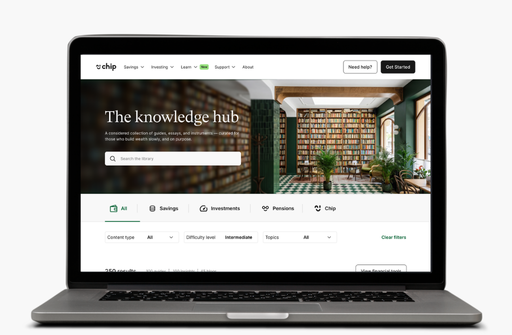
The knowledge hub

A considered collection of guides, essays, and instruments — curated for those who build wealth slowly, and on purpose.

0
results
Filter results
Filter by:
Content type
Difficulty level
Topics
0
results
View financial tools
Meet the UK’s “Dashing Dozen”
2 min read
Expert
Global cap giants

When we think of stock market stars, it’s often the US names like Apple, Microsoft, and Nvidia that grab the headlines. But closer to home, a group of UK-listed companies has been quietly outperforming the wider market for years.1

They’ve been dubbed the “Dashing Dozen”. These are twelve firms that have consistently flown the flag for the UK.
A recent feature in MoneyWeek highlighted them for substantially outperforming the stock market and “clearly doing something right” so let’s take a look.

‍

Who are the Dashing Dozen? 

This group spans a range of sectors — from defence and engineering to gaming and data services. Some familiar names include:

  • BAE Systems – benefiting from increased global defence spending.
  • Rolls-Royce – rebounding strongly with a surge in aerospace demand.
  • Games Workshop – the maker of Warhammer, proving that niche hobbies can mean big business.
  • Next – a high-street and online retail giant with a proven ability to adapt and thrive

Other members of the Dashing Dozen include: London Stock Exchange Group (LSEG), Halma, Diploma, Goodwin, Cohort, Concurrent Technologies, RELX, and 3i Group.

What they have in common is a track record of consistent growth, with all 12 businesses profitable and all paying dividends1. These are qualities that appeal to investors building a long-term portfolio.

Always remember, when considering any investment, a diverse portfolio across different asset classes, sectors and regions can manage risk and smooth returns.

‍

Why it matters to you

For years, FTSE 100 has been seen as a bit sluggish compared to US markets, but the “Dashing Dozen” prove that the UK market still packs some punch. 

While not a guarantee of future performance, they do highlight that businesses with durable advantages and strong demand – in sectors like defence, data, and gaming – can offer investors both resilience and opportunity.

So next time you think about your portfolio mix, remember: sometimes the dash for growth doesn’t require looking across the Atlantic – it could be right here at home.

‍

How Chip can help you take advantage

With Chip, we offer a range of index funds such as the FTSE 100, that include all of these high-growth companies in a single investment, as well as other popular indexes like the NASDAQ 100 and S&P 500.

Open a Stocks & Shares ISA in minutes, invest from £1, and manage everything right from our app. Just go to the ‘Invest’ tab to get started.

‍

5 Easy Ways To Help Save Money
2 min read
Beginner
Savings Strategies & Tips

There are many simple and effective ways to cut down on your spending, so you can save more money each month. 

If you're looking for some inspiration on how to save money in the UK, here are five great tips to help you get started. See how long it will take to reach your savings goal with our savings calculator.

‍

1) Make a budget and stick to it

The first and most important step to saving money is to have a budget. A budget is simply a plan for your money, which helps you see exactly where your money is going.

Make a list of all your income and expenses, and see where you can cut down. 

Once you have a savings budget, make sure you stick to it. This is the key to saving money and keeping your finances under control. Learn about different savings accounts.

This is not financial advice - this is about simple tips to get going, while not impacting your day to day life or living a life of extreme frugality.

So if this sounds like it’s for you, read on!The following should not be taken as advice or guidance around financial hardship. If you're in this situation, there is support available from GOV.UK or Citizens Advice that can help.

‍

2) Cut down on your food expenses

Food is one of the biggest expenses in many households. By being smart about your food shopping, you can save a lot of money. 

For example, buy food in bulk when it is on sale, and freeze it for later. Consider swapping big brands for own brand products or using discount supermarkets.

Cook meals at home instead of eating out, and bring your lunch to work instead of buying it. These small changes can add up to big savings.

‍

3) Reduce your energy bills

Another way to save money is by reducing your energy bills. You can do this by washing your clothes at 30 degrees, using energy-efficient light bulbs, and turning off appliances when they're not in use.

Heating is a big expense so turning down radiators and the flow temperature of your boiler to 60 degrees can also help you make big savings over the year. 

There are plenty of resources online such as GOV.UK with tips.

‍

4) Shop around for the best deals

When it comes to buying things like insurance, broadband, and mobile phone contracts, it's important to shop around for the best deals. 

Don't just go with the first offer you see, take the time to compare prices and find the best deal for you. You can use price comparison websites to make this easier.

‍

5) Save a little each month

Finally, one of the easiest ways to save money is by setting aside a little each month. You don't have to save a lot, just a few pounds here and there.

Start by setting up a regular amount (on payday for example) to go from your bank account to a savings account and watch your savings grow over time.

Saving money is all about being smart with your finances. By following these five money-saving tips, you'll be able to cut down on your spending and keep more money in your pocket. So, why not get started today?

Understanding the basics of investing
2 min read
Beginner
Investing basics

What is investing?

Investing is the act of putting your money into assets – like stocks, bonds, funds, property or businesses – with the goal of growing your wealth over time (we’ll come back to assets). 

Unlike saving, which typically means holding cash in a bank account, investing allows your money to work for you, potentially earning returns through compounding – the further returns that your reinvested returns earn, or dividends – payouts of cash from positive returns. 

Another key difference is that with investing, your money can go up or down in value, which we’ll explain in more detail. 

Whether you're investing for retirement, buying your first home, or building long-term financial security – starting early and staying consistent can make a huge difference.

‍

How does investing work?

Investing works by buying an asset at its current value, with the aim of selling it at a higher, ‘appreciated’ value, and generating a profitable return. 

Depending on the type of asset an investor holds, any potential gains can be ‘realised’ in a number of ways. For the purpose of this guide, we will focus on stock markets, but this concept can be applied to most investments. Learn about stock market basics.

Think of the stock market like a real market: a place where you can buy and sell your shares. If you buy a share for £10, and the value moves up to £15 in the stock market, and you sell, you have made £5. The sale of your share for a profit is called ‘realising’ your gains. 

For the period you own your share, you are a ‘shareholder’. You can learn about how stocks work here.

The movement of share prices within the stock market relates to the performance and value estimations of a company. As previously mentioned, these prices can move up or down, sometimes dramatically, and this is an important thing to consider when thinking about investing. 

The degree of risk an investor is comfortable with enduring onto assets during price movements, is called ‘risk tolerance’. You can read more about investment risk here.‍

‍

What are the basic types of investments?

Investors have a number of asset classes they can invest in:

  • Equities, stocks or shares are a stake in a company or property. 
  • Bonds or fixed-income investments are loans to companies or governments who pay fixed interest as a return. 
  • Cash or cash equivalents, such as money market funds, invest in short-term debts.
  • Property is where the value of your investment is held within a property’s price.
  • Commodities are assets such as gold or silver.
  • Cryptocurrencies are digital currencies created and stored electronically. 

A collection of assets is called a portfolio. You can invest in one or more of these assets at the same time, and investors generally choose to hold a mix of asset classes, to make their portfolio diverse. You can read more about asset classes in our full guide. 

‍

Investing vs saving: what’s the difference

As we’ve already touched on, the value of your investments can go up or down. This differs from a savings account, where you are given an interest rate.

This interest rate is a guarantee that the nominal value of your savings will appreciate, and pay out interest within your savings account. 

For example, if you save £100 at 5% AER, the value of your savings will be £105 at the end of year one. Simple, right? Well, there is an invisible force at work against your money, called inflation. 

Think of inflation, simply, as things getting more expensive over time. If a loaf of bread costs £1, but inflation is 5%, the next year it will cost £1.05.

The same goes for your savings. If inflation is 5%, and your interest rate on your savings is 5%, the purchasing power of your money will remain the same after a year.

With investing, your money is closely tied to the performance of the assets you’ve invested in.

For example, if you bought a share in a company for £100, and after the first year, the value of that company had appreciated 5%, your investment would be worth £105. 

Historically, investment returns have outperformed the interest of cash savings accounts, and can act as a better protection against inflation, if your returns are higher than the inflation rate.

‍

How much do I need to start investing?

With Chip, you can start investing from £1. Traditionally, investing has been viewed as an expensive activity, due to previously high brokerage fees and minimum investments. 

The rise of online investing has made investing far more accessible, and sustainable for all of us.

Investing little and often, with a proper investment strategy is the most effective way to grow your money, and this is far more important than having loads of cash to get started.

‍

Understanding investment accounts

If you’re ready to get started with investing, the first step is to choose which investment account is right for you. 

With Chip, you can choose to invest with either a Stocks & Shares ISA, or a General Investment Account. The core difference between these two accounts, is the Stocks & Shares ISA gives you access to tax-free returns (invest or save £20,000 each tax-year across all ISAs) and the General Investment Account does not. 

So, if you have some of your £20,000 allowance to use, a Stocks & Shares ISA could be your best option, and if you have used your allowance this tax-year, you can opt for a General Investment Account. 

These aren’t your only options when it comes to an investment account, and our next guide covers what’s out there in the UK, to give you the full picture. 

Seccl Custody Limited is the ISA Manager for the Chip Stocks and Shares ISA. Fund management charges apply. ISA limits apply. Invest £20k per tax year. Chip does not provide tax advice or financial advice. Tax treatment depends on individual circumstances and may be subject to change in the future. GIA proceeds are potentially taxable, subject to any annual exemption that may apply.

‍

‍

Cash ISAs Explained
2 min read
Beginner
Accounts & Products

What is a Cash ISA?

A cash ISA, short for Cash Individual Savings Account, is similar to a conventional savings account. However, its distinctive feature is the exemption from taxation on the interest earned.

In each UK tax year (which runs from April to April), you can deposit up to £20,000 into a cash ISA.

ISA savings are in addition to the Personal Savings Allowance (PSA), which permits basic rate taxpayers to earn up to £1,000 in savings interest annually without incurring tax liabilities.

Higher rate taxpayers (40% tax rate) qualify for a reduced PSA of £500 per year, while additional taxpayers earning £150,001 or more do not receive any allowance.

ISA limits apply. £20k per tax year. Chip does not provide tax advice or financial advice. Tax treatment depends on individual circumstances and may be subject to change in the future.

‍

How do Cash ISAs Work?

If you're thinking about using a cash ISA to grow your savings, here's a brief overview of how they work:

  • Cash ISAs are typically easy to open.
  • You can save up to £20,000 annually, and your account accrues interest similar to a standard savings account.
  • A variety of cash ISAs are available, such as easy access, regular saver, fixed rate, and junior ISAs for individuals under 18.
  • Different ISAs may have varying terms, including withdrawal restrictions on fixed rate cash ISAs.
  • Transferring funds from previous tax years into a higher-yield ISA account is possible. Avoid closing an ISA when switching; instead, contact your new ISA provider to facilitate the transfer.

‍

Interest Rates on Cash ISAs

The interest rate depends on the type of cash ISA and the chosen provider. Fixed rate cash ISAs offer a guaranteed return for a set period, whereas variable rate cash ISAs may change if the provider adjusts its interest rates.

Use our interest rates calculator to see how much you could earn. 

Cash ISA interest rates can vary between financial providers, so it’s always good to do your research with comparing Cash ISA rates.

‍

Cash ISA factors to think about

Before opening a cash ISA, consider the following factors:

1. Interest Rate: The interest rate determines your savings' returns. Be aware that initial high introductory rates may decrease after a year, so consider transferring your ISA funds to a higher-yielding account at that point.

2. Account Type: Choose between easy access, fixed, or regular saver ISAs based on your preferences for return and accessibility.

3. Alternative ISAs: Apart from cash ISAs, you can explore stocks and shares ISAs. These involve investing in the stock market, offering potential rewards but also bearing some level of risk.

4. Annual Limit: You can open only one cash ISA each year. Think carefully before selecting your cash ISA, keeping in mind that your total ISA savings can't exceed £20,000 in any tax year.

5. Deadline: The tax year concludes on April 5th. Any unused ISA allowance cannot be carried over, so invest before this date to maximise your tax-free benefits.

‍

How Many Cash ISAs Can I Have?

You can have multiple ISAs, but you can only deposit a maximum of £20,000 in a given tax year.

Be aware that transferring funds from previous years' ISAs does not count towards this limit.

‍

Cash ISA Rules

Cash ISA rules are straightforward:

  • You can deposit a maximum of £20,000 per tax year.
  • Transfers from existing cash ISAs to new cash ISAs or splitting transfers among different providers are allowed.
  • To switch between cash ISA providers, you must request a transfer. If you withdraw the money yourself, you'll lose your tax-free allowance on the entire sum.
  • You can transfer money from a stocks and shares ISA to a cash ISA, but this requires a form to be submitted to the new provider (but please note you can't currently do this with Chip).

‍

Pros and Cons of Cash ISAs

Pros of cash ISAs:

  • Tax-free savings.
  • No risk of capital loss compared to stocks and shares ISAs.
  • Flexibility to transfer to higher-yield accounts while retaining tax advantages.

Cons of cash ISAs:

  • High interest rates may drop after the first year.
  • Fixed rate cash ISAs may lock your money for a set period.
  • Not all accounts accept transfers from previous years, and exit fees may apply.

‍

Switching Cash ISAs

Switching could be considered if you find an account offering a higher interest rate. Ensure the new provider accepts transfers and inquire about any penalties for moving your funds.

You can transfer savings from both the current and previous years. It may also be possible to request a partial cash ISA transfer however not all providers can facilitate this.

Avoid closing the ISA, as this would result in losing the tax benefits. Instead, contact the new provider to arrange the transfer.

What is the Prize Savings Account?
2 min read
Beginner
Accounts & Products

What is the Prize Savings Account? 

Our Prize Savings Account is an instant access savings account, where instead of earning interest, your cash deposits give you entries into a monthly draw to win tax-free1 prizes paid directly into your account.

‍

Is it free to enter?

Yes! Entries are completely free of charge, all you need to do to enter is deposit and hold an average balance of at least £100 at the end of the month. 

Note - from 1 December 2025 onwards you will only need to hold a minimum average balance of £10. 

Every £10 of average balance gives you one entry in the monthly draw.

But to be clear; entries don’t cost you anything, and any money that you deposit can be instantly withdrawn whenever you want (but note that you will lose entries in the monthly draw).

‍

Is it a normal instant access savings account?

The Prize Savings Account is an instant access savings account with instant deposits and withdrawals.

It is powered by our partner bank ClearBank, and all deposits are ultimately held by them and covered by the Financial Services Compensation Scheme (FSCS) up to £120,000 (see our ‘how we protect your money’ webpage to learn more about FSCS at Chip). 

The only difference between the Prize Savings Account and any other savings account is that instead of earning interest, you will have a chance to win tax-free1 prizes.

‍

How much can I save?

The maximum amount of cash you can save into the Prize Savings Account is £85,000. Any prizes won are paid as ‘bonus’ and are paid directly into your Prize Savings Account, and don’t count towards the £85,000 balance limit. 

It is not possible to deposit more than this amount, or to open multiple accounts in order to do so. Any attempt by an individual to open multiple accounts would result in a breach of the Prize Savings Account terms and conditions.

‍

What are the prizes?

All prizes are tax-free1 sums of ‘bonus money’ we pay directly to your Prize Savings Account.

The prize amounts can change each month and we’ll publish next month’s prizes on this site no later than five calendar days before the start of the next draw. 

We commit to always paying at least one Grand Prize of £10,000 and 250 ‘additional prizes’ of £10. Though, generally we pay much more than this!

‍

What’re the odds of winning?

We can’t be exact with the odds of the next draw, as it depends on how many people enter and how many prizes are awarded. But we can share past odds. Please also note that you can win more than one prize per draw.

The odds of winning per entry (per £10 deposit) in the September 2025 draw were:

  • 1 in 623 to win any prize

The average odds of winning per entry (per £10 deposit) in all 2025 draws were:

  • 1 in 964 to win any prize

Data is based on January - September 2025.

‍

Are prizes tax free?

All prizes are tax-free sums of ‘bonus money’ we pay directly to your Prize Savings Account.

But note that Chip does not provide tax advice, and tax treatment depends on individual circumstances and may be subject to change in the future.

‍

‍Can I win more than one Prize? 

Yes you can. You can win multiple tax-free prizes in the draw. 

‍

When are the prizes paid?

If you win an ‘additional prize’, it will be added to your Prize Savings Account within five working days after the start of the month (but we aim to do this as close to the 1st of the month as we can). 

If you win the Grand Prize, we will contact you before it is paid (see below).

‍

What happens when you win the Grand Prize?

Grand Prize Winners need to confirm their win before the prize is paid. 

We will contact you by email and call you. You’ll have seen the recordings of these calls on our social media accounts. 

We will also ask you to take part in reasonable publicity, like being interviewed and filmed. We will obtain your express consent before filming and/or sharing any media. 

Winners have 10 working days to respond to us and claim their prize (we reach out by email, push notification and phone, leaving voicemails and even SMS).

If we can’t reach the Grand Prize winner, the prize will be deemed forfeit and the amount will be added to the following month’s prizes (i.e. like a ‘rollover’). 

For example, if a winner wins a Grand Prize of £10,000 in January but does not claim it, the Grand Prize available in February’s draw (for this example, also £10,000) would become the value of both January and February’s Grand Prizes combined (i.e £20,000).

Rest assured, we make every effort to contact the Grand Prize winner and we haven’t had a single Grand Prize unclaimed yet!

‍

How are the prizes awarded?

Prizes are paid as a bonus, not cash, directly into your Prize Savings Account.  

Please note, the prizes do not become cash until your full Prize Savings Account balance is withdrawn back to your current account, or if you transfer your balance to another account in Chip. Also note, when withdrawing prizes to your linked bank account, this can take up to five working days.

Prizes also do not count towards additional entries, unless you withdraw and redeposit. Prizes are not FSCS protected until they are withdrawn and redeposited.

‍

How do you enter?

Each month you will be entered into the prize draw provided you have an average balance of £10 or above in the Prize Savings Account (and have not opted out).

Every full £10 of average balance = one entry. 

The average balance you have on 11:59pm on the last day of the calendar month is what gets counted as your entries.

For example, if you have an average balance of £10 on 11:59pm on the last day of the calendar month you’d get 1 entries each calendar month (unless you opt out).  

If your average balance drops below £10, and remains at that level at the end of the calendar month, you’d have 0 entries in that month’s prize draw (if you choose to opt out of the draw, you’ll have 0 entries, regardless of your balance).

‍

How does average balance work?

Before we get into the detail of how average balance works, the important things to take away are:

  • The earlier you deposit in the month the more entries you get.
  • In the month after you deposit, every £10 of your balance = one entry in the draw (provided you don’t withdraw).
  • Use the calculator to see how many entries you’ll get.

Your average balance is calculated by your daily balance divided by the number of days in the month. 


When are my entries counted?

Your entries will be taken at the end of the calendar month, but the draw will take place in the first week of the following month (no later than five working days after the end of the calendar month). 

‍

Where can I see my entries?

You can see your entries in your app, on the Savings tab under “Prize Savings Account” 

‍

Can I get extra entries?

You can occasionally earn extra entries through promotional offers. You might be able to double your entries, or earn entries for completing actions like referring a friend.

These are one-off promotions and will have their own eligibility and terms and conditions. Extra entries can count above the deposit cap of £85,000 (8,500 entries)

‍

How and when are the winners picked?

The draw will take place within five working days after entries close (the first five working days of the following month). Winners are selected using randomised draw software. 

The Grand Prize winner will be paid within 5 working days of them accepting the prize (see above), and we aim to pay ‘additional prize’ winners within the same timeframe, but it’s normally much quicker.

‍

Can I autosave into this account?

Yes, you can autosave directly into this account (Savings Plans settings can be found on the profile tab) and also deposit one-off amounts at any time by selecting the Prize Savings Account in the Savings tab and tapping ‘deposit’. Saves into this account also count toward your in-app savings goals that you can set up in the ‘Goals’ tab.

‍

Is this gambling or a lottery? Can I lose money?

The Prize Savings Account is not a lottery or gambling and it’s completely free to enter. You can’t lose money. You are depositing money in a FSCS protected account for the chance to win prizes. You can withdraw for free at any time.

‍

Can I open a Prize Saving Account for my child?

Unfortunately not, The Prize Savings Account is only available to the named individual who must be a UK resident over 18 years of age.


ISAs Explained
2 min read
Beginner
Accounts & Products

What is an ISA?‍

ISA stands for Individual Savings Account, it’s a tax-efficient account, also known as a ‘tax wrapper’ for a savings or investments account. This means you don’t pay tax on any returns you earn on money held in an ISA. They present a hugely popular way to save and invest in the UK.

There are four kinds of ISAs (more on this later) available and at Chip we offer access to a Cash ISA and a Stocks & Shares ISA - where you pay no tax on your savings interest or UK income or capital gains on returns (or profit) from your investments.

As of April 2024, you can open multiple of the same type of ISA in the same tax year, as long as you stay within your £20,000 ISA allowance.

You can read more about ISAs on the official UK Government website here.

‍

Who can open an ISA? 

To open an ISA you need to meet the following criteria 

  • You’re over 18
  • You’re a UK tax resident
  • You aren’t a US citizen

‍

How do ISAs work?

ISAs function in much the same way as a regular bank or savings accounts with the key difference being you can only put a limited amount of money into an ISA every tax year, this is known as your annual ISA allowance.

‍

What’s my ISA allowance?

All UK residents over 18 currently have an annual ISA allowance of £20,000 per tax year. The tax year runs from 6 April to 5 April the following year. Any unused allowance doesn't roll over into the following tax year. 

For example, if you don’t use your full £20,000 this year (2024/25), and only put in £15,000, you can’t carry the remaining £5,000 over to the next tax year and invest £25,000 into an ISA.

As of the new tax year (2024/25) paying into multiple of the same type of ISA in a single tax year is now allowed.

‍

What are the benefits of an ISA?‍

  • The main benefit of an ISA is that any returns you earn are tax-free. This means you don't need to pay any income tax, capital gains tax, or dividend tax on returns or interest you earn.
  • Some ISAs (including Cash ISAs and Stocks & Shares ISAs) can be flexible, meaning you can withdraw and replace cash in the same tax year without it affecting your annual allowance. Not all providers offer this service however, so it’s best to check. Chip’s Stocks & Shares ISA is flexible. 
  • You’ll often see the figure of £20,000 in relation to ISAs but this is just the maximum amount you can pay in. You don’t need to have this much available to get started and you can start seeing the benefits of an ISA from as little as £1. 
  • You can transfer your ISAs from one provider to another at any time and even transfer between different types of ISAs. If you want to transfer to your Chip ISA from a provider outside of Chip, you must transfer all of it. Unfortunately, we are unable to offer partial transfers at this time.

‍

What types of ISA are there?

There are 4 types of ISA available in the UK. These are Cash ISAs, Stocks and Shares ISAs, Innovative Finance ISAs and Lifetime ISAs.

‍

How many ISAs can I have?

You can hold as many of them as you like but note that your £20,000 ISA allowance covers all of them (not £20,000 per ISA) in a single tax year.

‍

Which ISA might be right for you?

The type of ISA you want depends on your circumstances. A cash ISA may suit you best if you’re looking for easy access to your money and you think you might go over your personal savings allowance in a tax year.

However, it is worth considering that easy-access savings accounts without an ISA wrapper typically offer better interest rates.

If you’re taking a longer term view and are prepared to take on some risk, you can seek potentially higher returns with a Stocks and Shares ISA or an Innovative Finance ISA.

If you’re looking towards buying your first home or retirement then a Lifetime ISA could be the right fit. 

What is AER?
2 min read
Beginner
Rates, Tax & Economics

In this guide, we’ll look into what the Annual Equivalent Rate is, its significance in calculating interest, and how it differs from stated interest rates. By the end, you'll have a clear understanding of the AER and its implications for your savings.

‍

What Is the Annual Equivalent Rate (AER)?

The Annual Equivalent Rate, commonly known as AER, represents the estimated interest rate you would earn on your savings over the course of a year, assuming the interest is compounded and paid annually. 

It takes into account the frequency of interest payments and provides a standardised measure to compare different savings accounts or investment products on an equal footing. Interest rates explained here.

‍

How is AER calculated with monthly compounding interest?

When it comes to calculating the Annual Equivalent Rate (AER) with monthly compounding interest, it’s important to know the formula that’s used to calculate this. 

AER =[(1 + (Monthly Interest Rate))^12] - 1

Here’s a breakdown of calculating AER with compounding interest formula: 

Monthly Interest Rate: This is the nominal interest rate offered by the account, expressed as a decimal and divided by 12 (since there are 12 months in a year).
(1 + Monthly Interest Rate): This represents the factor by which your money grows each month. It's 1 plus the monthly interest rate.
^12: This exponent represents the number of compounding periods in a year (12 months).
- 1: Finally, subtracting 1 from the result gives you the AER, which is the annualised rate that takes into account the effect of monthly compounding.

Using this formula, you can calculate the AER for an account with monthly compounding interest and compare it to other accounts with different compounding frequencies to make more informed decisions about your savings.

‍

How does AER work?

For this example, imagine if you want to deposit £10,000 into a savings account. Account A offers an interest rate of 3.9% paid monthly, whilst account B offers 4% interest paid annually. 

Account A (3.9% interest paid monthly with compounding):

Calculate the AER for Account A:

  • AER accounts for the effect of monthly compounding.
  • Using the formula: AER = [(1 + Monthly Interest Rate)^12] - 1
  • AER for Account A is approximately 4.01%.

Interest earned in one year with Account A:

With a £10,000 deposit, you'd earn around £401 in interest over one year.

Account B (4% interest paid annually):

Since the interest is paid annually for Account B, the AER is equal to the nominal interest rate.

Interest earned in one year with Account B:

With a £10,000 deposit, you'd earn £400 in interest over one year.

Comparison:

  • Account A has an AER of approximately 4.01% due to monthly compounding, and you'd earn around £401 in interest over one year.
  • Account B offers a flat 4% interest rate, and you'd earn £400 in interest over one year.

In summary, even though Account A has a slightly lower nominal interest rate (3.9% monthly with compounding), its AER is slightly higher due to the effect of monthly compounding.

This results in competitive earnings compared to Account B, which offers a higher flat annual interest rate (4%). Check best interest rates for savings accounts.

‍

Annual Equivalent Rate vs. Stated Interest

The AER differs from the stated interest rate in that it takes into account the frequency of compounding. 

While the stated interest rate only represents the interest percentage applied to your principal amount, the AER considers the compounding effect and provides a more accurate reflection of the potential returns on your savings.

‍

Advantages and Disadvantages of the AER

AER offers several advantages:

  • Comparability: The AER provides a standardised measure that allows you to compare different savings accounts or investment products on an equal footing, considering the compounding effect.
  • Accurate interest calculation: By using the AER, you can estimate the actual returns on your savings over the course of a year, taking into account how often interest is added to your account.‍
  • Informed decision-making: With the AER, you can make more informed decisions about where to allocate your savings, as it provides a clearer picture of the potential growth of your money.

However, it's important to be aware of potential limitations:

  • Varied compounding periods: Different financial institutions may compound interest at different frequencies, making it crucial to compare AERs for accurate comparisons.‍
  • Changing interest rates: The AER assumes that interest rates remain constant over the year, which may not be the case. It's essential to consider the impact of potential interest rate fluctuations on your returns.

‍

AER Summary

The Annual Equivalent Rate (AER) is a vital tool for accurately comparing interest rates on savings accounts and investment products. By understanding the AER and its significance in calculating interest, you can make more informed decisions about where to grow your savings. 

Remember to consider the AER alongside other factors such as account terms, compounding periods, and potential interest rate fluctuations when evaluating your savings options. See Chip savings accounts.

Ethical and thematic investing
2 min read
Expert
Investing basics

What is ethical investing?

Investing ethically means choosing to allocate all or some of your investments based on moral, social, religious or environmental values. 

An example would be an ETF that excludes certain industries, such as tobacco, weapons and fossil fuels.

As an individual investor, it can be difficult to ensure harmful industries aren’t included in a fund, as it might be made up of thousands of investments. 

In response to demand, fund managers are increasing their provision of particular ethical investment options, tailored towards different values.

This can be anything from a fund focussed on clean energy solutions, to a Shariah fund that is compliant with Islamic Law. 

‍

What is thematic investing?

Investing in a particular thematic refers to long-term trends – think clean energy, AI, space innovation.

A lot of thematic investment trends are focussed on ethical themes such as climate and tech innovation, but this isn’t a guarantee. 

ETFs that cover thematics have seen a recent surge in popularity, thanks to availability of lower cost investment options and ever-growing trends in innovation. 

‍

ESG, SRI and impact investing: What’s the difference?

There are a few terms and acronyms you might see associated with ESG or thematic funds:

  • ESG (Environmental, Social, Governance) – This term refers to the framework used to assess the sustainable and ethical commitment of a particular company. You might see this tagged onto the end of a fund name, which indicates it meets the criteria of this framework.
  • SRI (Socially Responsible Investment) – This term refers to the social responsibility of an investment. Again, this could be an assessment of a particular company or an ETF made up of these companies than comply with this framework.

‍

Why do people choose ethical or thematic investing?

There are a few reasons people might choose ethical or thematic investing:

  • To align their investments with personal values and drive positive change – think climate progress, healthcare equality, conflict resolution.
  • A belief that these investments will outperform other investments over time. For example, a sustainable and innovative sector might see more significant growth and demand, as global regulations tighten
  • An opportunity to invest in exciting future trends like AI and space innovation.

‍

How can you access ethical and thematic investments?

If you’re looking to invest in ethical or thematic investments, there are a few vehicles you can use:

  • ETFs & Funds – Such as an ESG focussed multi-asset fund or AI ETF‍
  • Stock Picking – Choosing individual companies that align with interests, principles or frameworks
  • Robo-advisors – Some offer ethical or thematic portfolios, and preference setting to suit different needs
  • Fund ESG/SRI Ratings – Some platforms offer a rating system to help investors identify a fund's ethical commitments

Understand the basics of investment portfolio management.

‍

How to get started with ethical and thematic investing

If you’re interested in getting started:

  • Think about what aligns with your values and interests.
  • Look for the right investment fund or asset class for you.
  • Start small and aim for diverse exposure.
  • Reassess your portfolio annually and make sure it still aligns with your values and goals.
The U.S. Government has ‘gone fishing’ (but don't worry)
2 min read
Expert
Economic context

A US government shutdown* has been triggered after a deadline to reach a funding agreement before the start of the new fiscal year (1 October) came and went without a deal.

Noisy headlines like these can feel unsettling, but history shows that markets usually take them in stride. While shutdowns can cause short-term noise, they rarely derail the bigger picture for long-term investors.¹

‍Chip explains: What is a government shutdown?: In the U.S., Congress has to approve funding for government operations. If lawmakers can’t agree on a budget before the 1 October deadline, parts of the government temporarily close until a deal is reached.‍

‍

What might happen in the short term?

  • Data delays: Key economic reports could be postponed, creating a temporary “blind spot” for analysts and traders.
  • Government-linked sectors: Contractors and defence companies may face small payment lags, but these tend to be resolved once funding resumes.
  • Market sentiment: Expect some short-term jitters and reactive headlines in the news cycle, but past shutdowns haven’t caused lasting damage.

‍

Why investors don’t need to panic

The most important thing to note is that history is on your side. U.S. markets have been largely unaffected by previous shutdowns, with long-term returns back on track once political gridlock passes.2

Diversification also plays an important role. By spreading your money across different regions, sectors, and asset classes, you avoid being overly exposed to temporary political standoffs like this.

And most importantly, while headlines can spark short-term nerves, it’s worth remembering that the bigger picture matters far more than these short-lived disputes, so stick to the plan.  
‍

How Chip helps you stay steady

At Chip, we keep investing simple and diversified. Choose from over 40 investment funds – offering clear, curated choices without overwhelming you with thousands of options.

If you’re investing for the long term, the message is clear. Stay the course, let diversification do its job, and keep your goals in focus.

Head to the ‘Invest’ tab in your Chip app and see how you could put your money to work today with a tax-free Stocks & Shares ISA or General Investment Account.

‍

Sources:

1 JP Morgan

2 Voya

Thank you! Your submission has been received!
Oops! Something went wrong while submitting the form.