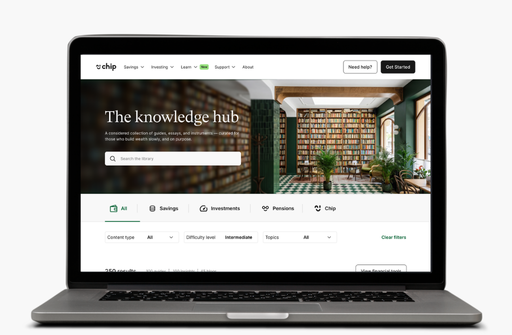
The knowledge hub

A considered collection of guides, essays, and instruments — curated for those who build wealth slowly, and on purpose.

0
results
Filter results
Filter by:
Content type
Difficulty level
Topics
0
results
View financial tools
What's my replaceable ISA allowance?
2 min read
Savings Strategies & Tips

ISAs are the most popular savings product in the UK, but they aren’t always the easiest to understand if you aren’t familiar with the ins and outs.

Some Cash ISAs are flexible. That means if you take money out, you can put it back in again within the same tax year, without using up any of your annual £20,000 ISA allowance.

But your ‘replaceable ISA allowance’ goes beyond that.

This is the extra "capacity" created when you withdraw money from a previous tax year. Instead of losing that tax-free space forever, you get a temporary window to put that exact amount back in without it counting as a new contribution.

The previous tax year rules

If you have a large balance built up over several years, a Flexible ISA allows you to treat that "old" money with the same freedom as your current £20,000 allowance.

You can withdraw "old" money: Let’s say you have £50,000 from previous years, you can withdraw any amount of it, e.g. £30,000, and your "replaceable allowance" for the year effectively becomes £50,000 (£20,000 current limit + £30,000 old money).

The "same account" restriction: While you can pay current year replacements into different ISAs, you must pay previous year replacements back into the exact same account they were taken from.

The "use it or lose it" deadline: Regardless of how old the money was, the "flexible window" always slams shut on 5 April. If you withdraw £30,000 of old money in August 2025, you have until midnight on 5 April 2026 to replace it. If you miss that date, that £30,000 of "tax-free capacity" is gone forever.

How the flexible money goes back in (the order)

HMRC has a "filling up" order for when you pay money back into a flexible ISA so you always know how its affecting you

  1. Replenish previous years first: Your deposits first "fill back up" any money you took out from previous years.
  2. Replenish current year next: Once old money is replaced, your deposits then cover any current-year withdrawals.
  3. New subscriptions last: Only after all withdrawals are replaced do your deposits start counting toward your fresh £20,000 annual limit.

Why it can supercharge your tax-free savings

A replaceable ISA allowance gives you flexibility that many people don't realise they have.

In practice, this means you can pay in more than £20,000 in a single year, as long as part of that amount is replacing money you previously took out.

That flexibility makes your ISA a more adaptable tool for real life. You can use it for short-term needs, like a house deposit, home improvements, or a major life event, and still keep your long-term plans intact.

It can also be particularly useful if you have already used your £20,000 allowance for new money elsewhere and did not realise (or forgot) you still had the option to replace earlier withdrawals.

The key is knowing the allowance is there, and making use of it within the same tax year if it fits your situation.

Personal Savings Allowance Guide
2 min read
Intermediate
Rates, Tax & Economics

What is the Personal Savings Allowance and what does it mean for my savings?

The Personal Savings Allowance is a tax exemption introduced by the UK government to enable individuals to earn interest on their savings without being taxed on it.

The amount of interest you can earn tax-free depends on your tax bracket. As of the current tax year, there are three tax bands:

  • Basic rate taxpayers: If you are a basic rate taxpayer, you can earn up to £1,000 in savings interest tax-free.
  • Higher rate taxpayers: Higher rate taxpayers have a Personal Savings Allowance of £500, meaning they can earn up to £500 in interest tax-free.
  • Additional rate taxpayers: Unfortunately, individuals in the additional rate tax bracket do not receive a Personal Savings Allowance, and all their savings interest is subject to tax.

What counts as savings interest under the Personal Savings Allowance?

The Personal Savings Allowance covers various types of savings interest, including interest earned from:

  • Bank and building society accounts.
  • Credit union and National Savings and Investments (NS&I) accounts.
  • Interest distributions from authorised unit trusts and open-ended investment companies (OEICs).
  • Income from government or corporate bonds.
  • Most types of purchased life annuity payments.

It's important to note that dividends from shares and other investments are not considered savings interest and are subject to different tax rules.

How much do I need in savings before my interest is taxed?

The Personal Savings Allowance applies to your total savings interest earned in a tax year, which runs from April 6th to April 5th of the following year. The threshold depends on your tax bracket:

  • Basic rate taxpayers: You can earn up to £1,000 in savings interest tax-free.
  • Higher rate taxpayers: You have a tax-free allowance of £500 for savings interest.
  • Additional rate taxpayers: Unfortunately, there is no tax-free allowance for savings interest in this bracket.

For example, if you are a basic rate taxpayer and earn £800 in interest within a tax year, you won't have to pay any tax on it. However, if you earn £1,200, the excess £200 will be subject to tax. See our interest rates calculator.

You're taxed on savings interest in the tax year you can access it

It's important to remember that the tax year you're taxed on your savings interest is based on when you can access the funds and not when they were earned.

For example, if you earned interest in March but couldn't access it until April, it would be taxed in the following tax year.

Summary

The Personal Savings Allowance offers a great opportunity for UK residents to earn tax-free interest on their savings.

By understanding the tax bands and thresholds, you can make the most of your savings and potentially keep more of your hard-earned money.

Remember to consult with a financial advisor or HM Revenue and Customs (HMRC) for personalised advice and stay informed about any changes to the tax laws.

5 Easy Ways To Help Save Money
2 min read
Beginner
Savings Strategies & Tips

There are many simple and effective ways to cut down on your spending, so you can save more money each month. 

If you're looking for some inspiration on how to save money in the UK, here are five great tips to help you get started. See how long it will take to reach your savings goal with our savings calculator.

1) Make a budget and stick to it

The first and most important step to saving money is to have a budget. A budget is simply a plan for your money, which helps you see exactly where your money is going.

Make a list of all your income and expenses, and see where you can cut down. 

Once you have a savings budget, make sure you stick to it. This is the key to saving money and keeping your finances under control. Learn about different savings accounts.

This is not financial advice - this is about simple tips to get going, while not impacting your day to day life or living a life of extreme frugality.

So if this sounds like it’s for you, read on!The following should not be taken as advice or guidance around financial hardship. If you're in this situation, there is support available from GOV.UK or Citizens Advice that can help.

2) Cut down on your food expenses

Food is one of the biggest expenses in many households. By being smart about your food shopping, you can save a lot of money. 

For example, buy food in bulk when it is on sale, and freeze it for later. Consider swapping big brands for own brand products or using discount supermarkets.

Cook meals at home instead of eating out, and bring your lunch to work instead of buying it. These small changes can add up to big savings.

3) Reduce your energy bills

Another way to save money is by reducing your energy bills. You can do this by washing your clothes at 30 degrees, using energy-efficient light bulbs, and turning off appliances when they're not in use.

Heating is a big expense so turning down radiators and the flow temperature of your boiler to 60 degrees can also help you make big savings over the year. 

There are plenty of resources online such as GOV.UK with tips.

4) Shop around for the best deals

When it comes to buying things like insurance, broadband, and mobile phone contracts, it's important to shop around for the best deals. 

Don't just go with the first offer you see, take the time to compare prices and find the best deal for you. You can use price comparison websites to make this easier.

5) Save a little each month

Finally, one of the easiest ways to save money is by setting aside a little each month. You don't have to save a lot, just a few pounds here and there.

Start by setting up a regular amount (on payday for example) to go from your bank account to a savings account and watch your savings grow over time.

Saving money is all about being smart with your finances. By following these five money-saving tips, you'll be able to cut down on your spending and keep more money in your pocket. So, why not get started today?

What are ETFs and how do they work?
2 min read
Beginner
Asset classes

How do ETFs work?

ETFs work by tracking a specific index, sector or asset class, and are traded on stock exchanges throughout the trading day, similar to individual shares. 

This means that prices fluctuate throughout the trading day, unlike mutual funds which are priced once per day at market close.

ETF prices fluctuate during the trading day based on supply and demand, giving investors closer visibility of performance. 

Unlike actively managed funds, most ETFs are passively managed, meaning they aim to track the performance of a benchmark or index, rather than trying to outperform it.

This usually means lower fund management fees, which can become expensive over the long term.

Types of ETFs explained

There’s a wide range of ETFs available, covering just about every asset type, region, and trend you can think of. Here are some common categories:

  • Stock ETFs – Track a group of company shares, often from a major index like the S&P 500 or FTSE 100. They offer broad market exposure in a single investment.
  • Bond ETFs – Invest in a mix of government or corporate bonds, offering greater stability and often regular income through interest payments.
  • Commodity ETFs – Follow the price of physical goods like gold, oil, or agricultural products, either by holding the actual commodity or companies in the sector.
  • Sector/Industry ETFs – Focus on specific areas of the economy, such as healthcare, technology, or finance, allowing you to invest in a theme you believe in.
  • Thematic ETFs – Capture emerging trends like clean energy, electric vehicles, AI, or future mobility by investing across sectors aligned to a common theme.
  • ESG ETFs – Invest in companies that meet environmental, social, and governance criteria – appealing to values-led investors, like the FTSE Global All Cap ESG.
  • Crypto or Bitcoin ETFs – Provide exposure to digital assets like Bitcoin or Ethereum, often in a more regulated and accessible form than buying crypto directly.

Why invest in ETFs?

ETFs have become a go-to tool for both new and experienced investors, for several reasons:

  • Diversification – One ETF can hold hundreds of underlying investments, spreading risk across sectors, regions, or asset classes.
  • Low fees – With most ETFs being passively managed, they typically come with lower annual costs compared to actively managed funds.
  • Transparency – ETF holdings are usually published daily, so you can track price movements more closely.
  • Accessibility – Traded on major exchanges and available through investment platforms, you can invest in ETFs just like you would a single share.
  • Passive investing – For those who want a simple, long-term approach, ETFs allow you to mirror entire markets or sectors without having to pick individual stocks.

How can ETFs make you money?

ETFs can generate returns in two main ways:

  1. Capital growth – If the price of the ETF rises (because the value of its underlying assets has gone up), you can sell your shares at a profit.
  2. Dividends – Some ETFs distribute income received from the underlying assets, like dividends from shares or interest from bonds. Others are “accumulating” ETFs, which reinvest earnings automatically to prioritise growth. 

How to invest in ETFs (UK)

If you're in the UK and want to start investing in ETFs, here’s how to get started:

  1. Choose a platform – Use a UK investment platform like Chip.
  2. Open an account – This could be a Stocks and Shares ISA to benefit from tax-free growth, or a General Investment Account (GIA), where proceeds are potentially taxable, subject to any annual exemption that may apply.
  3. Find your ETFSearch by index, theme, or region. Many platforms offer filters and performance data to help you compare options.
  4. Place your order – Decide how much you want to invest and place a buy order. You can invest a lump sum or set up a regular monthly investment.
  5. Monitor your portfolio – Keep an eye on performance over time, and rebalance your holdings if your goals or risk appetite change.

Risks of investing in ETFs

ETFs offer diversification, but they’re not risk-free. Here are some things to watch out for:

  • Market risk – If the assets your ETF tracks fall in value, your investment will too.
  • Liquidity risk – Some ETFs (especially niche or new ones) may not be easy to buy or sell at your preferred price.
  • Tracking error – Occasionally, an ETF won’t exactly mirror the performance of its underlying index.

ETFs summary

ETFs offer a flexible, low-cost way to invest in a wide range of assets.

Whether you’re just getting started or adding diversification to an existing portfolio, they provide instant exposure to markets and themes with relatively low effort.

But like any investment, it's important to research the ETF’s holdings, costs, and strategy before investing.

Our next guide covers commodities, and how physical assets can play a role in a diversified portfolio.

FAQs

What is an ETF in the UK?

An Exchange-Traded Fund (ETF) is an investment fund traded on UK stock exchanges like the London Stock Exchange. It can track markets, sectors, or themes, and is used to build diversified portfolios at low cost.

Does an ETF pay dividends?

Many ETFs pay dividends. Look for “income” or “distribution” ETFs. Some ETFs reinvest the earnings automatically (these are called “accumulating” ETFs).

How do I invest in ETFs?

Open an account with a UK investment platform, choose a suitable ETF, and place a buy order. You can invest via a Stocks and Shares ISA to make it tax-efficient.

How much should a beginner invest in ETFs?

Start with what you’re comfortable with. The emergence of investing platforms means you can now start investing with very little – with Chip, you can get started with £1. The key is consistency and focusing on long-term growth.

What does ETF stand for?

ETF stands for Exchange-Traded Fund – a type of fund you can buy and sell like a stock, offering instant diversification across markets or sectors.


Seccl Custody Limited is the ISA Manager for the Chip Stocks and Shares ISA. A monthly or annual ChipX membership is required for certain funds selected within a Stocks and Shares ISA. Fund management charges apply ISA limits apply.Invest £20k per tax year. Tax treatment depends on individual circumstances and may be subject to change in the future.

GIA proceeds are potentially taxable, subject to any annual exemption that may apply.

Investment into cryptocurrency ETFs is not available via the Chip platform. Chip offers investment funds that invest in different assets as a collective investment.

Passive and active investing explained
2 min read
Beginner
Investing strategies

What is passive investing?

Passive investing is a long-term investment strategy that aims to replicate the performance of a market index, rather than trying to beat it.

Investors typically buy into funds, such as index funds or exchange-traded funds (ETFs), that track a broad market benchmark like the FTSE 100 or S&P 500.

Key passive investing characteristics
  • Low cost: Passive funds generally have lower fees because they require minimal management. 
  • Buy-and-hold approach: Passive investors aim to ride out market ups and downs over time. 
  • Diversification: Tracking an index provides exposure to a wide range of companies.

What is active investing?

Active investing involves ongoing decision-making to buy, hold, or sell assets in an attempt to outperform the market. 

This strategy is often managed by fund managers or individual investors who analyse market trends, company performance, and economic indicators to make investment choices.

Key active investing characteristics
  • Higher costs: Fund management, research, and transaction fees tend to be higher. Learn about investment fees and costs.
  • Tactical decisions: Active managers may buy or sell holdings frequently to exploit market opportunities.
  • Potential for higher returns: Success depends on skill, timing, and market conditions.

The advantages and disadvantages of passive investing

Advantages of passive investing include:
  • Lower fees: Less management means reduced ongoing costs.
  • Simplicity: Ideal for beginners; less time and knowledge required.
  • Market-matching performance: Often performs better than many actively managed funds over the long term.
Disadvantages of passive investing include:
  • No chance to outperform the market: Returns will always closely mirror the index.
  • Limited flexibility: Can’t adjust quickly to market shifts or exploit short-term opportunities.
  • Market downturns: Passive funds track indexes even during declines, with no defensive measures in place.

The advantages and disadvantages of active investing

Advantages of active investing include:
  • Opportunity for higher returns: Skilled asset managers can outperform the market, especially in less efficient markets.
  • Flexibility: Managers can pivot strategies in response to changing conditions.
  • Tailored investment strategies: Portfolios can be aligned with specific goals or themes (e.g., ethical investing, emerging markets).
Disadvantages of active investing include:
  • Higher costs: Active funds charge more, which can eat into returns.
  • Greater risk of underperformance: Many active funds fail to beat their benchmarks after fees.
  • Requires more research and monitoring: Not ideal for novice investors or those short on time.

Is active or passive investing right for me?

Choosing between active and passive investing depends on your goals, how much time you want to dedicate to managing your investments, and how comfortable you are with risk. How to know your risk tolerance.

If you're just starting out, passive investing is often a practical and beginner-friendly option. It requires little ongoing effort, keeps costs low, and provides broad exposure to the market.

It’s especially suited to long-term investors who prefer a “set it and forget it” approach and are happy with market-average returns.

On the other hand, if you're someone who enjoys researching companies, keeping up with economic trends, and believes in your ability (or that of a professional) to spot investment opportunities, active investing might appeal to you. 

It offers the potential for higher returns but comes with more risk, higher fees, and a greater time commitment.

You should also consider your risk tolerance. Passive investing tends to be more stable and predictable, while active investing can be more volatile, especially over shorter periods.

Importantly, you don’t have to choose one or the other. Many investors find that a blend of both, using passive strategies for long-term stability and active ones for targeted opportunities, gives them the best of both worlds.

How to combine active and passive investing

Many investors choose a blended approach, combining both active and passive strategies to balance cost, control, and opportunity.

Common combinations:

  • Core and satellite: Use a passive fund for the core of your portfolio, with smaller “satellite” allocations to active funds targeting specific sectors or regions.
  • Thematic investing: Stick with passive index funds for broad market exposure and add active investments in areas you believe have strong growth potential.
  • Rebalancing over time: Start passive, then explore active strategies as your confidence and knowledge grow.

This approach allows flexibility while keeping fees manageable and risk diversified.

Passive and active investing summary

Understanding the core differences between passive and active investing is essential for building a strategy that suits your financial goals and comfort level. 

While passive investing offers cost-efficiency and simplicity, active investing presents opportunities for higher returns, albeit with added risk and effort.

Ultimately, there's no one-size-fits-all answer. Many UK investors successfully use a mix of both approaches to suit their needs.

In the next guide in our Investment Strategies series, we’ll explore another foundational concept: Growth Investing vs Value Investing, two popular approaches to selecting individual stocks.

Passive income strategies explained
2 min read
Intermediate
Investing strategies

What is passive income?

Passive income refers to earnings generated with minimal ongoing effort. Unlike active income, such as wages from employment, passive income typically stems from investments, a side business, or assets that continue to generate returns without your daily involvement.

In investing, passive income can take various forms: interest from savings, dividends from stocks, rental income from property, or returns from bonds and funds

While setting up these income streams often requires upfront capital or effort, the long-term goal is a source of financial stability that works for you in the background.

Advantages and disadvantages of passive income

Advantages of passive income could include:

  • Financial freedom: Passive income can supplement or even replace earned income, offering more control over your time.
  • Compounding benefits: Reinvesting passive earnings can accelerate long-term wealth accumulation.
  • Diversification: Passive income streams can help balance risk across different asset classes and reduce reliance on employment income.

Disadvantages of passive income could include:

  • Capital requirements: Many passive income strategies require an initial investment, whether in time, money, or both.
  • Market and interest rate risk: Investment returns may fluctuate, especially with stocks, bonds, and property.
  • Maintenance considerations: Some “passive” strategies (like rental property) require ongoing management or decision-making.

Passive income investing ideas

Passive income doesn’t come from a one-size-fits-all approach. Here are several tried-and-tested investing avenues for UK investors:

Dividend Stocks

Dividend-paying shares distribute a portion of a company’s profits to shareholders, typically on a quarterly or annual basis. These can provide a regular income stream in addition to any potential capital gains if the share price rises. Understand how stocks work.

  • Tax note: UK investors benefit from a tax-free dividend allowance (subject to change), but income above this threshold may be taxable. Chip does not offer tax advice.
  • Risk level: Moderate to high, dependent on market volatility and company performance.
Mutual Funds & Index Trackers

Rather than picking individual shares, investing in mutual funds or index trackers offers exposure to a broad range of assets. Some funds are designed to focus on income-generating holdings, distributing returns to investors at regular intervals.

  • Example instruments: UK-focused equity income funds, global dividend funds.
  • Risk level: Varies, diversified funds tend to carry lower risk than individual stocks.
Income Bonds

Income bonds (not to be confused with NS&I Income Bonds) are debt securities that pay investors regular interest over time. These are popular among risk-averse investors who prioritise predictable income.

  • Considerations: Interest rates affect bond performance, when rates rise, existing bonds may become less attractive.
  • Liquidity: Some income bonds can be difficult to sell before maturity.
Property & Real Estate

Buy-to-let properties or investments in Real Estate Investment Trusts (REITs) can provide regular rental income and potential property value growth.

  • Management effort: Rental properties involve ongoing responsibilities, finding tenants, property maintenance, and legal compliance.
  • Upfront costs: Stamp duty, mortgage deposits, and ongoing fees can be significant.
Savings Accounts

While not typically thought of as an "investment", high-interest savings accounts and cash ISAs can generate passive income in the form of interest.

  • Best suited for: Conservative investors seeking capital preservation and low risk.
  • Returns: Generally lower than other investment vehicles, especially during inflationary periods.

Learn more about investment types and asset classes.

Passive and active investing summary

Passive income can be a powerful pillar in your overall investing strategy, especially for those seeking long-term wealth with less hands-on effort. 

While it's not entirely “effort-free,” with the right knowledge and setup, passive investing can complement, or even surpass, active income over time.

In the next part of our Investment Strategies series, we’ll explore the Buy and Hold strategy, a long-term option for those looking to build wealth through passive income channels.

Pension contributions
2 min read
Beginner
Building your pension

What is an employee pension contribution? 

An employee contribution is the money taken from your salary to fund your pension. Depending on how your company runs its scheme, this is usually taken in one of two ways:

  • Net pay: Taken from your gross salary before tax is deducted. You get full tax relief immediately (because you don’t pay income tax on that chunk of earnings). 
  • Relief at source: Taken from your net pay after tax. The pension provider then claims the basic rate tax back from the government and adds it to your pot. 

How much should I contribute to my pension? 

While auto-enrolment rules set a legal minimum, relying solely on this may not be enough for a comfortable retirement income. Financial experts sometimes suggest two strategies to set your contribution level.

Pension contribution percentages (‘half your age’ rule) 

A widely cited rule of thumb for ‘comfortable’ retirement savings is the ‘half your age’ rule.

  1. Take the age you start contributing
  2. Half it
  3. Match total contributions to that number as a percentage until you retire

For example:

  • Starting at 22? Aim for 11% total contributions
  • Starting at 30? Aim for 15% total contributions
  • Starting at 40? Aim for 20% total contributions

Note: Total contributions are your contributions, your employers and tax relief.

Maximising employer matching contributions 

Many employers offer a ‘matching contribution’. For example, if you increase your contributions from 5% to 7%, the employer will also contribute 7%.

If your employer offers this and you are able to make this extra contribution, maximising it ensures you receive the highest possible contribution from your employer.

Make sure if you are able to make the extra contributions, you’re claiming the maximum amount your employer will match.

What is an employer pension contribution? 

An employer contribution is money from your employer paid into your pension. It does not come out of your salary; it’s an extra cost to the business, on top of your wages.

Because this money is paid directly into a pension, it is not liable for Income Tax or National Insurance contributions at the point of payment, making it a highly tax-efficient way to be paid.

How much does my employer contribute to my pension? 

Your employer must contribute to your pension if you are an eligible worker. You must meet the following criteria:

  • Be between age 22 and State Pension age. 
  • Earn at least £10,000 a year.
  • Ordinarily work in the UK. 

The amount they pay is dictated by Automatic Enrolment rules.

Note: Even if you don't meet the criteria for automatic enrolment, you may still be able to join your employer's pension scheme voluntarily. If you earn between £6,240 and £10,000 a year, or are aged 16–21 or above State Pension age, you have the right to opt in, and your employer will still be required to contribute. 

Auto-enrolment thresholds

The government sets total minimum contribution rates for employers and employees, which are currently 8% of your ‘qualifying earnings’ (between £6,240 and £50,270).

This 8% is usually split as follows:

  • 3% from the employer (the legal minimum they must pay). 
  • 5% pay contributions from the employee (the amount you must pay to make up the difference).

Opting out means losing your employer's 3% contribution entirely, effectively a reduction in your overall pay.". 

Read our full guide on workplace pensions.

Pensions tax, relief and thresholds

Now we’ve covered your contributions, it’s important to understand how the government treats that money once it’s in your pension.

A pension is one of the few places you can earn money without immediate taxation. A key benefit of a pension is tax relief, where the government adds money to your pot.

However, the generosity isn’t unlimited, and there are strict thresholds on how much you can save; and how much tax-free cash you can take as a lump sum.

Read our next guide to understand the limits you need to watch out for.

Understanding what is a robo-advisor
2 min read
Beginner
Investing trends

How robo-advisors work

At their core, robo-advisors use algorithms to build and manage diversified investment portfolios based on your personal goals, risk tolerance, and time. The process usually involves:

  • Initial Questionnaire: You answer questions about your financial goals, attitude to risk, and investment timeline.
  • Portfolio Recommendation: The platform allocates your funds across a range of assets, often using low-cost index funds or ETFs.
  • Automatic Rebalancing: Over time, the robo-advisor will adjust your portfolio to maintain your chosen level of risk and diversification.
  • Optional Features: Some services may include tax-loss harvesting, goal tracking, or ethical investing filters.

Robo-advisors typically operate under the regulation of the Financial Conduct Authority (FCA) in the UK, providing a layer of consumer protection.

Pros and cons of using a robo-advisor

One of the key functions of a robo-advisor is that it uses an algorithm to take the emotion out of investing and aims to help an investor achieve better returns. 

This naturally comes with various advantages and disadvantages when it comes to using a robo-advisor. Some of the advantages of using a robo-advisor include:

  • Low Fees: Robo-advisors tend to charge lower fees than traditional financial advisers.
  • Simplicity: Great for beginners; the platforms do most of the work for you.
  • Diversification: Portfolios are usually spread across multiple assets and geographies.
  • Automatic Rebalancing: Your investments are maintained without requiring your input.
  • Regulated: Most platforms in the UK are FCA-regulated, offering a level of trust and oversight.

However, there are some disadvantages of using a robo-advisor, such as:

  • Limited Personalisation: Less tailored than advice from a human financial adviser.
  • Less Control: You typically can’t pick individual investments or stocks.
  • Not Always Suited for Complex Needs: If you have multiple financial goals or more intricate tax planning needs, robo-advisors might not be enough.
  • Performance Can Vary: As with all investing, returns are not guaranteed.

How to choose a robo-advisor

If you're considering using a robo-advisor, here are some key criteria to consider:

  1. Fees and Costs: Look at both the platform fee and fund charges. Even small differences in fees can have a significant impact over time. Understand investment fees.
  2. Minimum Investment: Some platforms require only £1 to start, while others may have higher thresholds. Choose one that fits your current financial position.
  3. Portfolio Construction: Check what kind of assets are used, most robo-advisors use ETFs, but the exact approach to diversification can vary.
  4. User Experience: A clear, intuitive dashboard and helpful customer support can make a big difference, especially for newer investors.
  5. Regulation and Safety: Ensure the platform is FCA-authorised and that your money is held with a custodian covered by the Financial Services Compensation Scheme (FSCS).

Who are robo-advisors best suited for?

Robo-advisors are particularly well-suited to:

  • First-time investors seeking simplicity
  • Those who prefer a passive investment approach
  • Individuals who want to "set and forget" their portfolio

They may be less suitable if you:

  • Want custom financial planning advice
  • Are interested in actively managing your investments
  • Have complex tax or estate planning needs

Alternatives to robo-advisors

If a robo-advisor doesn’t seem like the right fit, consider these alternatives:

1. DIY Investing

Using platforms like investment apps or online brokers, you can choose your own funds or stocks. This requires more knowledge and time but gives you full control.

2. Financial Advisers

A qualified human advisor can offer personalised financial planning and investment recommendations and are often helpful if your finances are more complex.

3. Multi-Asset Funds

Some investment funds offer a ready-made diversified portfolio managed by professionals, similar in approach to robo-advisors but without the digital interface.

Are robo-advisors right for you?

Robo-advisors have opened the door to investing for a new generation of UK savers. By providing a streamlined and automated way to access diversified portfolios, often at a lower cost than traditional financial advice.

For those just beginning their investment journey, robo-advisors can serve as a practical and approachable starting point. 

They handle portfolio management, reduce the need for constant decision-making, and help keep you aligned with your financial goals. However, they aren’t the right fit for everyone.

If your finances are more complex, or if you prefer greater control over your investments, you may want to explore other options such as DIY investing or working with a financial adviser.

Next in the series: ESG and Sustainable Investing Explained, where we explore how to invest with purpose, what ESG criteria actually mean, and what UK investors should consider when aiming to make a positive impact with their money.

Robo-advisors are not available via the Chip platform. Chip offers self-invested funds that invest in different assets as a collective investment.

Investing: Why you should ignore the ghost stories
2 min read
Beginner
Investing strategies

The word investing can send a chill down some people’s spines.

Terms like “volatility” and “risk” can sound straight out of a horror film. And ‘losing all your money’ well that’s the stuff of nightmares.

But here’s the truth: investing doesn’t have to be scary. In fact, once you understand it, it’s far less Freddy Krueger and much more Casper the friendly ghost.

Let’s (ghost)bust a few myths and show you how Chip helps keep your money safe from what’s lurking in the shadows.

Myth 1. “I could lose everything!?”

This is the classic jump scare. But barring something like a zombie apocalypse, it's almost impossible. 

Yes, markets go up and down, that’s part of the story. 

But when you invest through Chip, your money is spread across hundreds (sometimes thousands) of companies, sectors, and regions. So even if one part of your portfolio takes a fright, others can help you get through the night.

And if we do have a ‘28 Days Later’ scenario, then I think we all have bigger problems than the stock market.

Myth 2. “I need to be an expert”

You don’t need to be a mysterious, all-knowing spectre hiding in a candlelit library to invest. With Chip, you can start from as little as £1, choose from clear, ready-made investment funds that are good to go.

The hard work is done for you, partnering with (real) experts who manage your investments funds for a low-transparent fee, so you can focus on growing your money without wondering what’s hiding under the bed.

Simple, smart, and built for everyone – not just the wizards of Wall Street.

Myth 3: “Now’s not the right time.”

Trying to time the market perfectly is like trying to cheat death in Final Destination – it’s highly unlikely to happen

Markets move, the news cycle changes, and there’s always a new headline to worry about. But history shows that staying invested, rather than trying to time it, is how you survive the scary bits and see the best long-term results.

If you’re nervous, try easing in with pound-cost averaging: investing small amounts regularly, so you smooth out the ups and downs over time. It’s a calm, steady way to build your confidence - and your wealth.

Myth 4: “You need loads of money to get started.”

This one is another work of fiction – like a 104-year-old vampire who decides to use his immortality to endlessly repeat high school.

In fact, getting started early (even with small amounts) can make a huge difference thanks to the magic of compounding; where your returns start earning returns of their own.

At Chip, you can begin with just £1 and build from there. No big commitment, no minimums — just a realistic, approachable way to put your money to work.

So this Halloween…

Don’t let the fear of the unknown and old ghost stories stop you from getting started with investing.

And as an added bonus, start now and pay 0% platform fees* until 31 January 2027. Eligibility & T&Cs apply.

With Chip on your side, a clear plan, and a little guidance, investing isn’t a horror story — it’s just another way to grow your money.

* Fund management charges apply.

Thank you! Your submission has been received!
Oops! Something went wrong while submitting the form.