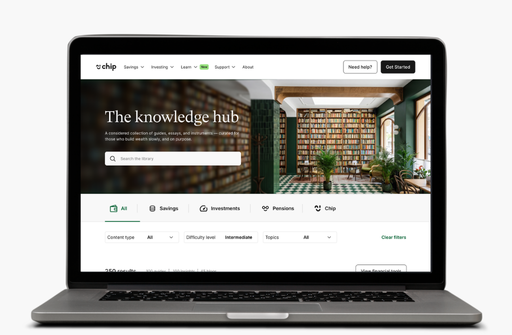
The knowledge hub

A considered collection of guides, essays, and instruments — curated for those who build wealth slowly, and on purpose.

0
results
Filter results
Filter by:
Content type
Difficulty level
Topics
0
results
View financial tools
The FTSE 100 is beating Bitcoin
2 min read
Expert
Asset classes

This week the UK’s most famous index, the FTSE 100, reached fresh highs, closing above 9,5001 and extending its year-to-date gains to around 15%, a standout in global equity markets.2

We picked out the FTSE 100 back in June for its notable performance, and it's taken that momentum into the Autumn. 

While this isn’t a competition, the index of old British staples is having such a good year that it’s beating the young gun, Bitcoin, with its 2025 return trailing at around 10%*. And we all know which gets far more headlines.

* FTSE 100 and Bitcoin price accurate as of 15:45 on 23 October 2025 adjusted for dividends and currency. Source: Google Finance

What’s pushing the FTSE 100 higher

Global asset manager Fidelity offered some key insight as to why the index is having such a strong year:  3

  • Strong defensive & diversified mix: The FTSE 100 is heavy on internationally-oriented giants in mining, energy, finance and defence that are benefiting from higher commodity prices and global volatility in areas like tech.
  • Relative value appeal: UK stocks in well-established brands look comparatively cheap to U.S. counterparts, making them attractive amid global uncertainty.
  • Easing external risks: Relief over U.S. trade policy, combined with resilient UK earnings and solid domestic data, has helped sentiment. 

Why it matters to you

Even in a year of tech-mania and crypto frenzies, it’s a good reminder that you don’t always need to chase the headlines – whether it’s Bitcoin or the latest surging tech stock.

Long-term growth doesn’t have to be flashy. Steady gains from global brands, dividends, and value stocks can build wealth just as well, and often with a lot less drama.

Sometimes, the solid returns and stability you’re looking for are closer to home, and in investing, the tortoise often beats the hare.


How Chip can help you take advantage

With Chip, you’ve got access to diversified index funds like the FTSE 100, the S&P 500 and Nasdaq 100, alongside other regions, themes and sectors.

Check out those fund options in the Invest tab in your app today and see how you could put your money to work today with a tax-free Stocks & Shares ISA or General Investment Account.

‘I had a superpower’ Investors pile into brain implants

2 min read

Jasaun Knight remembers the first time he operated a PC using only his brain.“The experience of controlling a computer with my thoughts, moving a cursor around the screen and playing games, was mind-blowing,” said the 35-year-old American. “It was like telekinesis.

I felt I had a superpower.”Knight is one of fewer than 200 people worldwide who have been implanted with a brain-computer interface (BCI) — a device that detects neural activity and translates it into digital commands.

BCIs have the potential to restore speech and movement to people who have lost them through injury or disease. If the technology becomes safe and affordable, it could turn computers and artificial limbs into more direct extensions of the human body, reshaping the relationship between people and machines.

Companies developing BCIs have already raised more than $1bn in 2026, according to PitchBook data, compared with $1.56bn in the previous four years combined.

Neuralink, founded by Elon Musk a decade ago, is the best-funded, having raised more than $1.3bn in seven rounds. But dozens of competitors are pulling in substantial investments as they pursue a range of approaches to connecting computers to the nervous system.

“The field is advancing rapidly as investors move into neurotechnology, though it has already been well characterised and validated in academia,” said Michael Mager, chief executive of New York start-up Precision Neuroscience, which made Knight’s implant. “We in industry are now taking this transformative technology and making it into products that will have a broad impact.”

The most ambitious companies are developing “invasive” devices inserted through a surgical incision in the skull. Some, like Neuralink, have electrodes that penetrate the brain and are designed for long-term use. Others, including Precision Neuroscience, are developing thin, flexible BCIs that sit on the surface of the brain without piercing it.

Knight received his device during surgery for brain cancer as part of a clinical trial that lasted a few days.

Source: US National Library of Medicine.

“I didn’t feel anything physically in my head,” he said. “Once you get the hang of it, your thoughts control what’s happening on the computer screen with no effort at all. ”Another area of research involves non-invasive systems placed on the scalp, which avoid the need for surgery altogether.

However, although they can be useful for diagnosis and research, the brain signals they receive are weakened by passing through the skull, and the devices are not yet sensitive enough to convert thoughts into dependable computer instructions. “All the hype and the funding is going into implantable BCIs,” said Damien Coyle, director of Bath University’s Institute for the Augmented Human.

“With non-invasive techniques the spatial resolution of signals is not so good, but they have a lot of scope for development over the next few years, for example to modulate brain activity. ”US companies including Synchron, Blackrock Neurotech, Axoft and Merge Labs benefit from deep American venture capital markets and a Food and Drug Administration that executives regard as more responsive than regulators in Europe.

Axoft’s Fleuron BCI neural implant

But a cluster of innovative BCI companies is emerging in Europe, among them CorTec in Germany, Onward Medical in the Netherlands, Spain’s InBrain, and Neurosoft and Ability Neurotech in Switzerland.

“The advantages of a European location lie in our deep engineering and precision manufacturing heritage as well as our talent in neuroscience,” said Frank Desiere, CorTec chief executive.

However, he added that Europe “has a real gap in late-stage funding and scale-up capital, as well as a fragmented reimbursement landscape”, and that the continent lacked a regulator “guiding and consulting manufacturers like in the US”.

The company has chosen US sites — the University of Washington and Mayo Clinic — for the first clinical trials of its BCIs.

Meanwhile, the industry is also growing rapidly in China following Beijing’s designation of BCIs last year as a nationally strategic sector, with a roadmap to create two to three “world-class” companies by 2030.

Several provinces have launched investment funds and industrial zones, backed start-ups and supported hospitals running clinical trials.

Private investors have followed suit. In the first half of 2026, VCs poured Rmb7bn ($1bn) into the broader neurotech sector across 60 investments, according to ITJuzi data.

Roughly a dozen Chinese companies are working on invasive BCI devices, according to a tally by the FT, with a much larger number developing non-invasive applications.

One leader in the field is NeuroXess, founded in Shanghai in 2021, which is developing flexible implants to treat severe neurological disorders.

Analysts say China has a strong advantage with its large patient population for clinical trials and regulatory support for accelerating the technology’s development.

Most BCIs work in one direction, reading signals from the brain and turning them into electronic commands. But some companies are developing systems that can also send signals back, creating a two-way exchange between brain and machine known as closed-loop stimulation.

CorTec is among them. “It’s like having a dialogue with the brain, adapting our therapy to the individual signals of the patient,” said Desiere. “In strokes we target the motor cortex, reading and stimulating the cells there so that they fire together. Neurons that fire together wire together.

”One of neurotech’s biggest opportunities may come when BCIs converge with another rapidly advancing field: prosthetics. Artificial limbs have been around since ancient times but developments in sensors, materials, batteries, motors and software are making them lighter, more capable and easier to control.

Bristol-based Open Bionics makes arms fitted with sensors that detect movement in a user’s remaining muscles and transmit the signals to the prosthetic hand.

Open Bionics CEO Joel Gibbard with the company’s products

While the investment climate has fluctuated during the company’s 12-year existence, its revenues have grown at a compound annual rate of 60 per cent since 2018.Yet even the most advanced artificial hands lack much of the dexterity and sensation of the biological original.

The technical capability to build a hand that replicates many natural movements already exists, according to Joel Gibbard, Open Bionics co-founder and chief executive. But the systems used to control them remain “very, very rudimentary” — a problem BCIs have the potential to resolve.

Researchers hope a direct link to the brain could eventually provide the missing interface — and, if signals flowed both ways, restore a sense of touch.Meanwhile, Open Bionics is embracing the superhero associations of its technology.

Its Hero Arm offers children designs based on characters from franchises including Black Panther and Metal Gear through licensing agreements with companies including Disney.“There are technical limitations for today, but what people think about for the future is inspired by movies and science fiction,” said Gibbard.

Source: Precision Neuroscience

Back in New York, Knight, a former insurance agent who is now training as a software engineer, is considering a new career in neurotech — helping to develop the kind of systems he helped test.“After my experience,” he said, “I’d probably be a perfect candidate.”


Biggest companies in the UK by market cap
2 min read
Beginner
Global cap giants

What are the biggest companies in the UK by market cap?

This list ranks the UK’s biggest public companies by market capitalisation; the cumulative value of a company's total outstanding market shares. We’ll also be highlighting other key figures, such as the company's revenue, gross profit, and 1-year return (all based on the previous fiscal year). 

Some other key facts such as the exchange the company is listed on, the founding year and country the company is headquartered in are also covered.

1. AstraZeneca PLC

  • Market cap: £182.77 billion
  • Revenue: £43.67 billion
  • Gross profit: £31.67 billion
  • 1-yr return: - 10.57%
  • Exchange: London Stock Exchange
  • Year founded: 1913
  • Country: United Kingdom

AstraZeneca is a global, science-led biopharmaceutical company that focuses on the discovery, development, and commercialisation of prescription medicines.

  • Pharmaceuticals: A leading developer of treatments in major disease areas.
  • Global reach: Its innovative medicines are used by millions of patients worldwide.

2. HSBC Holdings PLC

  • Market cap: £164.23 billion
  • Revenue: £110.12 billion
  • Gross profit: N/A 
  • 1-yr return: + 42.14%
  • Exchange: London Stock Exchange
  • Year founded: 1959
  • Country: United Kingdom

HSBC is one of the world’s largest banking and financial services organisations, serving customers worldwide from offices in 62 countries and territories.

  • Wealth and personal banking: Provides a range of services from current accounts and mortgages to wealth management and insurance for individuals.
  • Commercial banking: Offers banking services to small, medium-sized, and large corporations.
  • Global banking and markets: Provides financial services and products to corporate, government, and institutional clients.

3. Shell PLC

  • Market cap: £158.58 billion
  • Revenue: £212.38 billion
  • Gross profit: £36.13 billion
  • 1-yr return: - 0.33%
  • Exchange: London Stock Exchange
  • Year founded: 2002
  • Country: United Kingdom

Shell is a global group of energy and petrochemical companies with a focus on the entire energy value chain.

  • Integrated gas and upstream: Explores for and extracts crude oil, natural gas, and natural gas liquids. It also markets and transports oil and gas.
  • Downstream and renewables: Turns crude oil into a range of refined products, which are moved and marketed around the world for domestic, industrial, and transport use. It is also investing heavily in low-carbon energy solutions like biofuels, hydrogen, and wind power.

4. Unilever PLC

  • Market cap: £114.06 billion
  • Revenue: £50.24 billion
  • Gross profit: N/A
  • 1-yr return: - 5.63%
  • Exchange: London Stock Exchange
  • Year founded: 1930
  • Country: United Kingdom

Unilever is one of the world's leading suppliers of Beauty & Wellbeing, Personal Care, Home Care, and Nutrition products with sales in over 190 countries.

  • Global brands: Owns over 400 brands, including Dove, Ben & Jerry's, Knorr, Lipton, Magnum, and Persil.
  • Consumer reach: Its products are used by 3.4 billion people every day.

5. British American Tobacco PLC

  • Market cap: £91.37 billion
  • Revenue: £25.6 billion
  • Gross profit: £16.58 billion
  • 1-yr return: + 46.86%
  • Exchange: London Stock Exchange
  • Year founded: 1902
  • Country: United Kingdom

British American Tobacco (BAT) is a leading, multi-category consumer goods business that provides tobacco and nicotine products to millions of consumers around the world.

  • Traditional tobacco: A leading global seller of cigarettes with brands like Dunhill, Kent, and Lucky Strike.
  • New categories: Investing heavily in a portfolio of non-combustible products, including vapour (Vuse), heated tobacco (glo), and modern oral nicotine pouches (Velo).

6. Rolls Royce Holdings 

  • Market cap: £90.23 billion
  • Revenue: £19.54 billion
  • Gross profit: £4.77 billion
  • 1-yr return: + 119.47%
  • Exchange: London Stock Exchange
  • Year founded: 1906
  • Country: United Kingdom

A world-leading industrial technology company that provides complex power and propulsion solutions for critical applications.

  • Civil aerospace: Designs and manufactures engines for large commercial aircraft like the Airbus A350 and Boeing 787.
  • Defence: A key supplier of engines for military aircraft and naval vessels worldwide.

7. Rio Tinto PLC

  • Market cap: £78.93 billion
  • Revenue: £41.53 billion
  • Gross profit: £10.08 billion
  • 1-yr return: - 4.47%
  • Exchange: London Stock Exchange
  • Year founded: 1873
  • Country: United Kingdom

Rio Tinto is a leading global mining group that focuses on finding, mining, and processing mineral resources.

  • Key materials: A major producer of iron ore for steel, aluminium for cars and smartphones, copper for wind turbines, and other essential minerals.
  • Global operations: Owns and operates open pit and underground mines, mills, refineries, and smelters, as well as a network of railways and ports.

8. BP PLC

  • Market cap: £66.81 billion
  • Revenue: £144.2 billion
  • Gross profit: £22.79 billion
  • 1-yr return: - 1.11%
  • Exchange: London Stock Exchange
  • Year founded: 1908
  • Country: United Kingdom

BP is a global integrated energy company that delivers solutions for heat, light, and mobility.

  • Oil and gas: Focuses on exploration, production, and refining of oil and natural gas.
  • Convenience & mobility: Operates a large network of retail service stations.
  • Low carbon energy: Investing in renewable energy sources, including bioenergy, hydrogen, and wind and solar power, as part of its transition to a net-zero company.

9. RELX PLC

  • Market cap: £62.96 billion
  • Revenue: £9.53 billion
  • Gross profit: £5.99 billion
  • 1-yr return: - 4.01%
  • Exchange: London Stock Exchange
  • Year founded: 1903
  • Country: United Kingdom

A global provider of information-based analytics and decision tools for professional and business customers.

  • Risk: Provides data and tools for evaluating risk for industries like insurance and banking.
  • Scientific, technical & medical: A major academic publisher through its Elsevier division.

10. GSK PLC

  • Market cap: £58.51 billion
  • Revenue: £31.63 billion
  • Gross profit: £22.68 billion
  • 1-yr return: + 13.88%
  • Exchange: London Stock Exchange
  • Year founded: 1715
  • Country: United Kingdom

GSK (formerly GlaxoSmithKline) is a global biopharma company with a focus on uniting science, technology, and talent to get ahead of disease together.

  • Vaccines: A world-leading vaccine business, providing protection against a range of infectious diseases.
  • Specialty medicines: Develops and manufactures innovative medicines for areas such as HIV, respiratory diseases, and immunology.

What are the biggest companies by total annual revenue?

  • Shell: £214.24 billion
  • Glencore: £180.76 billion
  • BP: £148.05 billion
  • HSBC: £116.6 billion
  • Tesco: £69.92 billion

What are the biggest companies by workforce?

  • Tesco: 336,430
  • HSBC: 211,000
  • Glencore: 150,000
  • Unilever: 120,040

Summary

Understanding a company's performance is crucial; it's how you truly know what you own. These metrics directly drive the value of your stocks and funds. When you understand these key drivers, you can navigate market changes with confidence, rather than just reacting to headlines.

Next we’ll be looking at the biggest companies in Europe by market cap.

All market data sourced from TradingView and company reports as of 01.09.2025.

Introduction to pensions
2 min read
Beginner
Pension basics

What is a pension? 

At its simplest, a pension is a long-term savings plan with special tax rules. Unlike a regular bank account, the government adds money to your pension in the form of tax relief, and your employer will often contribute too.

The money you save is invested, meaning it buys shares, bonds, and other assets to help it grow over time. The goal is to build up a large enough pot of money to provide you with an income when you retire.

How do pensions work? 

Pension pots are built up through ‘compound growth’. You contribute a small amount regularly over many years, and that money earns a return. That return is then reinvested to earn its own return.

Money gets into your pension in one of three ways:

  1. You pay in: Regular monthly payments or lump sums.
  2. Your employer pays in: If you are employed, your company is usually legally required to contribute.
  3. The government pays in: This is called tax relief, effectively ‘free money’ from the government to reward you for saving. We’ll come back to this later.

Read our full guide on pension contributions.

Building your pension pot

What are the main types of pension? 

When building your retirement fund, almost every UK pension falls into one of two categories: Defined Contribution or Defined Benefit. 

Defined Contribution pension scheme 

Most modern private and workplace pensions are Defined Contribution schemes.

  • You and/or your employer pay into a pot. That pot is invested.
  • The final value of your pension depends on how much you paid in and how well your investments performed. This amount is not guaranteed.
  • Examples: SIPPs, Nest, most workplace schemes.
Defined Benefit pension scheme

These are often called ‘final salary’ or ‘career average’ schemes. They are now rare in the private sector but common in the public sector (e.g., NHS, Teachers, Civil Service).

  • Your employer promises to pay you a guaranteed income for life when you retire.
  • The amount is based on your salary and years of service, not on investment performance. Your employer takes the risk, not you.

Sources of pension income

What is the State Pension? 

The State Pension is a regular payment from the government, based on your National Insurance record, not your personal savings.

  • Current amount (2025/26): The full New State Pension is £230.25 per week (approx. £11,973 a year).
  • You usually need at least 10 ‘qualifying years’ on your National Insurance record to get anything, and 35 years to get the full amount.
  • You can claim it when you reach State Pension age, which is currently 66. 

Read our full guide on the State Pension.

What is a workplace pension?  

A workplace pension is arranged by your employer. Thanks to Automatic Enrolment laws, employers must set up a pension for eligible staff and contribute towards it.

  • Minimum contributions: Currently, the minimum total contribution is 8% of your qualifying earnings. 3% must come from your employer. 5% comes from you (including tax relief).
  • If you opt out, you are essentially turning down a pay rise in the form of employer contributions.

Read our full guide on workplace pensions.

What is a private pension?  

A private pension (also known as a Personal Pension) is one you set up yourself. This is essential if you are self-employed or want to save extra money on top of your workplace scheme.

  • SIPPs: A Self-Invested Personal Pension (SIPP) is a popular type of private pension that gives you full control over where your money is invested.
  • Flexibility: You can usually stop, start, or change your contributions whenever you like.

Read our full guide on private pensions.

An intro to pension tax rules

What is pension tax relief? 

Tax relief is how the government encourages you to save. It effectively refunds the Income Tax you paid on the money you put into your pension.

  • Basic rate taxpayers (20%): To save £100, you only pay £80. The government adds the other £20.
  • Higher and additional rate taxpayers (40-45%): You can claim back an additional 20-25%, meaning a £100 contribution effectively costs you only £55-60. The first 20% is typically paid out automatically into the pension and the additional 20-25% will need to be claimed through a Self Assessment tax return. 
What is the pension annual allowance? 

The amount you can save into a pension each year while still benefiting from tax relief is limited.

  • The limit (2025/26 tax year): For most people, the Annual Allowance is £60,000 per tax year (or 100% of your earnings, whichever is lower).
  • High earners: If you earn over £200,000, your allowance may be reduced (tapered).
  • If you don't use your full allowance, you can often carry forward unused allowance from the previous three years.
  • Once taxable income has been taken by an individual through flexible drawdown or the tax-free lump sum, tax relieved contributions to defined contribution pensions are limited to £10,000 per tax-year. This is the Money Purchase Annual Allowance (MPAA).

Read our full guide on pensions tax, relief and allowances.

Understanding SIPPs

While workplace pensions are a great foundation, they often lack flexibility and investment choice.

A Self-Invested Personal Pension (SIPP) allows you to choose exactly where your pension is invested. Read our next guide to discover how SIPPs work and if one is right for you.

Biggest companies in Japan by market cap
2 min read
Intermediate
Global cap giants

What are the biggest companies in Japan by market cap?

This list ranks the biggest public companies in the Japanese market by market capitalisation. We’ll also highlight other key figures, such as revenue, gross profit, and 1-year return. Key facts like the company's exchange, founding year, and country are also covered.

1. Toyota Motor Corp. 

  • Market cap: $246.8 billion
  • Revenue: $329.03 billion
  • Gross profit: $63.5 billion
  • 1-yr return: +14.38%
  • Exchange: TSE
  • Year founded: 1937
  • Country: Japan

Designs, produces, and sells a wide range of vehicles across several brands. Their philosophy is key to their success, focusing on eliminating waste and continuous improvement (“kaizen”). This has built them a reputation for quality and long-term reliability. 

  • Automotive sales: Largest source of revenue generated from sales of their core Toyota brand, their luxury division Lexus, and other brands like Daihatsu (small cars) and Hino (trucks). 
  • Hybrid technology: pioneer of hybrid tech with the iconic Prius, with future strategy focusing on a diverse approach to electrification, and investment in next-gen electric cars and solid-state batteries. 

2. SoftBank Group Corp. 

  • Market cap: $194.89 billion
  • Revenue: $25.74 billion
  • Gross profit: N/A
  • 1-yr return: +137.88%
  • Exchange: TSE
  • Year founded: 1981
  • Country: Japan

A multinational conglomerate holdings company renowned for making huge, bold investments in the world’s boldest and most innovative tech companies.

  • Vision fund: one of the world’s largest venture capital funds, with multi-billion dollar investments in late-stage startups and public companies across sectors like Artificial Intelligence (AI), biotech, and fintech.
  • Arm holdings: its most valuable asset is its huge stake in the British firm that designs chips for most of the world’s smartphones, whilst maintaining interests in telecommunications and other technology assets. 

3. Mitsubishi UFJ Financial Group 

  • Market cap: $174.52 billion
  • Revenue: $81.70 billion
  • Gross profit: $8.28 billion
  • 1-yr return: +59.18%
  • Exchange: TSE
  • Year founded: 2001
  • Country: Japan

Japan’s largest bank and one of the world’s leading full-service financial institutions.

  • Retail and commercial banking: serving millions of customers and businesses across Japan through its main banking unit, MUFG Bank, offering a full suite of services from deposits and loans to wealth management.
  • Corporate and investment banking: provides large-scale financing, treasury, and securities management services to multinational corporations and institutional investors globally. 

4. Sony Group Corporation

  • Market cap: $171.37 billion
  • Revenue: $85.36 billion
  • Gross profit: $25.13 billion
  • 1-yr return: +60.77%
  • Exchange: TSE
  • Year founded: 1946
  • Country: Japan

A huge Japanese conglomerate that has evolved from a legendary electronics maker into a global entertainment and technology giant. 

  • Entertainment empire: Sony Gaming produces the iconic PlayStation, Sony Music is one of the world’s largest record labels, and Sony Pictures produces major Hollywood films and TV.
  • Technology: leader in high-end consumer electronics like Bravia TVs and Alpha camera, but its most critical business is imaging and sensing solutions, where it is a world leading manufacturer of the camera sensors used in a majority of smartphones, including the iPhone. 

5. Hitachi Ltd.

  • Market cap: $130.93 billion
  • Revenue: $85.36 billion
  • Gross profit: $19.29
  • 1-yr return: +18.35%
  • Exchange: TSE
  • Year founded: 1980
  • Country: Japan

An industrial conglomerate that’s evolved from a heavy industry giant to a technology leader focused on IT and social industry.

  • Digital systems and services: IT solutions for its business customers focusing on data storage, AI, and its ‘Lumada’ Internet of Things platform (connects physical machinery to digital analytics).
  • Green energy, mobility and connective industries: build and maintain critical infrastructure, from high speed rail, power grids, construction machinery and advanced automotive components.

6. Sumitomo Mitsui Financial Group 

  • Market cap: $104.08 billion
  • Revenue: $64.18 billion
  • Gross profit: N/A
  • 1-yr return: +33.19%
  • Exchange: TSE
  • Year founded: 2002
  • Country: Japan

One of Japan’s largest ‘megabanks’, SMFG is a major global financial institution and holdings company that operates globally in retail, corporate, and investment banking.

  • Sumitomo Mitsui Banking Corporation: the group's main subsidiary, providing retail and commercial banking services to millions of individual customers and corporate clients across Japan.
  • Corporate and investment banking: serves multinational clients with project financing and trade finance, alongside its securities division, SMBC Nikko Securities, which handles brokerage and underwriting. 

7. Nintendo Co.

  • Market cap: $98.33 billion
  • Revenue: $10.12 billion
  • Gross profit: $5.04 billion
  • 1-yr return: +65.57%
  • Exchange: TSE
  • Year founded: 1889
  • Country: Japan

World famous pioneer of the video game industry. The mastermind behind the Wii, DS, Switch and a range of iconic games.

  • Consoles and hardware: core focus of the business, having evolved from the iconic Nintendo 64 and GameCube, to the Switch and 3DS.
  • Games: some of the world’s most valuable entertainment intellectual property, such as Super Mario, The Legend of Zelda, and Pokémon franchises, which are being expanded into movies and theme parks.

8. Fast Retailing Co. 

  • Market cap: $95.33 billion
  • Revenue: $22.75 billion
  • Gross profit: $10.80 billion
  • 1-yr return: -2.63%
  • Exchange: TSE
  • Year founded: 1949
  • Country: Japan

Global fashion retail holding company that owns big names such as UNIQLO, GU, Theory and Helmut Lang.

  • UNIQLO: core business offering, operating thousands of stores worldwide. They focus on producing high-quality, functional and affordable basic apparel for a mass audience.
  • Other brands: focus on greater affordability through GU, and more premium offering through Theory.

9. Keyence Corporation 

  • Market cap: $92.19 billion
  • Revenue: $7.27 billion
  • Gross profit: $6.08 billion
  • 1-yr return: -12.61%
  • Exchange: TSE
  • Year founded: 1972
  • Country: Japan

A global leader in the development and manufacturing of factory automation sensors, measurement systems, and other industrial electronics.

  • Tech: its core business involves creating high-tech products like sensors, vision systems, and laser markers that are essential for automating production lines in industries such as automotive, electronics, and food packaging.
  • Sales: the company is renowned for its unique direct-sales business model, where a highly-trained salesforce works directly with customers on-site to solve complex engineering problems, leading to exceptionally high profit margins and a deep understanding of market needs.

10. Mitsubishi Corporation

  • Market cap: $88.25 billion
  • Revenue: $123.26 billion
  • Gross profit: $11.27 billion
  • 1-yr return: +15.42%
  • Exchange: TSE
  • Year founded: 1950
  • Country: Japan

Japan’s largest general trading company, Mitsubishi is a vast conglomerate that trades in nearly everything and acts as a major global investor.

  • Commodities and products: traditional business trades everything from sourcing and distributing energy, metals and chemicals to food and machinery.
  • Strategic investor: takes significant ownership stakes in businesses and develops large-scale industrial projects, such as power plants, mining operations, and retail enterprises around the world.

What are the biggest companies by total annual revenue?

  • Toyota Motor Corp.: $320.52 billion 
  • Honda Motor Co Ltd.: $144.71 billion 
  • Mitsubishi Corporation: $124.23 billion 
  • Itochu Corporation: $98.18 billion 
  • Mitsui & Co Ltd.: $97.78 billion

What are the biggest companies by workforce?

  • Toyota Motor Corp.: 383,850
  • NTT Inc.: 341,320 
  • Sumitomo Electric Industries Ltd.: 288,140
  • Hitachi Ltd.: 282,740 
  • Japan Post Holdings Ltd.: 218,720

Summary

Understanding a company's performance is crucial; it's how you truly know what you own. These metrics directly drive the value of your stocks and funds. When you understand these key drivers, you can navigate market changes with confidence, rather than just reacting to headlines.

Next we’ll be looking at the biggest companies in the USA by market cap.

All market data sourced from TradingView and company reports as of 06.10.2025.

The mastering your money mindset: Simple psychology for smarter saving
2 min read
Intermediate
Money Mindset & Lifestyle

We all have financial goals. Whether you're aiming for early retirement, paying off your mortgage, or growing your pension, the path to success depends on more than just numbers. 

It's about mindset. Managing money isn’t just about budgeting or resisting impulse buys; it’s about understanding your relationship with money. 

So, with that in mind, let’s explore some psychological strategies and simple tricks to help keep you on track with your savings goals.

Discover your money personality

Each of us has a unique relationship with money, influenced by upbringing, experiences, and even cultural shifts. Some people naturally save, always preparing for the future. Others tend to spend impulsively, enjoying life in the moment.

To understand your money personality, reflect on how your family viewed money growing up.

Did your parents or friends have the same financial habits as you? Acknowledging your financial background can be eye-opening.

For example, in the 1980s, the average age of marriage in the UK was 25, while today it’s 34. Similarly, first-time homebuyers were 28 on average in the '80s, but now the typical age is 34.

These shifts mean our financial expectations have changed dramatically, but our attitudes may not have kept pace.

Visualise your financial success

Imagine yourself in 10 years, living your dream life – perhaps you’re mortgage-free, retired early, or taking monthly holidays.

Visualisation is a powerful tool and can help turn long-term goals into daily motivators.

Create a vision board, save goal-related images on Pinterest, or stick a picture of your future dream on your fridge. Keeping these visuals front and centre will reinforce your motivation to stay committed to your financial journey.

Break it all down

Achieving financial freedom doesn’t happen overnight – it requires small, consistent actions. Breaking down your big savings goal into manageable steps makes the journey less overwhelming.

Celebrate each milestone, whether it’s saving your first £1,000 or hitting 25% of your target. Each victory boosts your motivation and reinforces positive habits.

And, if you slip up or miss a goal, don’t beat yourself up. Life happens – what matters is bouncing back and focusing on the next milestone.

Master delayed gratification

In a world of instant gratification, learning to delay is a game-changer. When faced with an impulse purchase, take a pause. Ask yourself how it will (or could) impact your future.

Your Chip app can help with this by showing you how far you’ve come, and what’s still ahead. If impulse control isn’t your strong suit, budget a little "fun money" each month. This way, you’re not depriving yourself, you’re just adding a delay to your gratification.

Automate your savings

Set it and forget it. Automation is one of the easiest ways to grow your savings without thinking about it. Set up automatic transfers to your savings or investment accounts as soon as you get paid. This way, you learn to live off what’s left, while your wealth grows in the background.

Also, perhaps think about keeping push notifications on for your money apps so you can celebrate small wins when deposits are made. This can be a great daily reminder of your progress.

Surround yourself with support

Money talk doesn’t have to be taboo. Surround yourself with friends or communities that share your financial goals. Whether it’s a local investment club or an online group, sharing ideas and strategies can keep you inspired and accountable.

Social media can be a great resource for connecting with others who are saving for similar goals. You can learn from their mistakes and successes, while also building a support network for those inevitable tough moments.

Keep learning

Financial knowledge is empowering. Always try to keep learning, whether it's mastering tax laws, exploring different types of investments, or brushing up on budgeting tips. Staying informed can help you make smarter decisions and ensure you stay in control of your financial future.

Mastering your money mindset isn’t just about controlling impulse buys or following a rigid budget. It’s about aligning your financial actions with your long-term goals.

Every small step you take today is building a brighter future for yourself. Remember, the journey to financial freedom is uniquely yours. Celebrate each win, embrace the process, and keep your eye on the prize.

With the right mindset and tools—like the Chip app—your financial future can become more than just a dream.

Cash ISAs Explained
2 min read
Beginner
Accounts & Products

What is a Cash ISA?

A cash ISA, short for Cash Individual Savings Account, is similar to a conventional savings account. However, its distinctive feature is the exemption from taxation on the interest earned.

In each UK tax year (which runs from April to April), you can deposit up to £20,000 into a cash ISA.

ISA savings are in addition to the Personal Savings Allowance (PSA), which permits basic rate taxpayers to earn up to £1,000 in savings interest annually without incurring tax liabilities.

Higher rate taxpayers (40% tax rate) qualify for a reduced PSA of £500 per year, while additional taxpayers earning £150,001 or more do not receive any allowance.

ISA limits apply. £20k per tax year. Chip does not provide tax advice or financial advice. Tax treatment depends on individual circumstances and may be subject to change in the future.

How do Cash ISAs Work?

If you're thinking about using a cash ISA to grow your savings, here's a brief overview of how they work:

  • Cash ISAs are typically easy to open.
  • You can save up to £20,000 annually, and your account accrues interest similar to a standard savings account.
  • A variety of cash ISAs are available, such as easy access, regular saver, fixed rate, and junior ISAs for individuals under 18.
  • Different ISAs may have varying terms, including withdrawal restrictions on fixed rate cash ISAs.
  • Transferring funds from previous tax years into a higher-yield ISA account is possible. Avoid closing an ISA when switching; instead, contact your new ISA provider to facilitate the transfer.

Interest Rates on Cash ISAs

The interest rate depends on the type of cash ISA and the chosen provider. Fixed rate cash ISAs offer a guaranteed return for a set period, whereas variable rate cash ISAs may change if the provider adjusts its interest rates.

Use our interest rates calculator to see how much you could earn. 

Cash ISA interest rates can vary between financial providers, so it’s always good to do your research with comparing Cash ISA rates.

Cash ISA factors to think about

Before opening a cash ISA, consider the following factors:

1. Interest Rate: The interest rate determines your savings' returns. Be aware that initial high introductory rates may decrease after a year, so consider transferring your ISA funds to a higher-yielding account at that point.

2. Account Type: Choose between easy access, fixed, or regular saver ISAs based on your preferences for return and accessibility.

3. Alternative ISAs: Apart from cash ISAs, you can explore stocks and shares ISAs. These involve investing in the stock market, offering potential rewards but also bearing some level of risk.

4. Annual Limit: You can open only one cash ISA each year. Think carefully before selecting your cash ISA, keeping in mind that your total ISA savings can't exceed £20,000 in any tax year.

5. Deadline: The tax year concludes on April 5th. Any unused ISA allowance cannot be carried over, so invest before this date to maximise your tax-free benefits.

How Many Cash ISAs Can I Have?

You can have multiple ISAs, but you can only deposit a maximum of £20,000 in a given tax year.

Be aware that transferring funds from previous years' ISAs does not count towards this limit.

Cash ISA Rules

Cash ISA rules are straightforward:

  • You can deposit a maximum of £20,000 per tax year.
  • Transfers from existing cash ISAs to new cash ISAs or splitting transfers among different providers are allowed.
  • To switch between cash ISA providers, you must request a transfer. If you withdraw the money yourself, you'll lose your tax-free allowance on the entire sum.
  • You can transfer money from a stocks and shares ISA to a cash ISA, but this requires a form to be submitted to the new provider (but please note you can't currently do this with Chip).

Pros and Cons of Cash ISAs

Pros of cash ISAs:

  • Tax-free savings.
  • No risk of capital loss compared to stocks and shares ISAs.
  • Flexibility to transfer to higher-yield accounts while retaining tax advantages.

Cons of cash ISAs:

  • High interest rates may drop after the first year.
  • Fixed rate cash ISAs may lock your money for a set period.
  • Not all accounts accept transfers from previous years, and exit fees may apply.

Switching Cash ISAs

Switching could be considered if you find an account offering a higher interest rate. Ensure the new provider accepts transfers and inquire about any penalties for moving your funds.

You can transfer savings from both the current and previous years. It may also be possible to request a partial cash ISA transfer however not all providers can facilitate this.

Avoid closing the ISA, as this would result in losing the tax benefits. Instead, contact the new provider to arrange the transfer.

What is an investment time horizon?
2 min read
Beginner
Portfolio building

Understanding investment time horizons

Investment time horizons will vary depending on where you are in your investing journey, your strategy and typically, your age. These timelines are not necessarily fixed, and horizons may evolve over time with changing market conditions, retirement and tax rules, and your goals. 

Short-term investment horizon

Short-term investing is any holding period up to five years. These investments wouldn’t be appropriate for higher risk assets like stocks, as immediate market downturn could derail your progress towards a short-term goal without giving your portfolio the necessary time to recover. 

Lower-risk investments like short-term bonds, money market funds, or high interest savings accounts allow you to focus on capital preservation, and aim to outpace inflation, without the potential for big price swings.

These might be suitable for investors who need easy access to their cash, such as those approaching retirement. 

Medium-term investment horizon

Medium-term investing is any holding period up to ten years. These investments have some time to ride out the ups and downs of the market and potentially benefit from compounding returns. 

A balanced allocation between higher risk assets like stocks and funds, and lower risk assets like bonds and money market funds can offer some protection whilst aiming to outperform inflation and generate some growth. Investors could tailor their approach to a more aggressive or defensive strategy based on their risk tolerance and goals. 

Read our full guide on aggressive and defensive investing strategies

Long-term investment horizon

Long-term investing is any holding period of more than ten years. These investments have the most time to ride out the ups and downs of the markets, so investors may want to consider a higher portion of equities in their portfolio to take advantage of this. 

Goals associated with long-term investments are typically retirement or setting money aside for your family to inherit. You aren’t just putting money away, you’re planting a seed for the long-term, on the belief that the global economy will grow over a long period of time. 

Read our full guide on retirement and long-term investing. 

How to plan your investment goals

Aligning your investment horizon with your goals, risk tolerance and capacity for loss is essential; and not doing so could be costly.

For example, trying to build your entire retirement fund in five years isn’t likely to be successful, and going all in on higher-risk assets might leave you overexposed to risk, and potentially worse off than you’d be if you just focused on preserving capital.

It might feel tempting to speculate when markets are moving in a positive direction, but the ‘fear of missing out’ on a good stock market rally often kicks in before a market bubble is about to burst.

So, make a plan for each investment and stick to it as making too many decisions can be a costly mistake for investors trying to reach a specific goal. 

See our full guide on behavioural investing and common mistakes.

Investment time horizon summary

Short-term goals (under 5 years) prioritise capital preservation, favouring lower-risk assets like bonds and savings accounts. Medium-term horizons (up to 10 years) allow for a balanced approach, mixing stocks and bonds to achieve growth while managing risk.

For long-term goals (10+ years), such as retirement, investors might take on more risk with a higher allocation to equities, allowing maximum time for growth and to recover from any market downturns.

Aligning your goals, risk tolerance and capacity for loss with the correct time horizon can potentially prevent costly mistakes, like taking on too much risk for a short-term need or being too conservative for long-term growth.

Let’s fight fraud together
2 min read
Accounts & Products

In an ideal world, this isn’t a subject we’d need to feature on our blog. But, the reality is that thousands of people fall victim to financial crime every day.

Scams today are becoming increasingly sophisticated, and in the age of digital money management, it’s more essential than ever to be aware of how criminals act, and what can be done to remain safe online.

At Chip, we want to give you the information you need to stay steps ahead of the criminals, so you can build your wealth securely.

We’ve compiled this guide to help our community fight fraud.

More than a wealth-building app

We’re here to help you manage your money safely

Although you can’t send money to anyone else directly from the Chip app and you can only withdraw to your own bank account, it could be the case that you end up withdrawing funds to pay someone from your bank for a fraudulent reason.

With this in mind, we want to provide educational resources and tips on recognising and avoiding common tactics used by fraudsters, ensuring you can build your wealth with confidence.

Some tips to keep you safe

How to be sure about the legitimacy of an email or call

When we get in touch with you to tell you about products, updates or general Chip information, it’ll mainly be via email (secure@getchip.uk, or hello@getchip.uk), in-app messaging, or push notifications. We sometimes send you an SMS, but these will only ever tell you to log onto the app and will never contain any links.

Scammers routinely use email and text messages to pry for personal details or to get you to click a malicious link, and will often try to impersonate financial institutions (such as your bank, or Chip), or people in your contacts list.

Here are some of the key things to be on the lookout for:

  • Suspicious email addresses: Scammers often use email addresses that mimic legitimate organisations, but may contain variations or misspellings. Always check who the sender is, that the domain matches the company website in any links (getchip.uk).
  • Urgent or threatening language: If an email contains language designed to pressure you into making a decision, it’s most likely from a scammer. Fraudsters often try to create a sense of urgency.
  • Requests for personal information: Chip will only ever ask for personal information for a purpose such as verifying your identity, or confirming the information we hold about you.
  • Requests for passwords or sensitive account information: This is a big red flag. Avoid any requests that ask you to send sensitive personal account information such as passwords, PINs, one time passwords, mother’s maiden name (etc...). Chip will never ask for this information outside of your app.
  • Requests for your full card details: Scammers want your full card details, including expiry dates, and your three-digit CVC number. To be clear, Chip will never ask for your debit or credit card information outside of your Chip app.
  • Requests for payment: Be extra wary of emails that request money or payments for goods, services, or fees. Again, Chip would never ask you to complete any transactions outside of your app.
  • Poor spelling: Many scam emails contain spelling and grammar mistakes, unusual phrasing, or awkward language.
  • Unsolicited attachments/links: Be very wary of emails from unknown/suspicious email addresses that contain attachments or links. They could contain malware/viruses, or link you directly to phishing websites. Check the URL to see if it’s a genuine request from Chip.
  • Requests for remote access: Another common email scam asks you for remote access to your computer or mobile device, and will often claim to be from tech support or a company’s customer service team. Chip will never request remote access. We will never ask you to download an additional app or software.
If you’re unsure if an email, call, app push notification, SMS (or any form of contact) is from Chip, you should always double check with our support team using your secure in-app chat, or email us directly using hello@getchip.uk.

Phone calls

We may, on rare occasions, contact you over the phone for urgent requests.

We will need to verify your identity using information we already hold on you, but we will never ask for sensitive account information like full card numbers, PINs, passwords.

Additionally, we won’t request immediate payment or threaten legal action over the phone.

If you’re ever unsure about whether the call is really coming from Chip, hang up and contact us via email or via our app to confirm if the call is genuine.

Common characteristics of fraudulent calls include:

  • Pressure to act quickly: Fraudsters will often try to create a sense of urgency to pressure you into making decisions without thinking it through.
  • Requests for sensitive personal information: If the caller asks for sensitive personal information, such as bank account details, passwords, PINs.
  • Fee requests: Fraudulent callers sometimes demand upfront payment for services, taxes, or fees.
  • Inconsistencies: One of the easiest ways to spot fraudulent activity is by recognising inconsistencies in the caller's story. If something seems off, end the call.

Protect yourself with biometrics

Keeping your app secure

It's genuinely wise to protect your mobile devices with a password or biometric login. As an additional security layer all Chip users need to create a 6-digit PIN to access their app.

Once you’ve created your PIN, you'll have the option to set up biometric logins using your fingerprint or FaceID for seamless and secure access.

Take Five to stop fraud

Chip supports the industry fraud awareness campaign ‘Take Five’

Take Five offers straightforward and impartial advice to help everyone in the UK protect themselves against financial fraud.

Its goal is to raise awareness and provide advice on how you can protect yourself from scams, emphasising the importance of taking a moment to stop and think before parting with personal information or money.

We’re here to help

Please reach out to the team if you have any questions or concerns.

If you are ever in doubt about communications from Chip being legitimate, send an email to secure@getchip.uk and our team will confirm whether the request is genuine.

Let’s build wealth, safely and securely, together.

Thank you! Your submission has been received!
Oops! Something went wrong while submitting the form.